
Last updated October 31, 2026
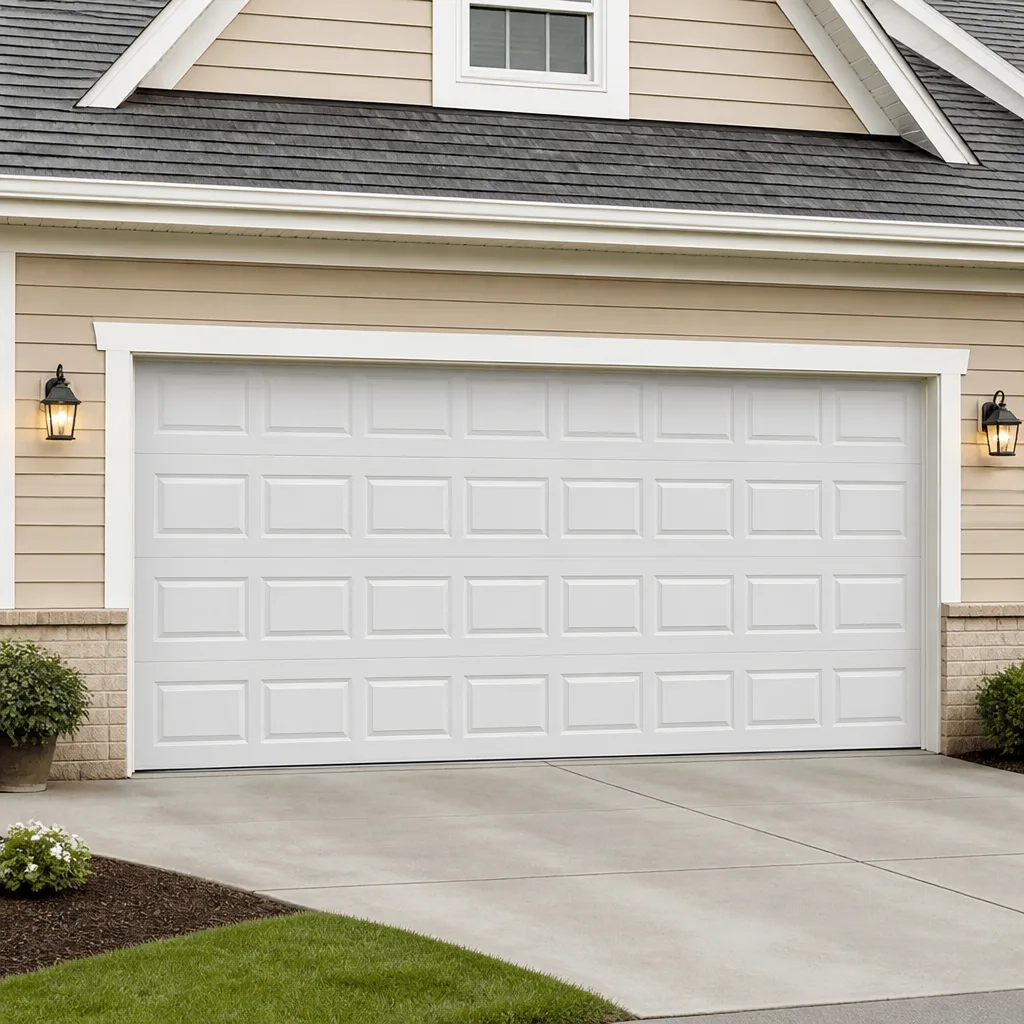 Raised-panel steel
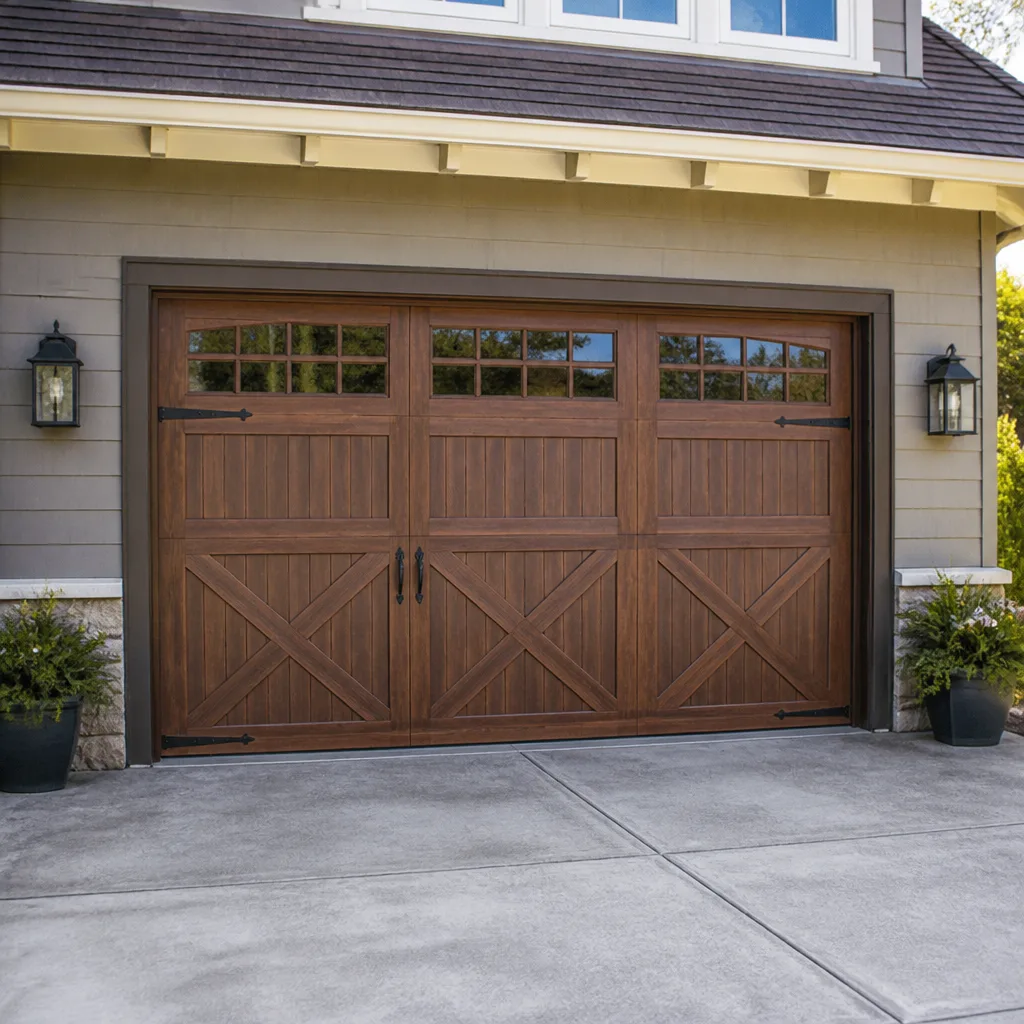 Carriage house
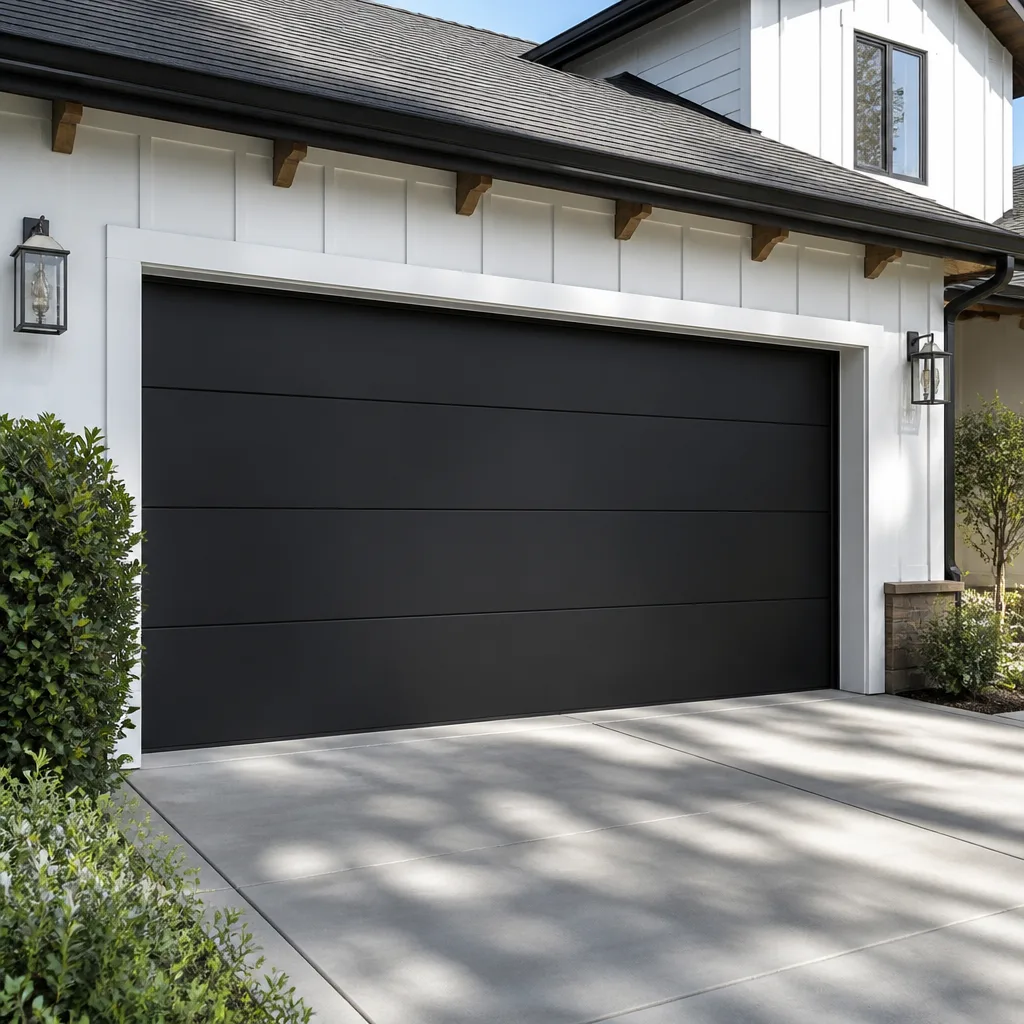 Modern flush
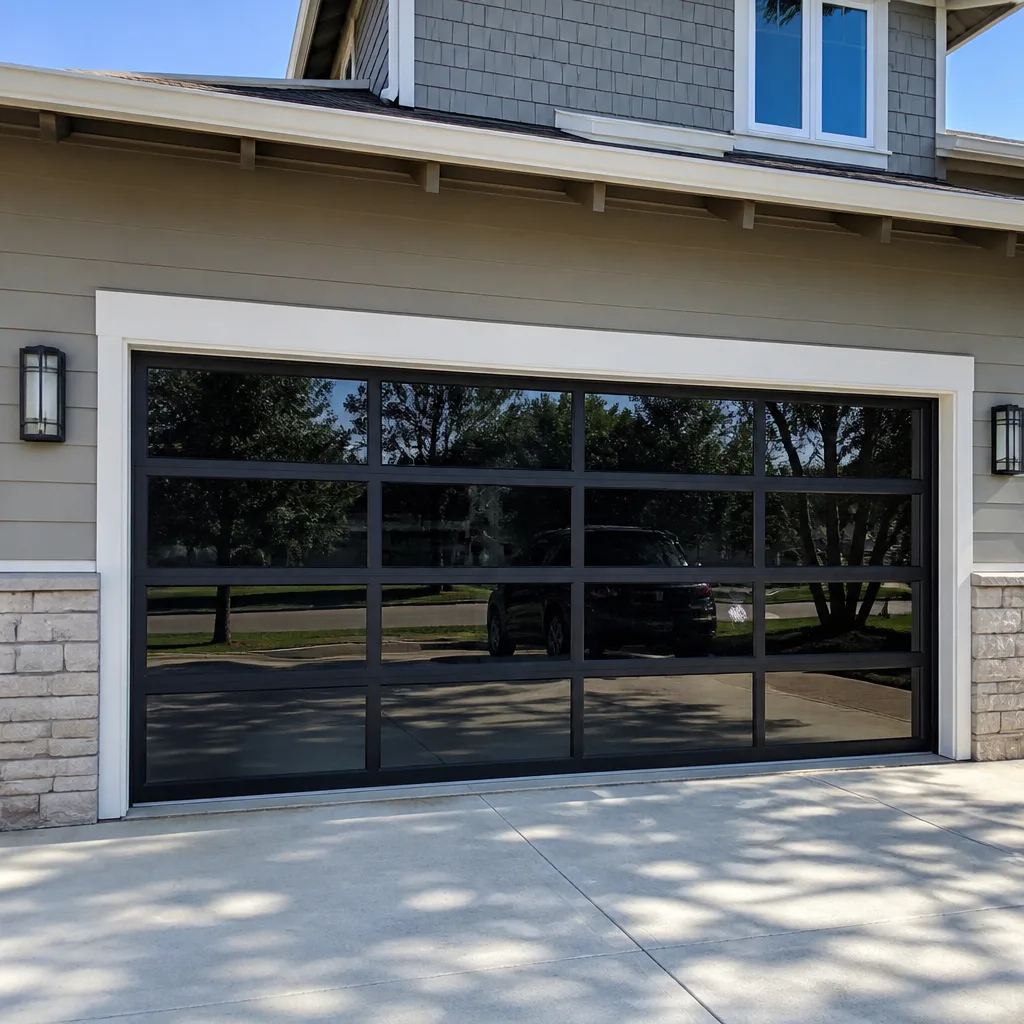 Full-view glass
 LiftMaster openers
 Chamberlain openers
Full 25-point door and opener safety check with every visit - springs, cables, rollers, tracks, and your LiftMaster or Chamberlain opener included
You get a price before we start. It does not change when the truck arrives.
Get your free estimateGarage Door Warning Signs: A Elk Grove Homeowner’s Reference Guide
A garage door that hesitates for two seconds before moving is not “getting old.” It is telling you exactly which component is about to fail, if you know how to read it. Most Elk Grove homeowners replace an opener when the problem is a rusted spring, or swap out a cable when the real culprit is a failing logic board. This guide pairs every observable warning sign with the specific component at fault and what it realistically costs to act now versus waiting.
Styles & brands we work with
Quick Answer
Garage door warning signs fall into four categories: noises, movement irregularities, visual wear, and opener-specific electronic glitches. Each sign maps to a specific failing component, and acting early typically costs $120 to $300 to repair versus $500 to $1,800 for the full failure that follows within 30 to 60 days.
Table of Contents
- Noise Diagnosis: What Each Sound Means
- Movement Warning Signs and What They Indicate
- Visual Warning Signs You Can Check Today
- Opener Warning Signs vs. Mechanical Door Warning Signs
- Why Intermittent Failure Is the Most Dangerous Pattern
- Elk Grove-Specific Failure Patterns: Tule Fog and Summer Heat
- The Cost of Acting Now vs. Waiting
- How to Document Warning Signs Before Calling a Technician
- Common Mistakes to Avoid
- When to Call a Professional
- Frequently Asked Questions
- The Bottom Line
Noise Diagnosis: What Each Sound Means
Noise is the most reliable early warning system a garage door has. Every sound the door makes corresponds to a specific mechanical event happening somewhere in the system. In Elk Grove, where doors cycle multiple times daily for commuters heading to Sacramento or dropping kids at school, noise patterns develop predictably. Here is what we listen for during a diagnosis.
Squealing or high-pitched grinding
A squeal that happens only while the door moves usually points to dry rollers or a roller bearing that has started to seize. Nylon rollers on Clopay and Amarr doors are quieter than steel rollers but wear on the bearing, not the wheel. When the bearing goes, the roller stops spinning and drags along the track. That grinding is metal shavings accumulating in the track. Left alone, the roller eventually welds itself to the shaft and the door jerks hard enough to bend a track section.
Low rumbling or growling
A deep rumble typically comes from the opener motor itself, not the door. On LiftMaster and Chamberlain openers, a worn motor bearing or a stripped gear inside the drive unit creates a growl that gets louder as the door travels. The fix is usually a gear kit and bearing replacement, which costs a fraction of a new opener. On belt-drive Genie units, a rumble often means the belt is misaligned and rubbing against the rail.
Sharp popping or snapping
A single sharp pop when the door starts moving is almost always a torsion spring binding or a cable slipping on the drum. This is the sound that precedes a full spring break by days or weeks, not months. If you hear this once, the door is on borrowed time. A spring that breaks under full tension releases enough stored energy to dent a car hood or seriously injure anyone standing nearby. Do not delay this call.
Rattling that changes with door position
Rattling that comes and goes as the door moves through different positions usually means a hinge or bracket has loosened where the door sections connect. On Wayne Dalton doors, which use a different hinge design than most, this is more common. The fix is typically a hardware tightening and alignment, and it is cheap if caught before the loose hinge elongates its mounting holes.
Movement Warning Signs and What They Indicate
How the door moves tells you more than how it sounds. Watch a full open-and-close cycle from start to finish. Here are the movement behaviors that map to specific failures.
- Hesitation before moving: The motor engages, but the door waits half a second or more before lifting. This indicates the opener’s travel limits or force settings have drifted, or the spring has lost tension and the opener is straining against the extra weight. If the spring is the culprit, the opener will burn out its gears prematurely.
- Door dips on one side during travel: A door that is visibly lower on the left or right as it moves has a cable issue or a broken spring on the high side. The door is essentially being pulled by only one cable. Continued operation will eventually pull the door completely out of its tracks.
- Door reverses mid-cycle for no reason: On modern openers, this is usually the auto-reverse safety system reading too much resistance. That resistance is mechanical drag from dry rollers, a bent track, or a spring that is weakening. Fix the mechanical problem before overriding or replacing the opener.
- Door slams or drops the last few inches: This is a balance problem. A properly balanced door should hold its position halfway open. If it drops, the springs have lost tension and are failing. The full break is imminent.
The quick test we recommend to every Elk Grove homeowner: disconnect the opener by pulling the red emergency release handle, then lift the door manually to the halfway point. If it stays, the door is balanced. If it drops or climbs, the springs need attention. This one check takes 30 seconds and catches most failures before they become emergencies.
Visual Warning Signs You Can Check Today
Some failures announce themselves visually before any noise or movement problem appears. A quarterly visual inspection of these five areas will catch most issues while they are still cheap to fix.
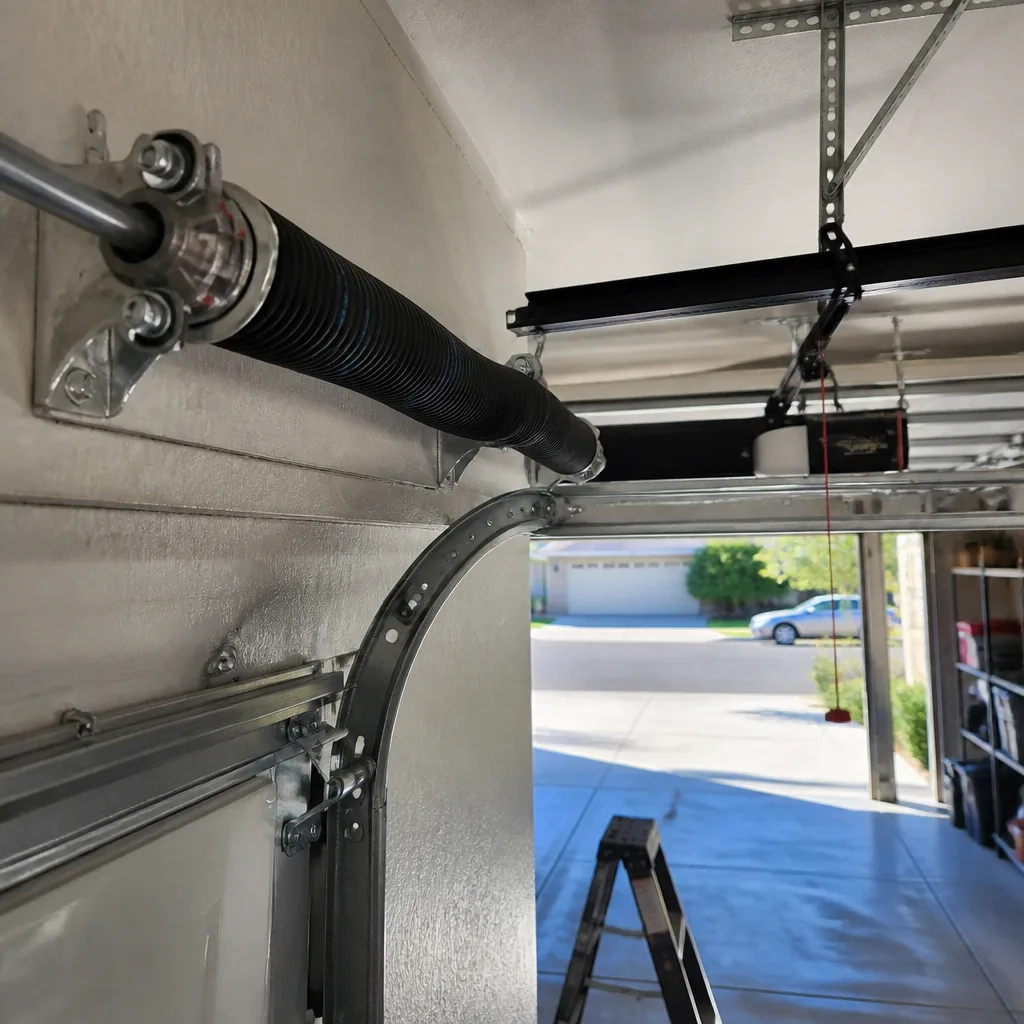
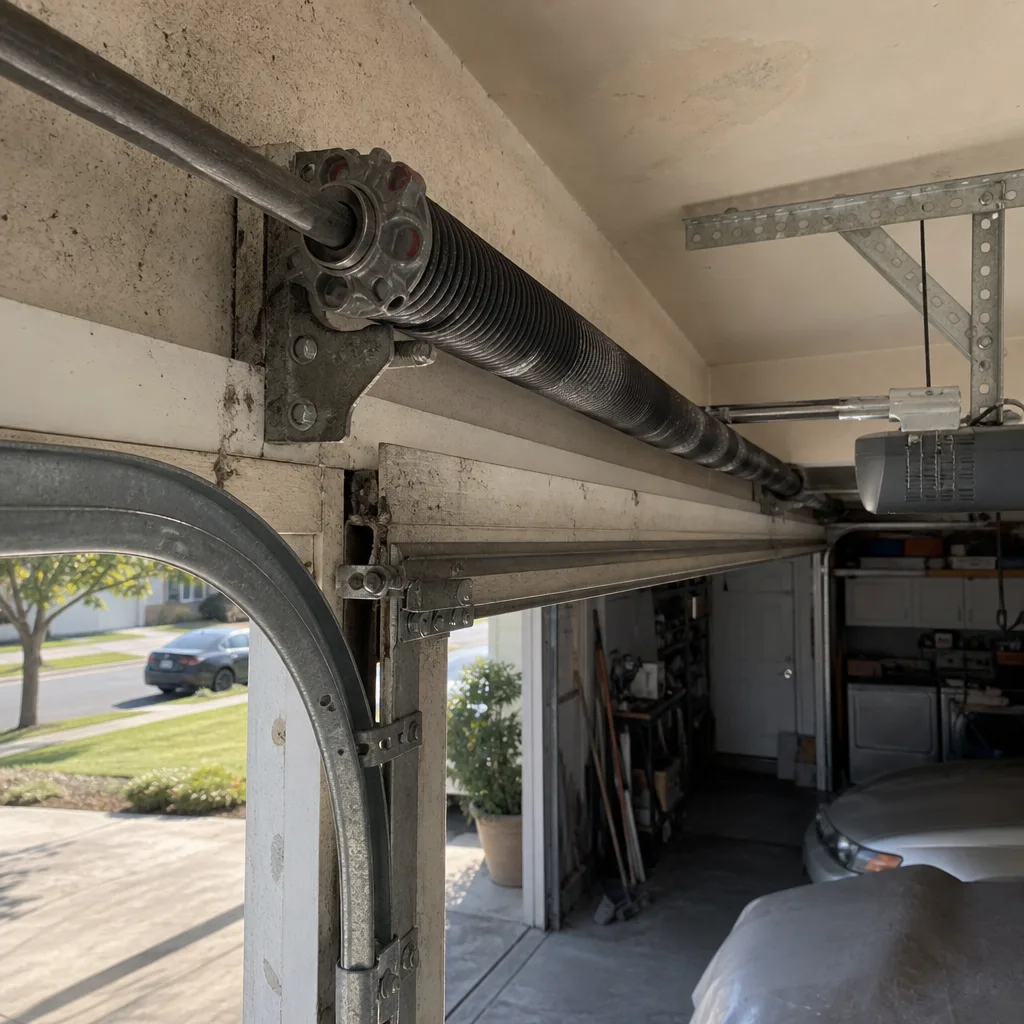
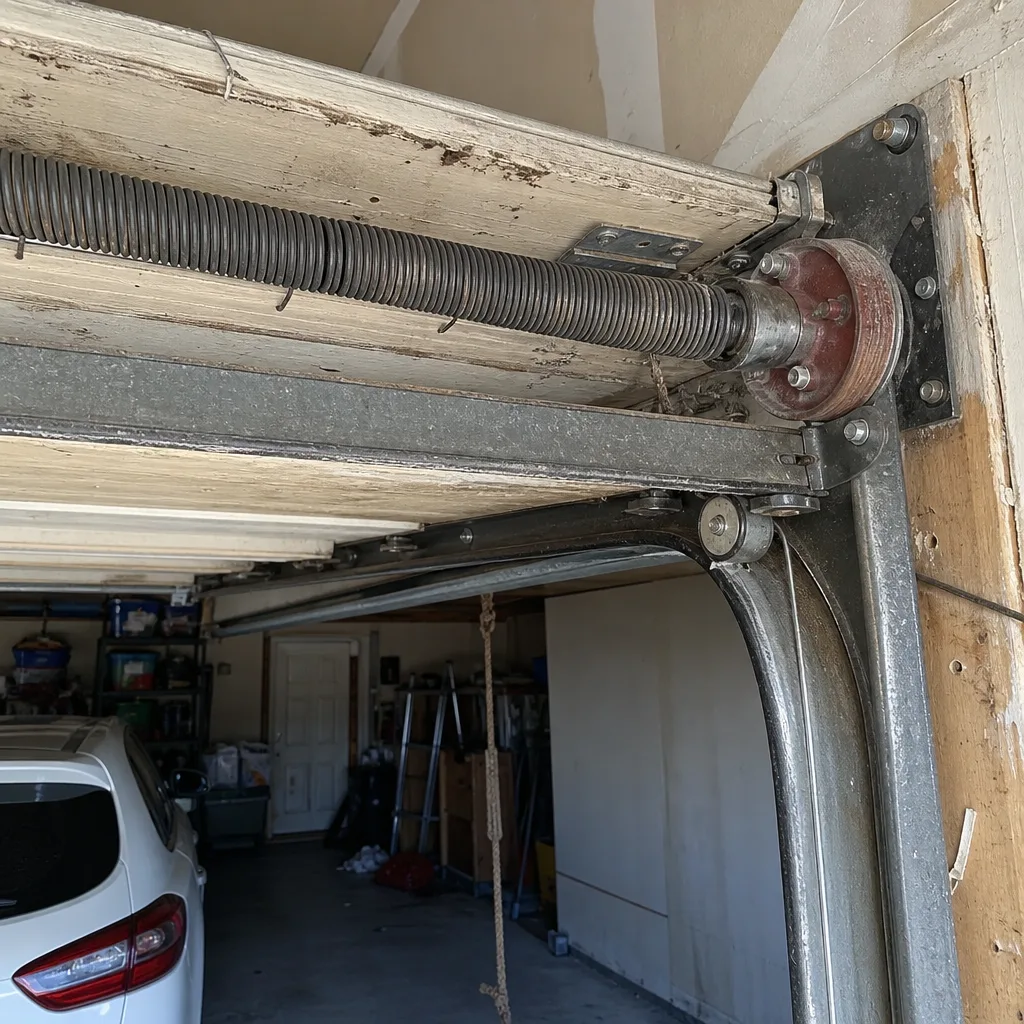
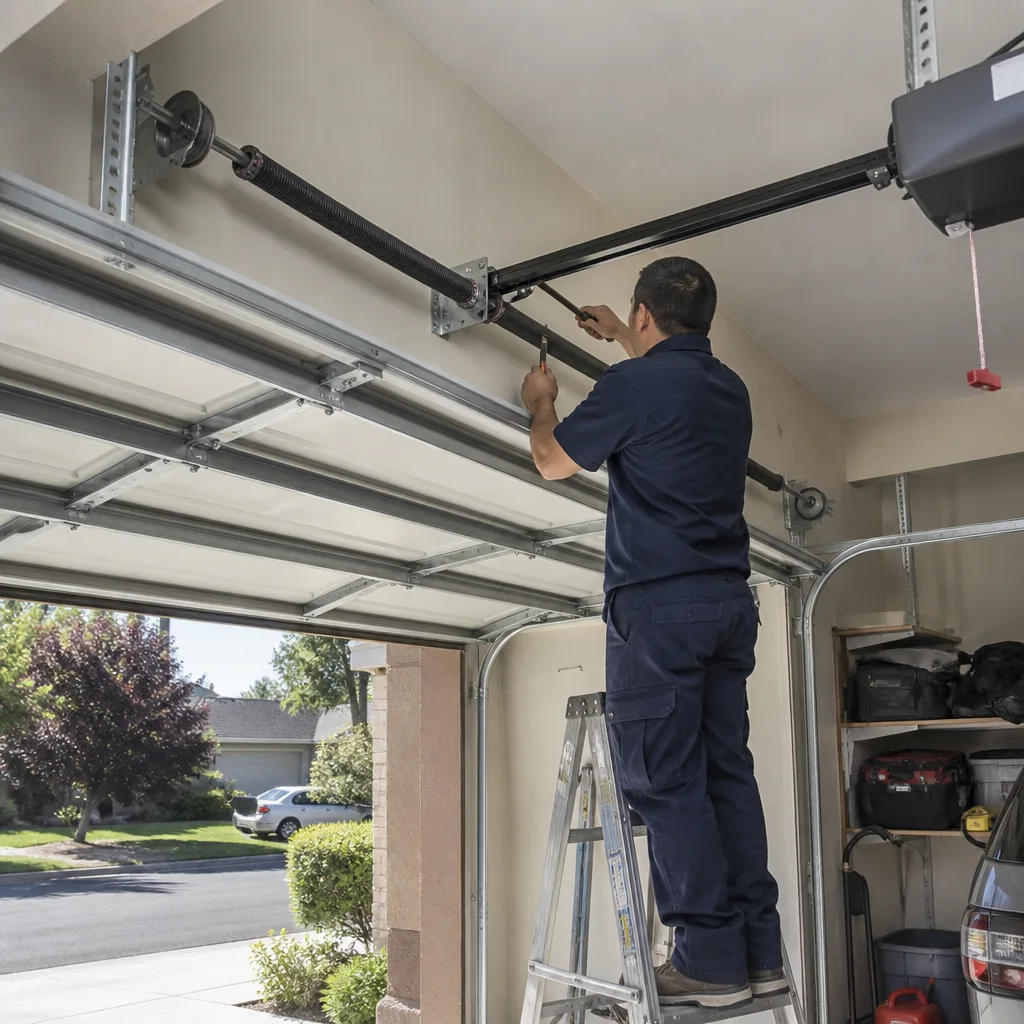
- Look at the springs. On a torsion spring system, the spring sits on a bar above the door. Look for gaps in the coil spacing. A healthy spring has even spacing between every coil. A gap means the spring has already fractured. Replace it now, because the remaining coils are carrying the full load and will fail.
- Look at the cables. The lift cables run along both sides of the door. Frayed strands, kinks, or a cable that is starting to unwind from its drum are all urgent. A frayed cable snaps without warning and can drop the entire door weight onto whatever is below.
- Look at the rollers. Rollers sitting at an angle, wobbling, or with visible flat spots are done. The bearing inside has failed, and the roller is now grinding against the track. On Clopay and Amarr doors factory-fitted with nylon rollers, you will see plastic residue building up in the track.
- Look at the track alignment. Stand inside the garage and sight down each track. A track that bows inward or outward by more than a quarter inch will bind the rollers. In Elk Grove, track brackets loosen on stucco walls where the anchorage has cracked, especially on homes built before 2000.
- Look at the door panels themselves. Cracks, water stains, or delamination on the lower panels indicate moisture intrusion. A waterlogged panel is significantly heavier than the door’s rated weight, which accelerates spring fatigue and opener wear. On Wayne Dalton doors, check the joints where the stiles meet the panel surface, as these are common moisture entry points.
Opener Warning Signs vs. Mechanical Door Warning Signs
The most expensive mistake we see in Elk Grove is a homeowner replacing a perfectly good opener because the door was mechanically failing, or replacing the door when the opener was the only problem. These are two separate systems that work together, and their failure signs are distinct.
Mechanical door warning signs (the hardware system)
- Door is heavy or hard to lift manually after pulling the release handle.
- Visible spring gaps, frayed cables, or bent track sections.
- Door is unbalanced, dipping, or crooked during travel.
- Popping or snapping from the spring area.
- Rollers wobbling, squealing, or leaving metal dust in the track.
These are the door’s own hardware: springs, cables, rollers, hinges, tracks, and panels. None of these are fixed by replacing the opener.
Opener warning signs (the electromechanical system)
- The motor runs but the door does not move, or moves only a few inches.
- The opener reverses even after you confirm the door is balanced and rolls freely.
- The remote or wall button works intermittently or requires multiple presses.
- Grinding or whining comes specifically from the motor housing, not the door.
- The opener’s lights flicker or the unit reboots when operating.
These point to the opener’s motor, gear train, logic board, or safety sensors. A door that is mechanically healthy can be brought back online with opener-specific work. We service LiftMaster, Chamberlain, Genie, and Craftsman opener units, and the diagnosis is the first step regardless of brand. For help selecting equipment, see Choosing the Right Garage Door Brand: A Buyer’s Guide for Elk Grove.
One call covers the door and the opener. If you are not sure which system is failing, a technician who works on both will diagnose it in a single visit, not send you across town for a second opinion.
Why Intermittent Failure Is the Most Dangerous Pattern
A door that has completely stopped working is a headache. A door that works fine most of the time is a hazard. Intermittent failures desensitize homeowners. After the fifth time the door closes normally, the concern fades. But intermittent failures in garage door systems do not self-heal. They progress.
The progression pattern we see repeatedly: a failing spring delivers inconsistent tension. Some days the opener has just enough mechanical help to move the door. Other days, the opener strains harder, the thermal overload trips, and the door reverses or stops entirely. The homeowner tries again, it works, and the incident is forgotten. Then the spring breaks while the door is halfway up, and the entire panel weight comes down on whatever is in the doorway: a car hood, a trash bin, a child’s bike.
Intermittent remote or wall-button failures follow a similar pattern with the logic board. The circuit works until it gets warm, then a cracked solder joint expands and fails. The user presses the remote three times, it works on the third press, and they assume it is a dead battery. It is not. The board is failing, and the day it fails permanently will be the day before a work trip or during a storm.
The rule we recommend: any failure that happens twice in a week is a real failure. The component is already broken. It is just not broken all the time yet. Acting on the second occurrence usually means a small repair instead of a replacement.
Elk Grove-Specific Failure Patterns: Tule Fog and Summer Heat
Elk Grove has a failure signature that technicians in drier or cooler climates do not see. Our winters bring extended tule fog events where humidity sits near 100 percent for weeks. Our summers push 100 degrees and dry everything out. That swing accelerates specific wear patterns.
Corrosion from fog, not water intrusion
Tule fog corrosion is different from rust caused by rain or sprinkler water. Fog corrosion is an even, dull patina that forms on exposed steel hardware: spring coils, cable strands, hinge pins, and track brackets. It does not drip or streak. It coats. Over consecutive fog seasons, the patina develops into surface pitting that weakens the metal. Springs and cables are the first casualties because they are under constant tension. A spring with surface pitting from fog exposure is measurably weaker than a smooth spring, and it fails earlier.
This is why we recommend an annual hardware inspection for doors in Elk Grove, especially for homes where the garage faces north or sits under shade trees that keep moisture on the hardware longer each morning.
Heat fatigue on nylon components
Elk Grove summers bake the garage interior. On days over 95 degrees, a closed garage can reach 120 to 130 degrees. Nylon rollers, nylon gears inside openers, and polymer bearing blocks all age faster in that heat. The material becomes brittle. We see nylon rollers cracking and shedding material on doors that are only five or six years old, where the same rollers in cooler climates would last a decade.
Stucco anchorage loosening
A less obvious Elk Grove-specific issue is track and opener bracket looseness on stucco walls. The expansion and contraction cycle from heat to fog loosens the anchors. Over time, the track shifts, the door binds, and the opener strains harder than it should. The fix is often as simple as re-anchoring the brackets, but left unaddressed it bends the track and trashes the rollers.
The Cost of Acting Now vs. Waiting
Every warning sign has a price tag attached to it, and the difference between acting now and waiting is significant. Here is the honest breakdown of what typical repairs cost versus what full replacements cost after the warning is ignored, based on the work we see across Elk Grove and the surrounding Sacramento area.
- Replacing one torsion spring before it breaks: $140 to $260 including parts and labor. Waiting until it snaps while the door is open: $500 to $900 for a full panel replacement if the door drops on a vehicle, plus the spring replacement on top.
- Replacing worn rollers before they seize: $90 to $150 for a full set. Waiting until a seized roller bends the track: $200 to $400 for track replacement plus the roller set.
- Replacing frayed cables before they snap: $130 to $220 per pair. Waiting until a cable snaps with the door halfway up: risk of panel damage, personal injury, and a door that cannot be safely operated until both cables and the spring system are rebalanced: $300 to $600.
- Repairing an opener with a worn gear before it strips completely: $120 to $180. Waiting until the stripped gear leaves the door frozen shut: $350 to $600 for a new opener installation if the unit is out of production.
- Re-anchoring loose track brackets: $80 to $140. Waiting until the shifted track bends: $250 to $450 for track replacement and alignment.
These are the numbers we quote in Elk Grove. Every quote is discussed and agreed before any work starts, so the price you hear is the price you pay. The pattern is consistent: early intervention costs one third to one half of what the cascading failure costs.
How to Document Warning Signs Before Calling a Technician
A good photograph is worth more than a verbal description on the phone. Descriptions like “it makes a weird noise” do not help a technician come prepared. Documentation does. Here is how to capture what matters.
- Record the sound. Use your phone to capture 10 to 15 seconds of the door operating. Hold the phone near the opener motor for one cycle, then near the spring bar for another. Playback tells us whether the noise is motor-side or door-side, which saves time on the diagnosis.
- Photograph the springs. Stand on a ladder (never directly under the spring) and take a clear photo of the torsion spring or side springs. We are looking for coil gaps, rust pitting, or visible fractures.
- Photograph the cables. Shoot both lift cables where they wrap around the drums at the top corners. A smartphone photo is sharp enough to see frayed strands.
- Photograph the rollers. Capture a close-up of at least two rollers, one near the top and one near the bottom. Wobble, flat spots, or plastic shavings in the track are all visible in a good shot.
- Note the behavior. Write down exactly when the problem happens: first cycle of the day, only after the door sits open for an hour, only on hot afternoons, only when using the wall button, only when using the remote. Timing is diagnostic.
- Find the model numbers. The opener model is printed on the motor housing. The door manufacturer is usually stamped on the inside of a panel or on a sticker near the top section. Having these ready means we can arrive with the correct parts on the truck.
We diagnose first, recommend second. When you call us with photos and model numbers ready, the diagnosis is faster and the repair options are clearer. If you already have a Garage Door Repair in Elk Grove need diagnosed, documentation shortens the visit.
Common Mistakes to Avoid
- Lubricating worn rollers to quiet them. Lubricant masks the sound for a few days, but the bearing is already destroyed. The roller will still seize. Worse, the lube attracts dust and turns the track into a grinding paste that accelerates wear on every other roller.
- Overriding the auto-reverse on a door that keeps reversing. The auto-reverse is doing its job: it is telling you the door is too heavy or binding. Overriding the force setting so the door powers through is how fingers get caught under a door that cannot sense resistance.
- Replacing the opener when the door was the problem all along. A door with failed springs destroys the replacement opener’s gears within months. We see this in Elk Grove often: a homeowner pays for a new opener, and six months later the same symptom returns because the mechanical problem was never fixed.
- Ignoring a sound that goes away. Sounds do not go away because the problem healed. They go away because the failing component finally broke, and now the door is running without it, which means something else is carrying the load. The silence is worse than the noise.
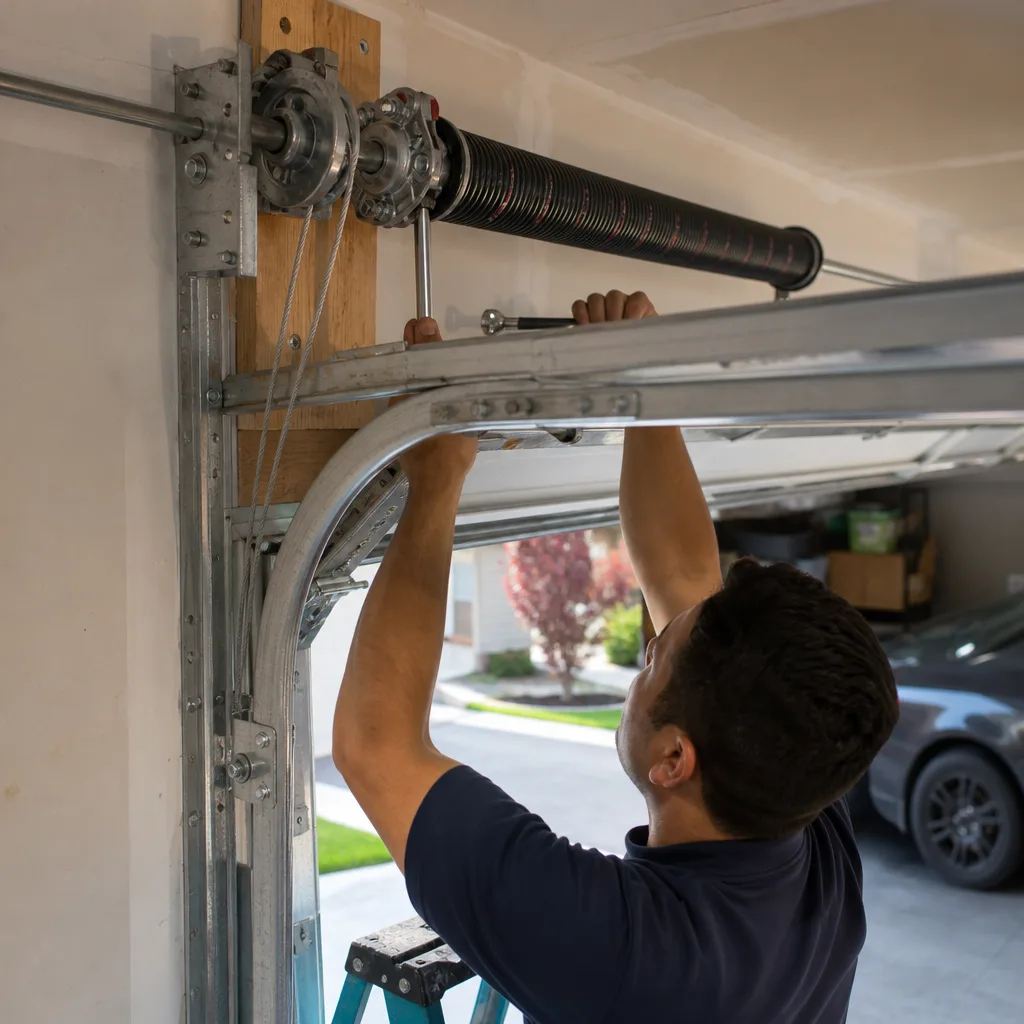
- Trying to replace a torsion spring without the proper winding bars and training. Torsion springs store enough energy to kill. This is not a chore like changing a light fixture. The springs on a double-car door in Elk Grove can be under 200 to 300 pounds of torque. Leave this to a technician with the right tools and training.
- Waiting for the door to fail completely before calling. The most expensive calls we run are the ones where the homeowner knew something was wrong for weeks and waited. A $140 spring replacement became a $700 panel replacement because the door dropped on a car. Do not wait for the second failure.
When to Call a Professional
Call a professional when you see any of these: a gap in the spring coils, a frayed cable, a door that drops or climbs when released manually, a rolling door that reverses without cause, or any noise from the spring area that sounds like a pop or snap. Do not attempt spring or cable work yourself. The stored energy in the spring system is lethal.
If the door is already stuck open or closed and cannot be moved safely, that is a same-visit priority. If the warning sign is still mild, a scheduled visit works fine. Elk Grove Garage Door Service offers free estimates in Elk Grove, and because garage doors are all we do, the technician showing up has seen your exact brand, your exact opener, and your exact failure pattern before. Call (844) 766-3083 to schedule a diagnosis, and whether you need Garage Door Opener Repair in Elk Grove or full Garage Door Installation in Elk Grove, the quote is discussed and agreed before any work begins.
Frequently Asked Questions
The most common warning sign we see in Elk Grove is a door that hesitates before moving, which typically indicates a spring losing tension or opener force settings that have drifted. The hesitation means the opener is straining against additional weight, and the spring is the usual culprit. Call (844) 766-3083 for a free estimate if your door hesitates.
Pull the red emergency release handle and lift the door manually to the halfway point. If the door is heavy, unbalanced, or makes grinding sounds while you move it by hand, the problem is mechanical (springs, rollers, cables). If the door moves smoothly by hand, the problem is the opener. A technician who works on both systems can confirm in minutes.
Yes. A torsion spring usually gives a visible warning: a gap in the coil spacing, surface rust pitting, or an audible pop or snap sound when the door starts moving. Any of these means the spring is fractured or about to be, and replacement should happen immediately.
Heat causes metal to expand and nylon to soften. In Elk Grove, summer garage temperatures regularly exceed 120 degrees, and a door that binds on hot afternoons typically has a track alignment issue or a roller bearing that is marginal. The expansion is just enough to push it over the edge. The fix is usually track adjustment or roller replacement.
No. The noise is the failure in progress. Every cycle with a worn roller, a weak spring, or a frayed cable adds more damage that increases the final repair bill. Stop using the door for anything except essential access, and schedule a diagnosis.
Some home warranties in Elk Grove cover garage door springs, but many exclude them, and the claim process often takes days. If your door is showing spring warning signs, waiting on a warranty claim risks the full break and the bigger bill. Get the diagnosis first, then decide whether to pursue the warranty. Estimates are free.
For more on what we cover, see the Elk Grove Garage Door Service home page, or read about our repair approach on the Garage Door Repair in Elk Grove page.
The Bottom Line
Garage doors fail on a schedule, not randomly. The warning signs are consistent, specific, and readable if you know what to look for: noise tells you which component is suffering, movement tells you whether the door or the opener is at fault, and visual checks confirm what the sound and movement already suggested. The price of reading these signs early is a small repair. The price of ignoring them is a cascade of failures that costs three to five times more. In Elk Grove, where tule fog and summer heat accelerate hardware wear, the inspection is not optional. Whatever brand is on your door, we know it. The right fix for your door, not the easiest upsell. Browse more guides & resources to keep your system running.
Written by the team at Elk Grove Garage Door Service, serving Elk Grove since 2018.
See the difference
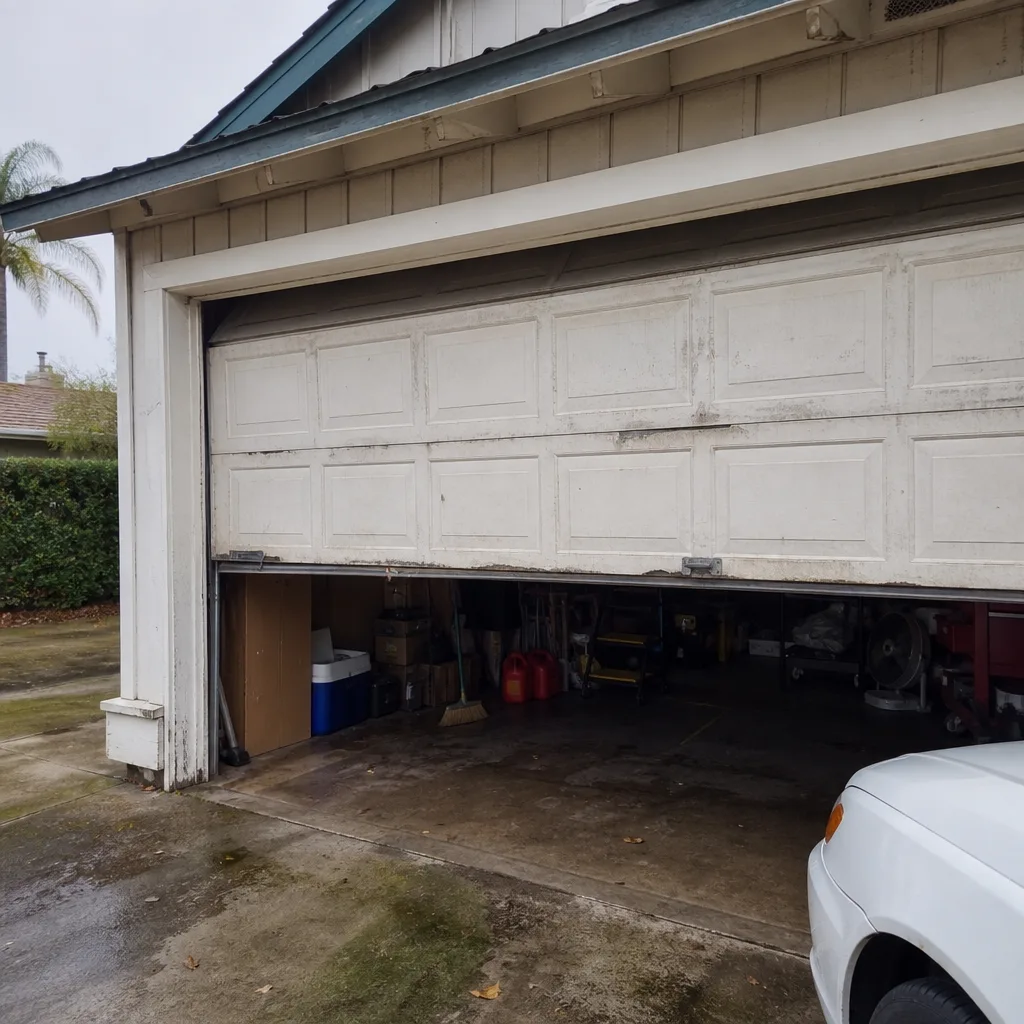 Before
 After
 Before
 After
 Before
 After