
Last updated October 31, 2026
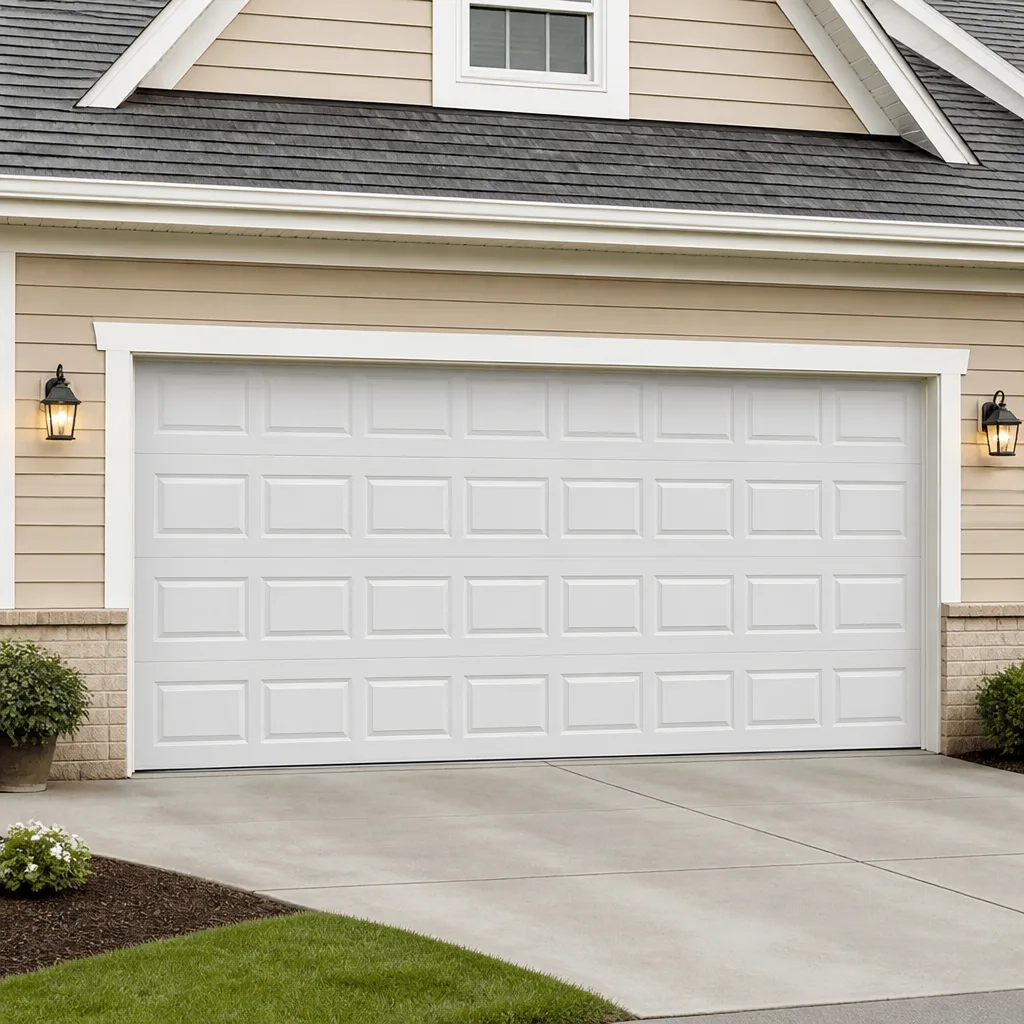 Raised-panel steel
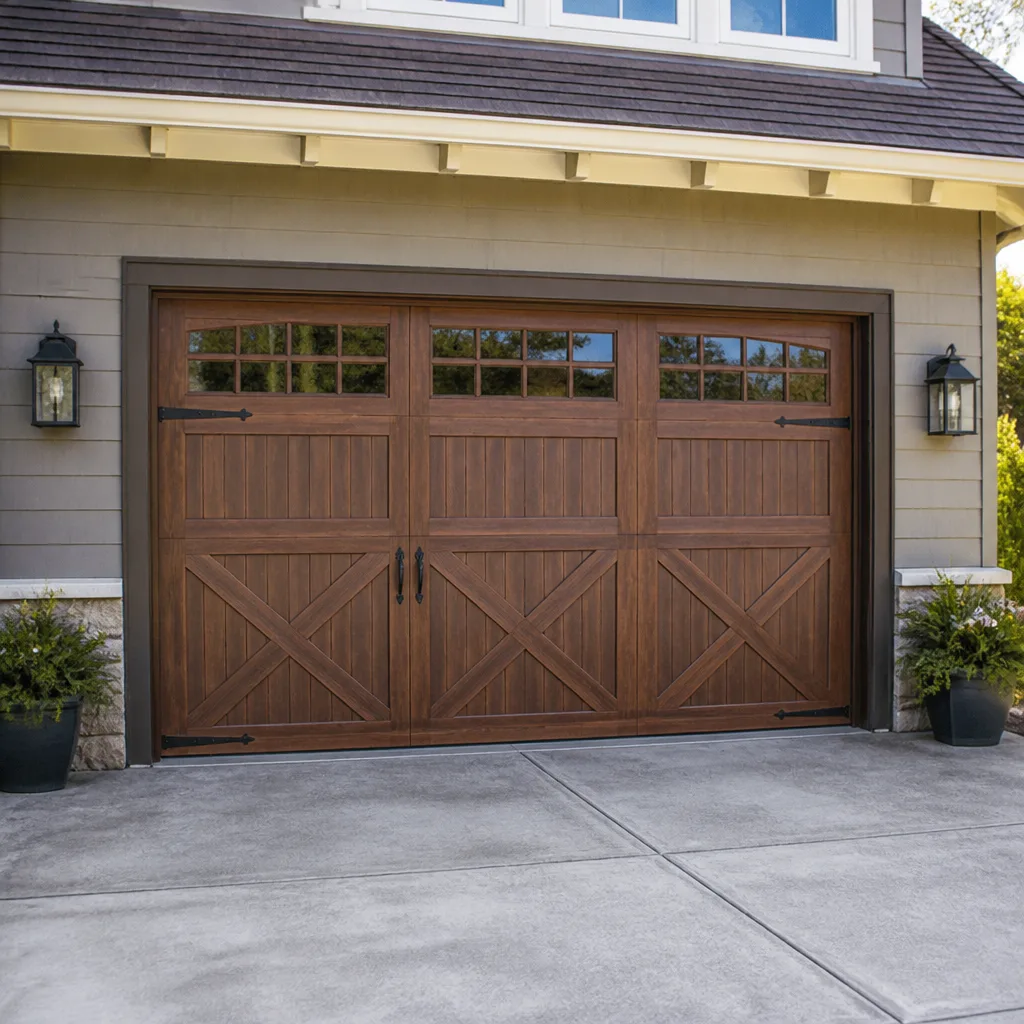 Carriage house
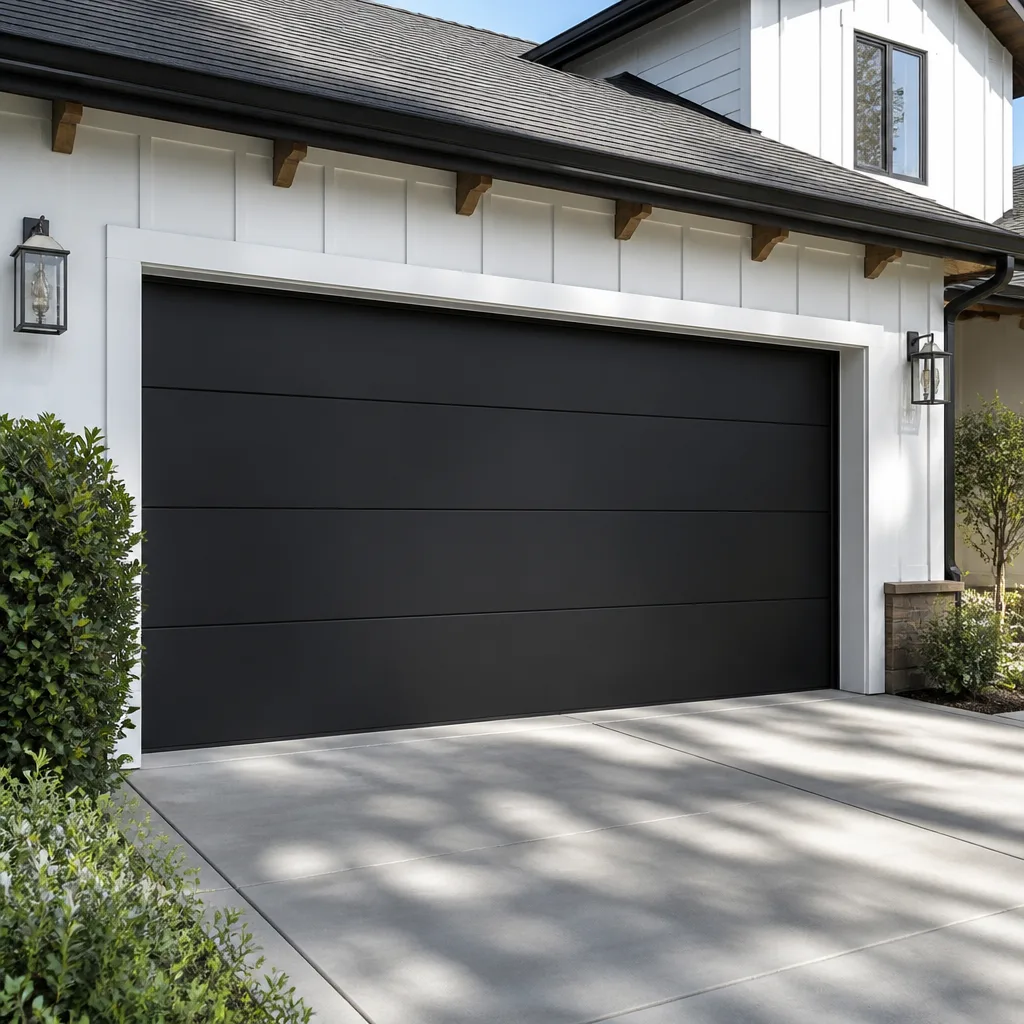 Modern flush
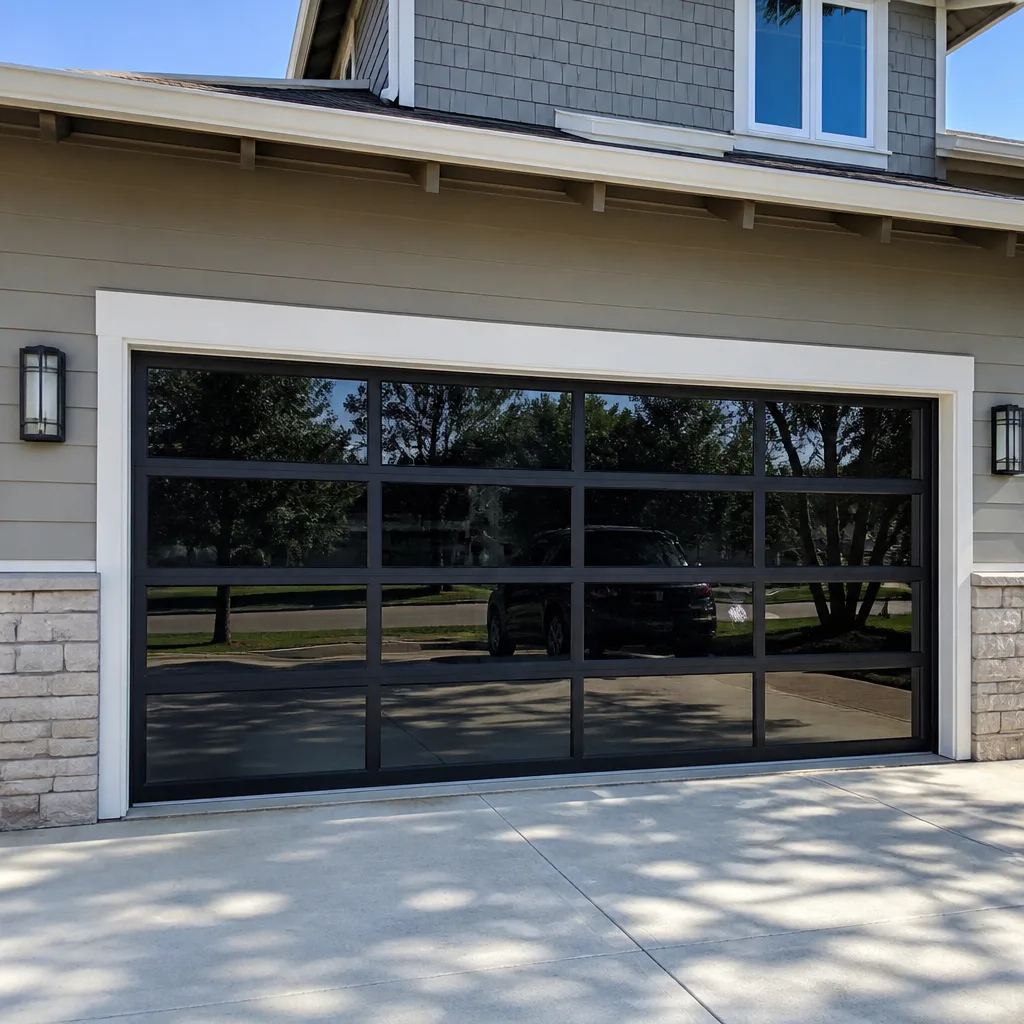 Full-view glass
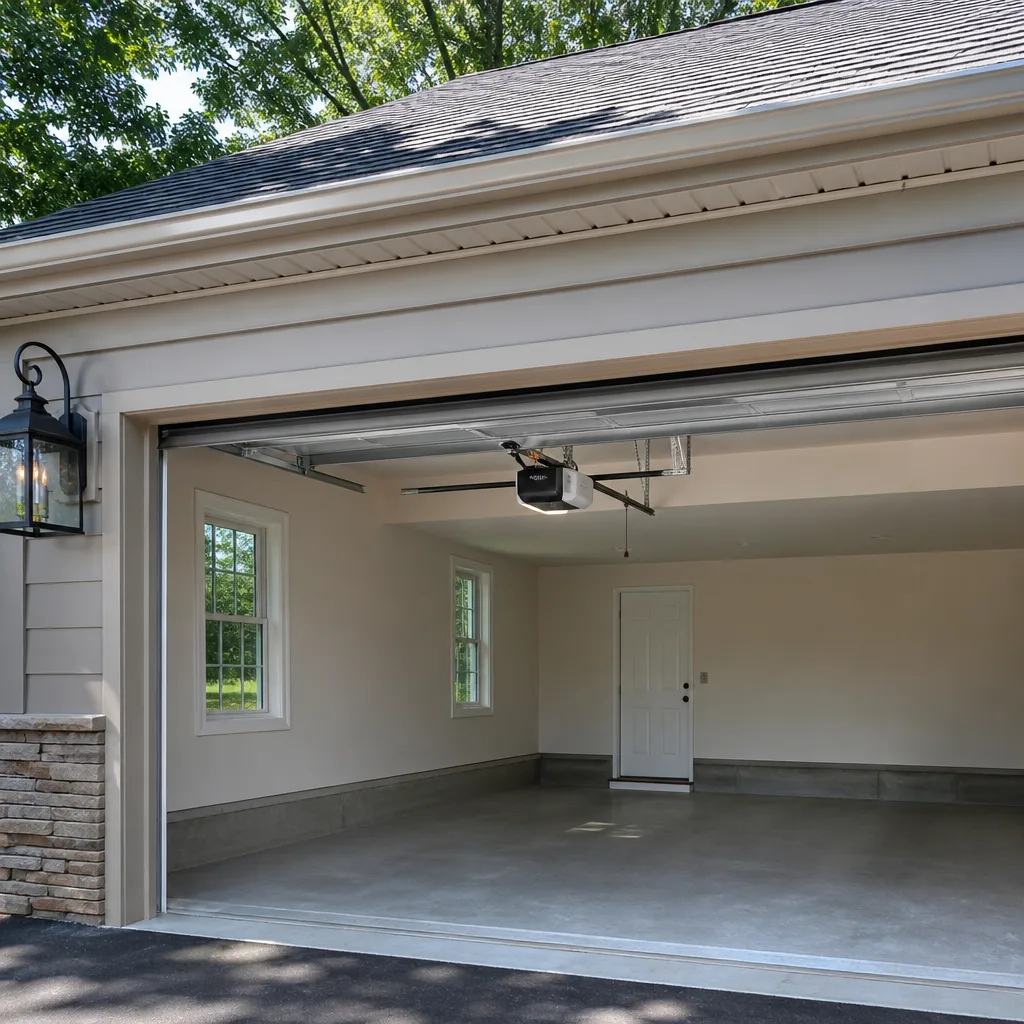 LiftMaster openers
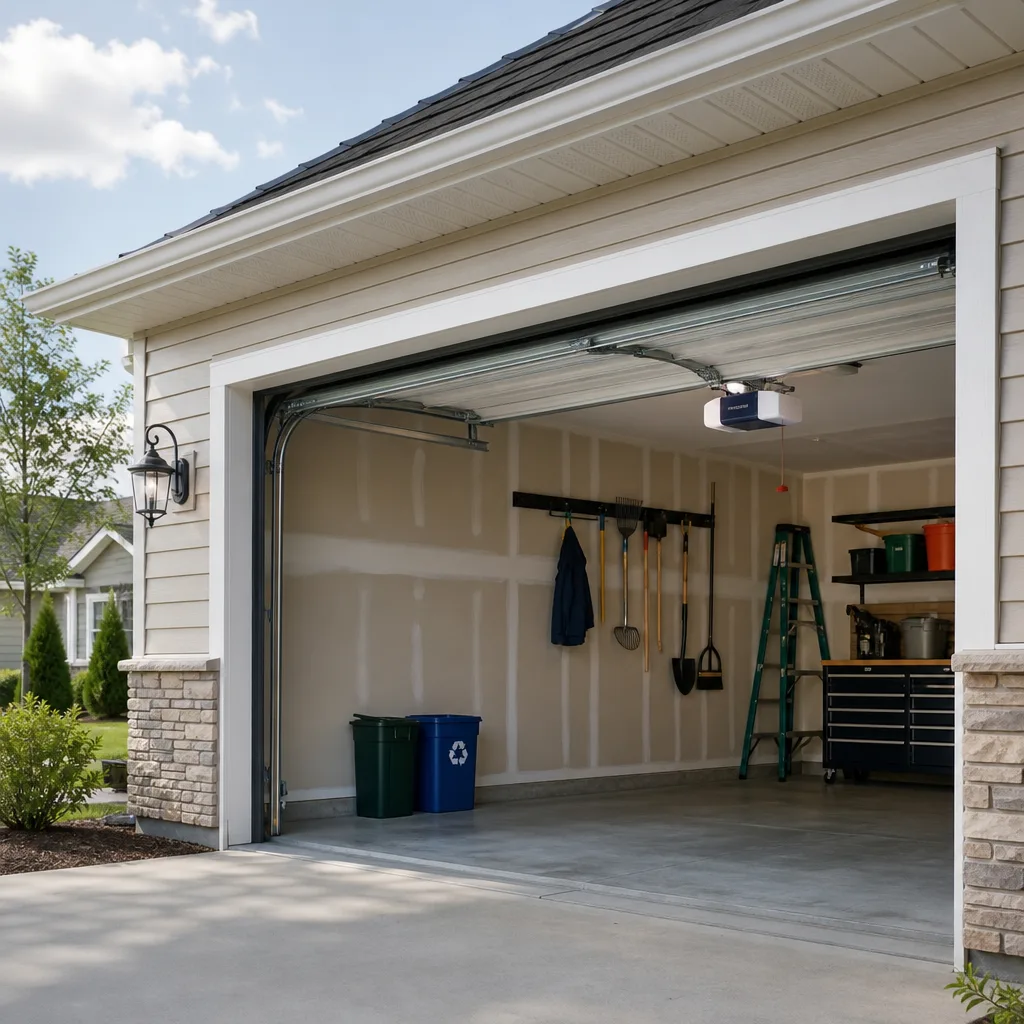 Chamberlain openers
Full 25-point door and opener safety check with every visit - springs, cables, rollers, tracks, and your LiftMaster or Chamberlain opener included
You get a price before we start. It does not change when the truck arrives.
Get your free estimateSeasonal Garage Door Care for Elk Grove: Year-Round Homeowner’s Guide
The month most Elk Grove garage door springs fail isn’t January. It’s October, when overnight temperatures drop 30 degrees in a single week and the metal in your torsion springs contracts faster than it has all year. Homeowners who grew up in colder climates often bring their old seasonal maintenance habits with them, but Elk Grove has its own stress profile: triple-digit July heat, tule fog that sits on January mornings for weeks, and valley wind events that slap the door panels in March. This guide walks through what actually breaks here, when it breaks, and the inspection routine that prevents most of it. For a deeper dive, see our The Complete Guide to Garage Door in Elk Grove.
Styles & brands we work with
Quick Answer
Seasonal garage door care in Elk Grove means four specific tasks per year: spring re-lubrication and hardware checks in March, weatherstripping inspection before and after the summer UV season, torsion spring tension calibration in early October before temperatures swing, and bottom seal and steel panel checks during and after January tule fog stretches. Most emergency calls can be avoided with a 20-minute seasonal walk-around that costs almost nothing.
Table of Contents
- What Elk Grove’s Climate Does to Garage Doors
- Why October Temperature Swings Break Torsion Springs
- UV Damage and Weatherstripping: What Actually Holds Up
- Tule Fog, Steel Panels, and Bottom Seals
- The Elk Grove Month-by-Month Maintenance Calendar
- Seasonal Care for Openers and Smart Drives
- DIY Inspection vs. Professional Repair: Where the Line Is
- Common Mistakes to Avoid
- When to Call a Professional
- Frequently Asked Questions
- The Bottom Line
What Elk Grove’s Climate Does to Garage Doors
Elk Grove sits at the southern edge of the Sacramento Valley floor, which means the garage door on your home endures a wider annual temperature range than doors in coastal California cities. A July afternoon here routinely hits 105 degrees, and a January fog-season morning drops to 35 degrees. That’s a 70-degree swing between seasons, and sometimes 30 degrees of it happens inside a single October week.
The door on your garage isn’t a sealed system. The torsion spring above the opening, the cables on either side, the rollers in the tracks, and the bottom seal along the floor are all exposed to ambient temperature and humidity changes. Metal expands in the July heat and contracts in the fog-season cold. Rubber and vinyl weatherstripping degrade under intense UV exposure that never lets up from May through September. Steel panels respond to moisture differently when that moisture comes from tule fog instead of rain. Understanding those mechanisms is what separates a maintenance routine that actually works from a generic checklist that sounds good and doesn’t prevent anything.
As a Elk Grove Garage Door Service home company that only works on garage doors, we see the same failure patterns repeat every year. The good news is that most of them announce themselves weeks before they strand you in the driveway.
Why October Temperature Swings Break Torsion Springs
Here’s the failure sequence we see every fall in Elk Grove. Through August and September, daytime temperatures hold in the high 90s and low 100s. Your torsion spring sits in that heat for weeks on end, and the steel inside it stays in an expanded state. Then a weather front moves through in early-to-mid October. Overnight lows drop to 45 degrees. The spring steel contracts. If the spring was already near the end of its rated cycle life, that contraction pushes it past its tolerance and it snaps. Usually at 6:45 in the morning, right when you need to leave.
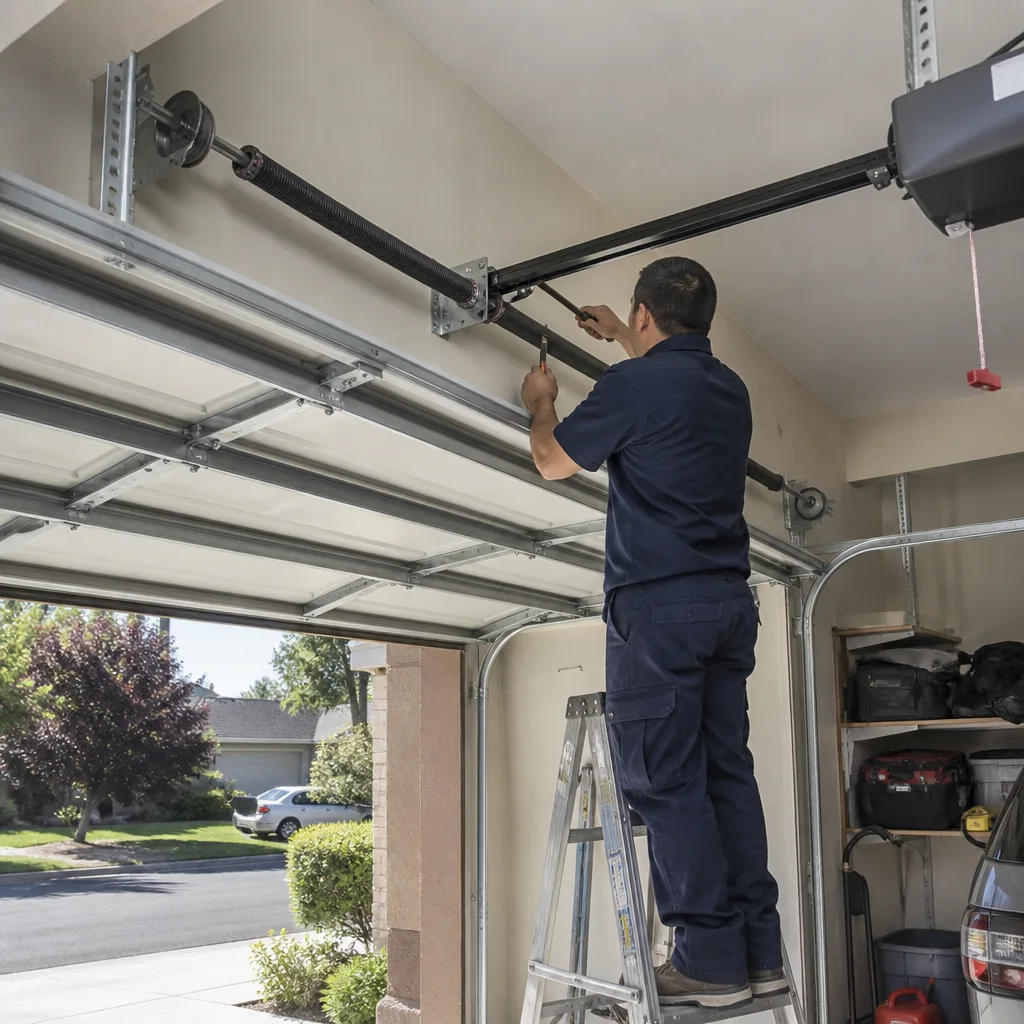
This is why the single most important fall task for Elk Grove garage door care isn’t done in spring or summer: checking torsion spring tension as the weather transitions. We’re not recommending homeowners adjust their own springs. Torsion springs hold several hundred pounds of torque even at rest, and working on a mounted spring without the right tools and know-how causes serious injury every year. The fall task is visual and auditory:
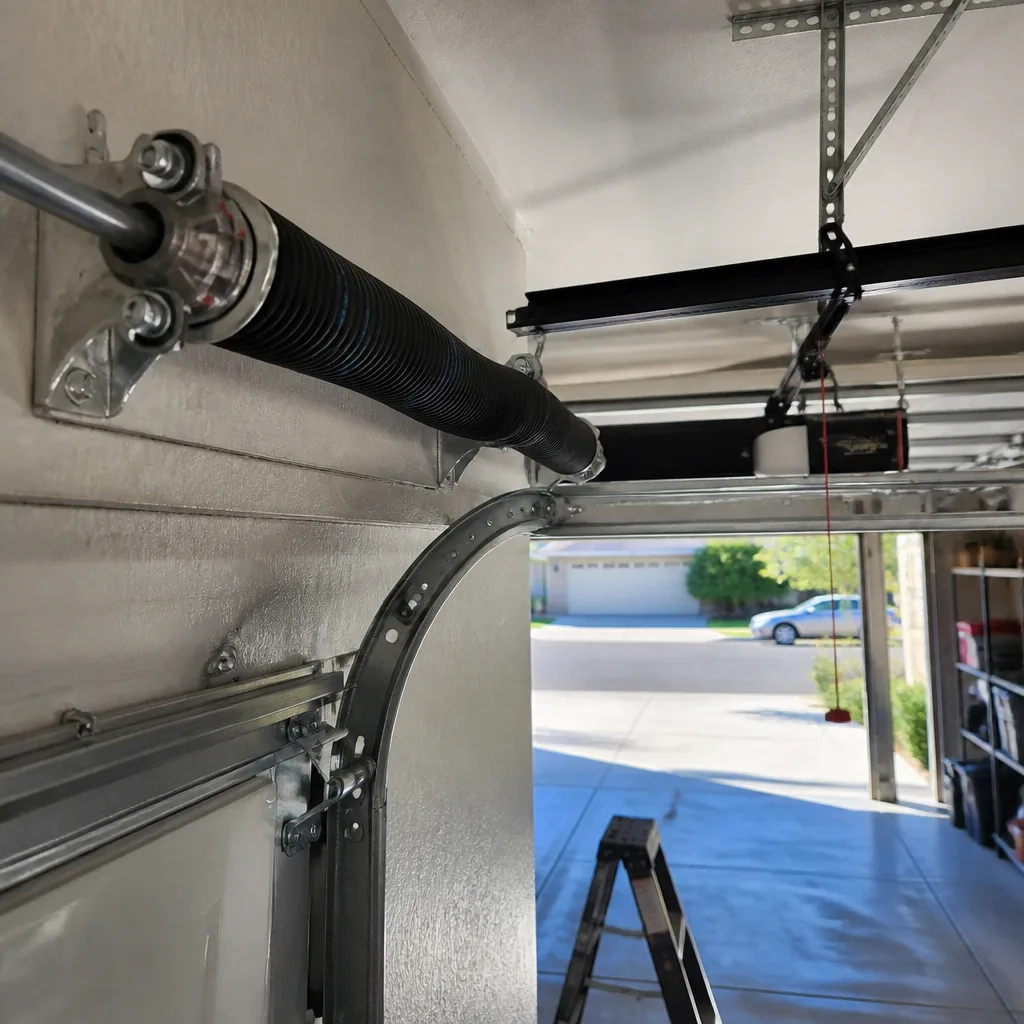
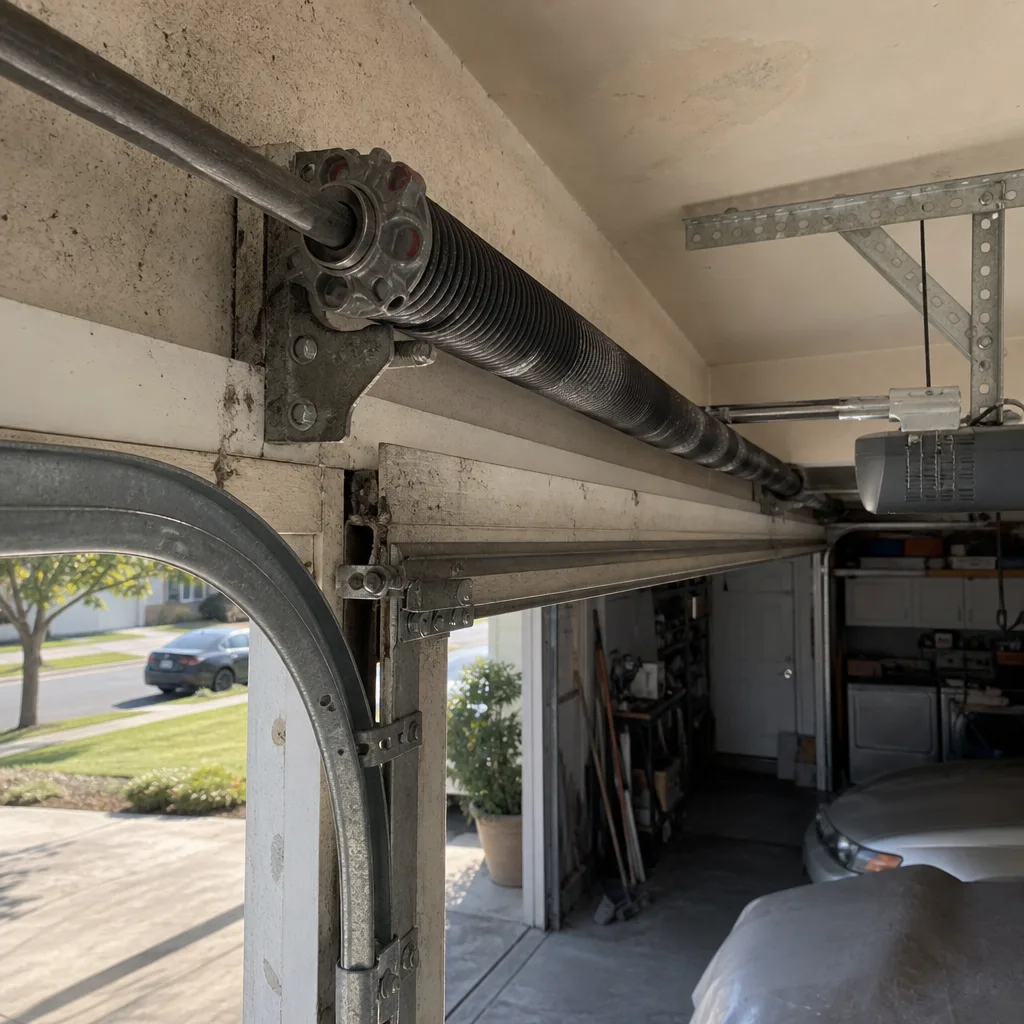
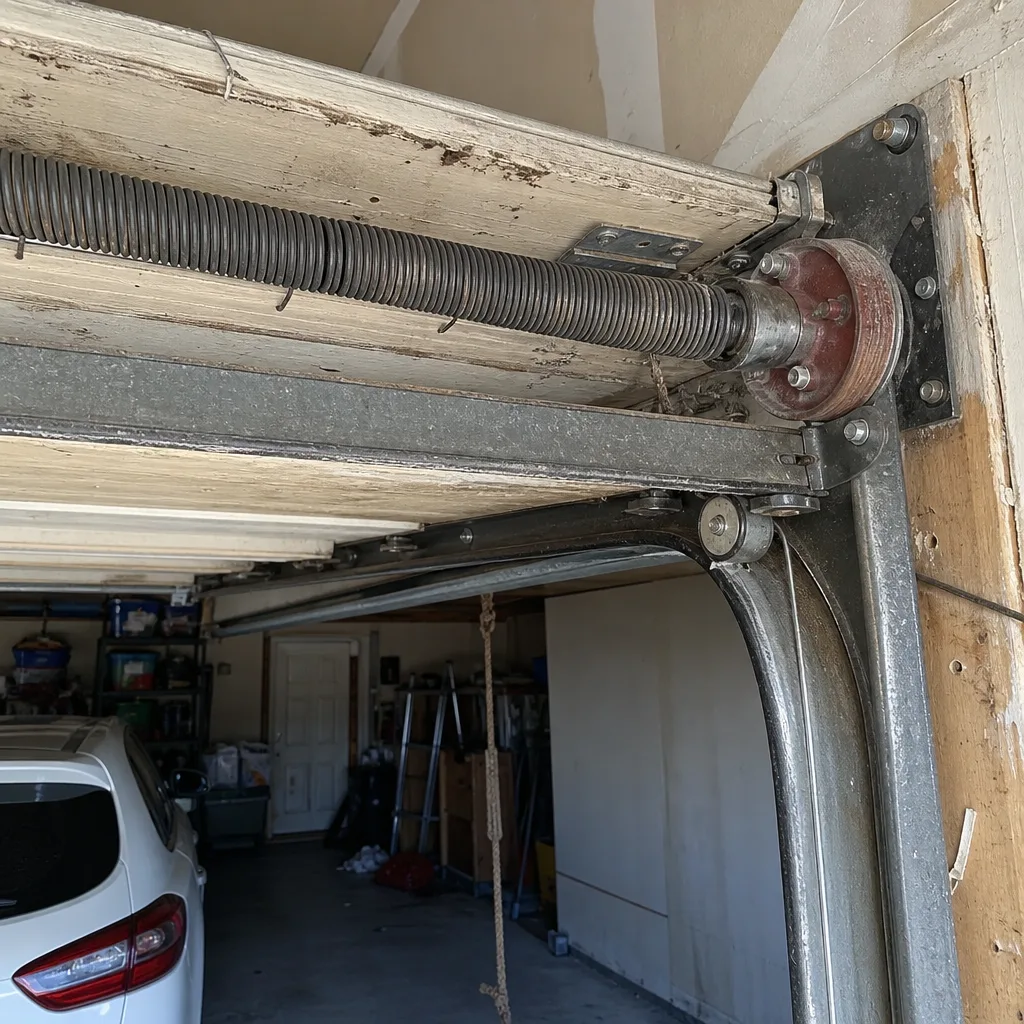
- With the door closed, look at the torsion spring above the opening. A healthy spring has even spacing between coils, no visible separation or gaps, and no surface rust beyond light cosmetic spotting.
- With the door open, listen as it rises and lowers. A spring that’s losing balance will cause the opener to strain, and you’ll hear a subtle grinding or moaning from the opener rail that wasn’t there in spring.
- Test the door’s own weight balance by pulling the emergency release cord (door should be closed) and lifting the door manually. A properly calibrated door holds its position at waist height. If it drops, the spring tension has shifted with the temperature change and needs recalibration.
If step three fails, that’s the moment to call for Garage Door Repair in Elk Grove before the spring snaps on a cold morning. Spring recalibration in October costs a fraction of a full spring replacement in January, and it’s done in one visit.
UV Damage and Weatherstripping: What Actually Holds Up
Elk Grove gets very little rain, but it gets relentless sun. Between May and September, your garage door’s bottom seal, side weatherstripping, and top header seal absorb direct afternoon UV radiation almost every day. This is a different degradation pattern than what coastal California doors experience. Where coastal weatherstripping fails from moisture and mildew, Elk Grove weatherstripping fails from the material drying out, becoming brittle, and cracking.
Most factory weatherstripping, especially the PVC vinyl that comes standard on doors from brands like Clopay and Amarr, loses meaningful pliability after two or three Elk Grove summers. If you’re comparing brands, read our Choosing the Right Garage Door Brand: A Buyer’s Guide for Elk Grove. When that happens, the seal stops conforming to the concrete floor, and gaps open up. Those gaps let dust in during the dry season, and damp air during fog season.
What material actually holds up here? EPDM rubber. EPDM weatherstripping resists UV degradation far better than PVC or standard vinyl, which is why we recommend EPDM bottom seals and perimeter weatherstripping for nearly every Elk Grove door we service. It’s not a budget upgrade, but it tends to last roughly twice as long in this specific climate. Whatever material you use, add weatherstripping inspection to your seasonal checklist twice a year: once in March after the first warm stretch, and once in October after the final heat spike.
Tule Fog, Steel Panels, and Bottom Seals
Tule fog is a Central Valley phenomenon, and Elk Grove gets a real dose of it between late December and early February. The fog sits low and thick for days at a stretch. The air is saturated with moisture for hours at a time. Here’s the part most homeowners miss: tule fog affects steel garage door panels and bottom seals differently than rain does, and adjusting for that matters.
Rain hits a door, runs off, and dries when the sun comes out. Fog condensation, by contrast, penetrates. It gets into the seams between steel door sections, collects on the bottom seal’s inner lip, and sits inside the weatherstripping channels for days. That’s why you’ll often see surface rust or paint bubbling at the bottom edge of steel panels after two or three fog weeks, even on doors that have never seen a rain puddle.
After every heavy fog stretch in Elk Grove, we recommend a five-minute check:
- Open the door halfway and run a bare hand along the bottom panel edge, looking for bubbling paint or raised surface rust.
- Inspect the interior side of the bottom seal for trapped moisture or debris that holds damp against the panel.
- Wipe down the exterior panel seams and the top of the bottom weatherstrip with a dry microfiber cloth.
- Check that the opener’s safety sensor lenses on either side of the track are dry and clean. Fog leaves a fine film that can trigger false obstruction signals.
Doors built by Raynor and Wayne Dalton ship with a factory rust-treatment on the steel substrate, and in our experience those panels handle repeated fog cycles better than untreated steel. But all steel panels benefit from a quarterly wipe-down during fog season, and a spot-application of a rust-inhibiting sealant at the first sign of bubbling keeps a small issue from becoming a panel replacement.
The Elk Grove Month-by-Month Maintenance Calendar
Here is the maintenance calendar we use with our own Elk Grove customers, calibrated to the valley’s actual climate rather than a generic four-season template.
January – Fog Season Inspection
Tule fog is at its peak. Focus on moisture. Wipe down panel seams, check the bottom seal for trapped damp, and keep safety sensor lenses clean. If the door groans more than normal on cold mornings, note it. Cold weather thickens the grease on older openers and puts more load on the motor. This is also the month we see the most broken-spring calls that were delayed from October.
February – Roller and Track Sound Check
Dry valley air and winter temperature swings accelerate roller wear. Open the door and listen. Metal-on-metal grinding means roller bearings are shot. A smooth door with a slight hiss is normal. If the door shudders or wobbles, the track alignment has likely shifted slightly. These are quiet failure signals that many homeowners miss until a roller breaks.
March – Wind Event Walk-Around
Elk Grove gets real valley wind in March, and a windy day puts lateral pressure on the door panels and the track brackets. After a windy week, check that all four track brackets are tight against the framing, that the rollers haven’t popped out of the track, and that the bottom seal hasn’t been lifted away. This is also the month for the first lubrication pass of the year: white lithium grease on the torsion spring, silicone spray on the rollers and hinges, and graphite on the track itself.
April – Opener Load Test
As temperatures warm up, test the opener under normal load. Disconnect the door using the emergency release and lift it manually to feel for the correct balance. A 7-foot LiftMaster or Chamberlain opener that’s been running well all winter should lift the door smoothly without laboring. If the opener feels hot to the touch after a single open/close cycle, the spring tension has shifted and the opener is carrying weight it shouldn’t.
May – Pre-Heat Weatherstripping Check
Triple-digit heat arrives soon. Check the bottom seal for early cracking and the top header seal for shrinkage. If you’ve had the same PVC seal for more than two summers, this is the month to plan a replacement. Doing it before the heat spike means it cures and sets properly instead of baking immediately.
June – Heat Season Tension Check
The first 100-degree week is the real test of the spring’s current calibration. Metal expands in the heat and a spring that was borderline in April will show it now. Listen for any change in how the door sounds, and watch the opener for slowdown. This is the last low-cost calibration window before the October failure season arrives.
July – Panel and Paint Inspection
Elk Grove’s most intense sun will find any weak point in your door’s finish. Walk the exterior and look for paint checking, bubbling, or clearcoat delamination, especially on south-facing doors. A door that’s in strong UV all afternoon needs annual paint inspection if it’s a wood-composite door, and every two-year sealant treatment if it’s a factory-painted steel door.
August – Mid-Summer Seal and Hardware Check
The weatherstripping has now been in the heat for three months. Any seal that started cracking in May will be visibly degraded now. Check the torsion spring for surface rust, especially on the winding cone and the set screws. Oil-based lubricant vanishes faster in this heat, so if the spring looks dry, reapply lightly.
September – Pre-Transition Walk-Through
This is the preparatory month. Walk through the full door operation: visual spring inspection, manual balance test, track tightness check, roller and hinge lubrication, weatherstripping condition check. Anything that looks marginal should be scheduled now rather than waiting for the cold snap that’s four weeks away.
October – The Critical Calibration Month
This is the month we opened with, and it’s the one that prevents the most mid-winter emergency calls in the Sacramento Valley. The first overnight temperature drop of 25 degrees or more is the signal. Do the manual balance test. Listen carefully to the opener on a cold morning. If anything is off, get it calibrated now. A service call in October is predictable and scheduled. A broken spring in December is neither.
November – Pre-Winter Final Pass
This is the last warm-weather-friendly window for any mechanical work or seal replacement. If your bottom seal showed gap wear in September and you didn’t change it, do it now. Cold weather makes rubber stiffer and installation slower. The door should be fully lubricated, balanced, and sealed before Thanksgiving.
December – Cold Morning Listen
Cold grease, cold metal, and cold weather combine to reveal any remaining weakness in the system. The first 35-degree December morning is a diagnostic tool. Open the door and listen. Watch the door for hesitation on the way up. This is the moment to catch a struggling spring before it snaps entirely, and it’s the right time to note anything for a January service visit if needed.
Seasonal Care for Openers and Smart Drives
The opener most Elk Grove homes run is a belt-drive or chain-drive unit from LiftMaster, Chamberlain, Genie, or Craftsman. All of them share the same two seasonal vulnerabilities in this climate: greased-gear viscosity changes in cold months, and capacitor fatigue in hot ones.
Here’s what that means in practical terms. The grease inside the opener’s gear housing thickens when the garage stays cold for days on end, which is normal, but it means the motor works harder on fog-season mornings. That extra load shortens the life of the plastic drive gear, which is the part that strips first on most openers after eight to twelve years. If your opener ever makes a grinding sound for two or three seconds after the door stops moving, that’s the gear slipping against the worm drive. It’s a repairable issue, and it’s caught early by listening on cold mornings.
In summer, the more common failure is the capacitor. A garage in Elk Grove can hit 115 degrees or higher by mid-afternoon, and that ambient heat degrades electrolytic capacitors faster than the opener’s own motor heat does. When a capacitor starts to fail, the opener either won’t start, starts slowly, or opens the door only halfway. This is a Garage Door Opener Repair in Elk Grove issue that’s consistently misdiagnosed as a dead opener. Capacitors are a specific fix, and they’re one of the most common opener repairs we do in July and August.
Smart drive and battery backup units from LiftMaster have an additional seasonal consideration: the backup battery’s internal chemistry degrades faster in sustained heat, and it cycles more often during winter’s occasional power dips. If your opener has battery backup and you haven’t checked it in two years, checking the battery’s charge test button is a quick annual task. If the battery won’t hold charge, replace it before the next fog-season power flicker.
DIY Inspection vs. Professional Repair: Where the Line Is
We want to be direct about this. Almost every seasonal maintenance task in this guide is a visual or auditory check that any observant homeowner can do safely with the door closed. But every mechanical adjustment on a garage door carries real risk, and the two things you should never touch yourself are the torsion spring and the lift cables.
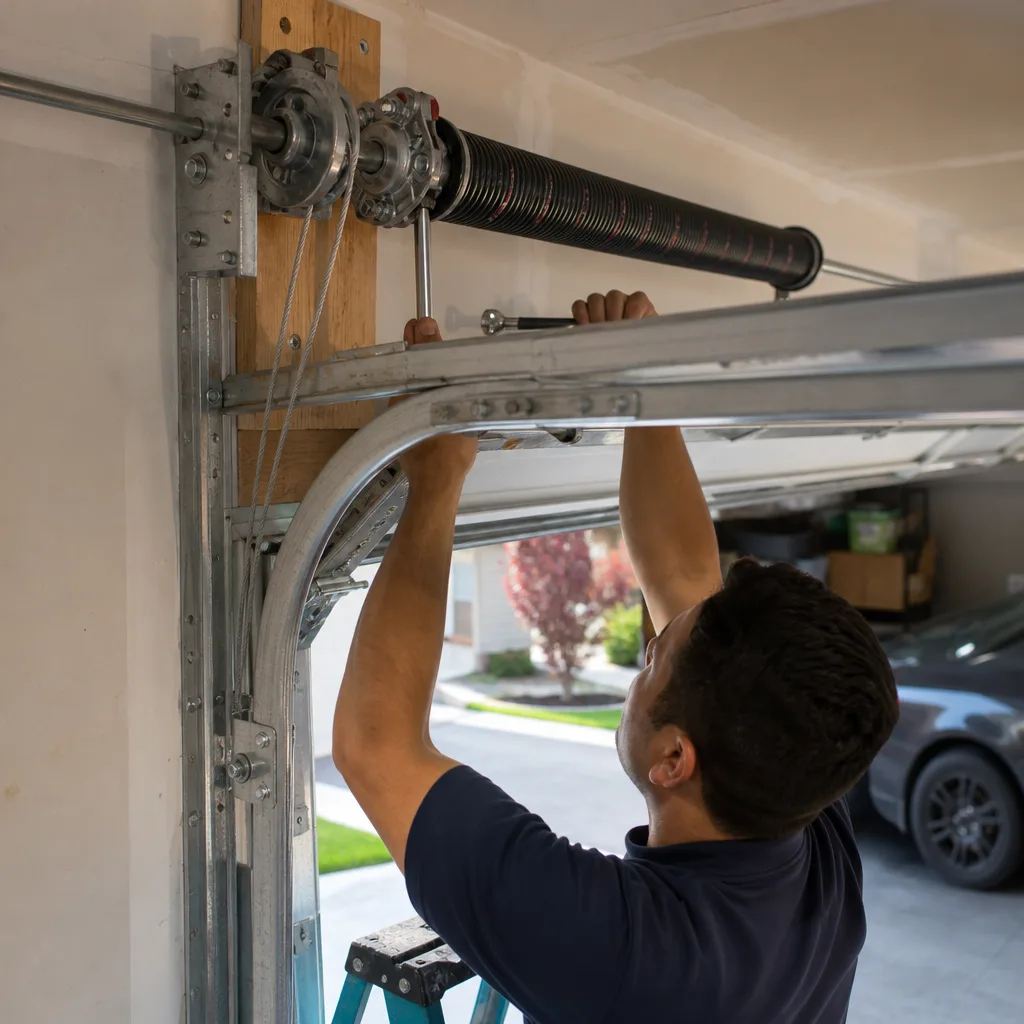
A torsion spring under tension stores hundreds of pounds of torque. The winding cone, the set screws, and the spring itself are under constant rotational load even when the door is fully closed. If a spring or cable lets go while you’re near it, the result can be severe hand, arm, or facial injury, or worse. This is not a scare tactic. It’s the reality of working on garage-door hardware with hand tools when you haven’t been trained to read tension states.
The same goes for cables. The lift cables run along both sides of the door and carry the door’s entire weight during every open and close cycle. A frayed cable that snaps under load moves fast and unpredictably. If you see a fray on a cable, don’t attempt to adjust or replace it. Call someone who does this every day.
Here’s the line we draw for every Elk Grove homeowner we talk to:
- You can and should do: visual spring inspections, manual balance tests with the door closed and you clear of the spring, lubrication, weatherstripping inspection, panel and track-bracket tightening, opener sound checks, sensor cleaning, and monthly manual open/close tests.
- You should not attempt: spring winding or unwinding, spring replacement, cable replacement or re-routing, track re-bending, panel replacement, or opener gear repair.
One call covers the door and the opener. If you find something during a seasonal walk-around and aren’t sure what it means, describe what you’re seeing or hearing and we’ll tell you whether it’s a real issue or a normal quirk. That’s the whole point of working with a garage-door-only specialist: we diagnose first, recommend second.
Common Mistakes to Avoid
- Using WD-40 on rollers and hinges. WD-40 is a solvent, not a lubricant. It cleans metal and then evaporates, leaving the roller dry and more prone to wear. Use a silicone-based lubricant on rollers and hinges, white lithium grease on the torsion spring, and nothing liquid on the opener rail except the manufacturer’s recommended grease.
- Waiting until the door stops working to do anything. Every broken spring and stripped opener gear in Elk Grove gives warning signs in the weeks before failure. The October calibration check and the December cold-morning listen exist to catch those signs while the repair is still scheduled rather than emergency.
- Treating all weatherstripping as interchangeable. PVC and vinyl look like EPDM but fail in Elk Grove’s UV intensity in two or three seasons. If you’re replacing a seal, use EPDM and save yourself a repeat job in 24 months.
- Lubricating without cleaning first. Adding fresh grease on top of accumulated grit and dust creates an abrasive paste that accelerates wear. Wipe down the spring, rollers, and hinges with a dry cloth before applying fresh lubricant.
- Ignoring a slow-opening door in July. A door that opens noticeably slower in summer heat is often a failing capacitor or a spring that’s lost tension. The opener is working harder than it should, and the extra load will shorten its life further. Slow in July means replacing something in the winter.
- Adjusting the opener’s force settings to compensate for a heavy door. If the door won’t open without nudging up the force dial or the app’s force setting, the real problem is spring balance. Increasing opener force masks the symptom and puts a larger load on the gear train. Fix the spring, not the setting.
- Never cleaning the safety sensors. Fog and summer dust both leave a film on the sensor lenses, and that film can cause false obstruction stops, where the door reverses as if something is in the way. A quick wipe twice a season prevents this entirely.
When to Call a Professional
Call a garage door professional when the door won’t balance at waist height during the manual test, when the spring shows visible separation between coils, when the opener makes a grinding sound that lasts after the door stops, when a cable looks frayed or rusted at the crimp, or when the door has come off its tracks even by an inch or two. These are not tune-up items. They are mechanical failures in progress, and they become more expensive the longer they run. If you’re in any of these situations, Elk Grove Garage Door Service offers free estimates in Elk Grove, and the price is quoted and agreed before any work starts. Call (844) 766-3083.
Frequently Asked Questions
Do a full visual inspection and balance test twice a year, once in March and once in October. Add lubrication during each of those checks, and add the tule-fog wipe-downs in January and February if the fog season is heavy. That’s a 20-minute routine per season and it covers the majority of preventable spring and opener failures. Find more guides & resources on our blog.
Spring replacement in Elk Grove typically runs between $180 and $340 depending on the door’s size, weight, and whether you’re replacing one spring or the pair, and the price is confirmed before any work begins. If one spring has snapped, the other is usually near the end of its cycle life too, and we’ll give you an honest quote before touching anything. Call (844) 766-3083 for a free estimate.
Yes, and it happens more often in climates with fast temperature swings than in consistently cold ones. Metal contracts when it cools, and a spring that’s already near the end of its cycle life snaps at the point of contraction. Elk Grove sees exactly this pattern every October, when daytime highs drop 25 or 30 degrees within a week.
Mostly. Rust prevention during fog season means keeping panel seams and the bottom seal dry, wiping down the exterior after multi-day fog stretches, and treating any early surface rust with a rust inhibitor before it spreads. Doors with factory rust-treatment handle fog better than untreated steel, but even those benefit from dry wipe-downs.
EPDM rubber. PVC and standard vinyl weatherstripping degrade quickly in sustained UV exposure, which is exactly what Elk Grove doors get from May through September. EPDM lasts roughly twice as long in this climate and it stays pliable at lower temperatures, which also helps during fog-season cold mornings.
Yes. We work on doors and openers from all major manufacturers, including LiftMaster, Chamberlain, Genie, Clopay, Amarr, Wayne Dalton, Craftsman, and Raynor. Whatever brand is on your door, we know it. That’s the point of our service model: we work across manufacturers, so the recommendation you get is about your door and your budget, not about which brand we stock.
The Bottom Line
Elk Grove doesn’t need a winter-prep garage door routine copied from a Minnesota checklist. It needs a calendar built around the valley’s actual stress points: the October temperature swing that breaks springs, the triple-digit summer UV that kills weatherstripping, the tule fog that corrodes steel and confuses safety sensors, and the March wind that works track brackets loose. Four short seasonal checks, a few targeted lubrication passes, and EPDM weatherstripping cover almost all of it. And when the seasonal check finds something that needs real work, a garage-door-only specialist handles it in one visit, covering both the door and the opener. Call (844) 766-3083 for a free estimate on any repair, opener service, or Garage Door Installation in Elk Grove you’ve been putting off.
Written by the team at Elk Grove Garage Door Service, serving Elk Grove since 2018.
See the difference
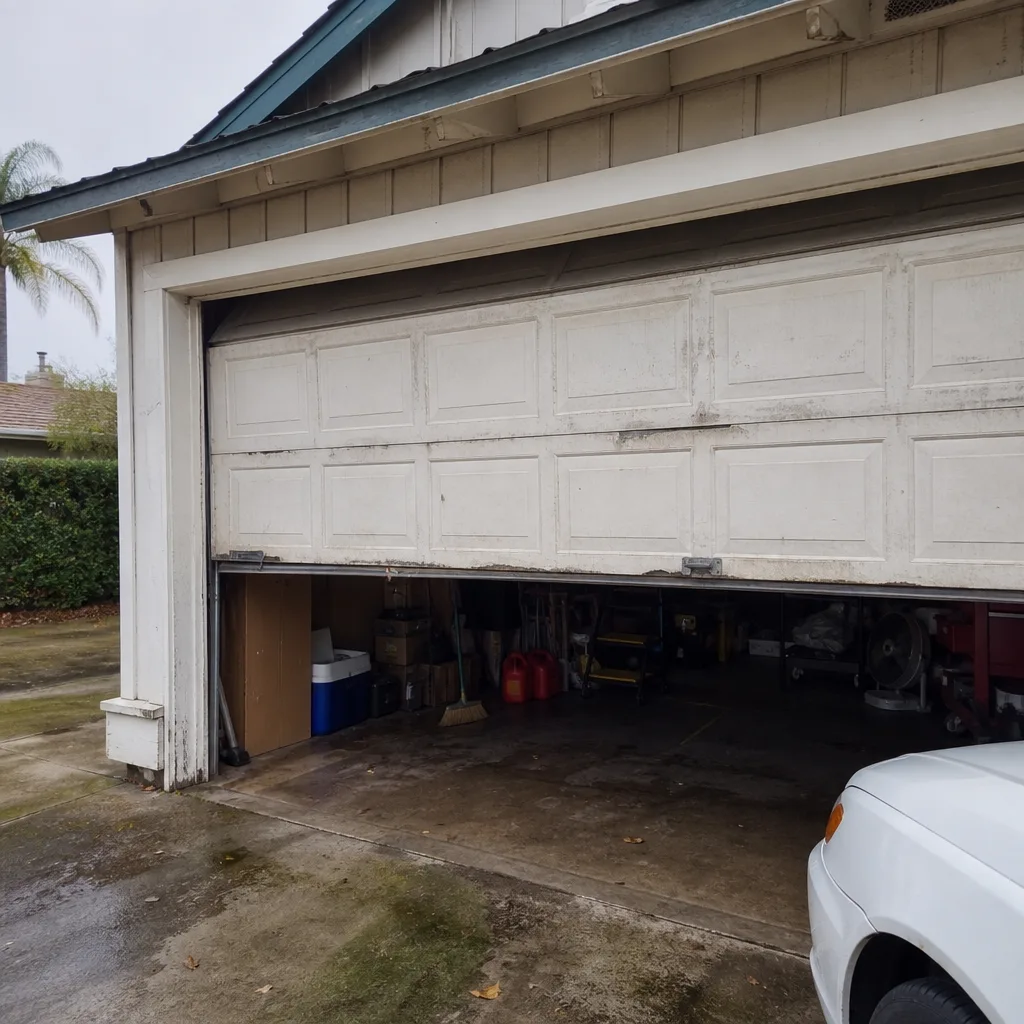 Before
 After
 Before
 After
 Before
 After