
Last updated October 31, 2026
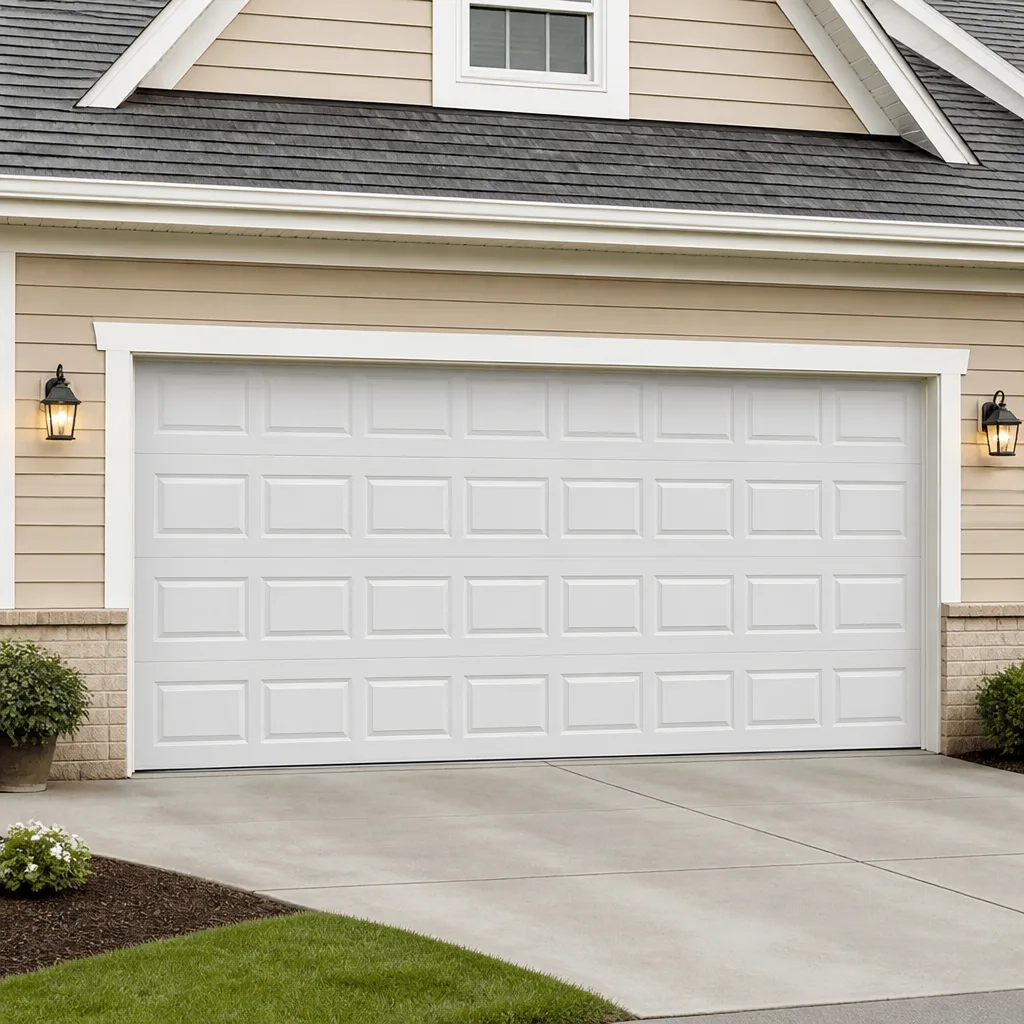 Raised-panel steel
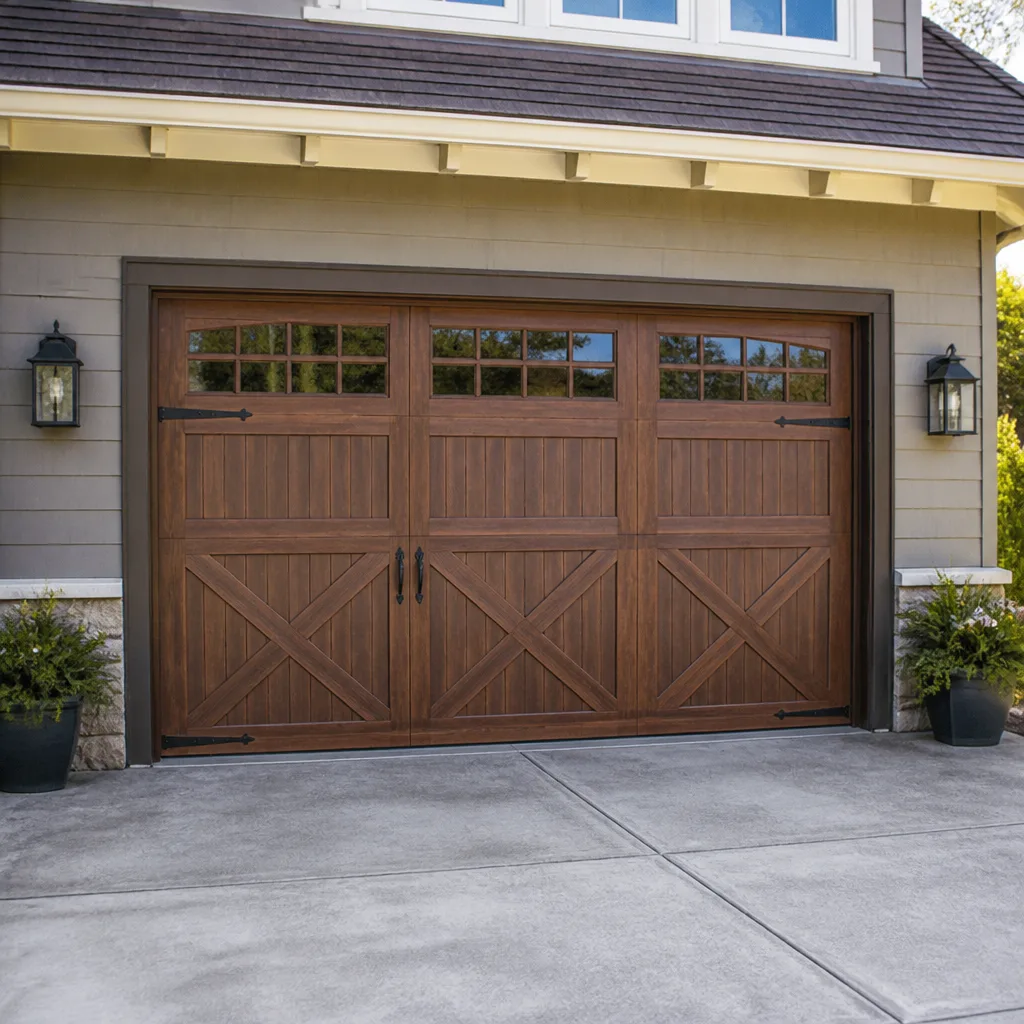 Carriage house
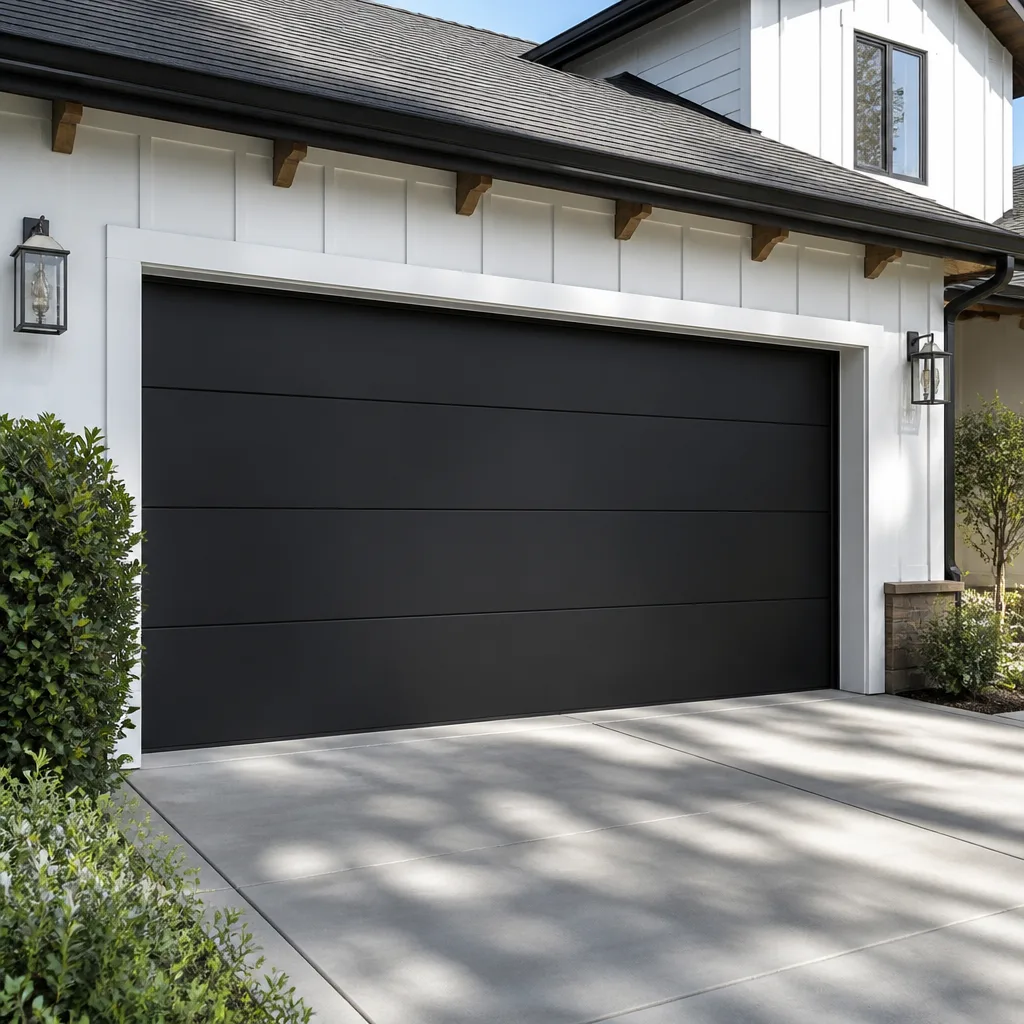 Modern flush
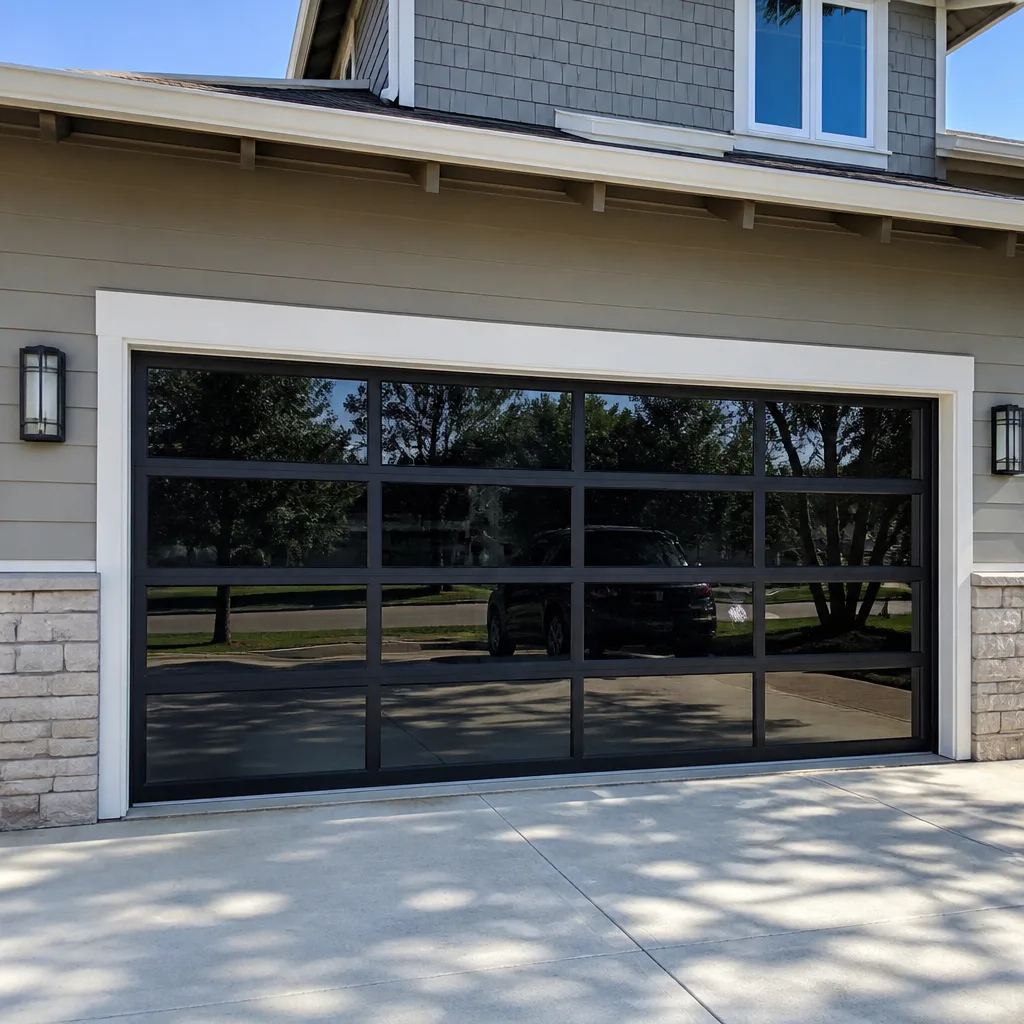 Full-view glass
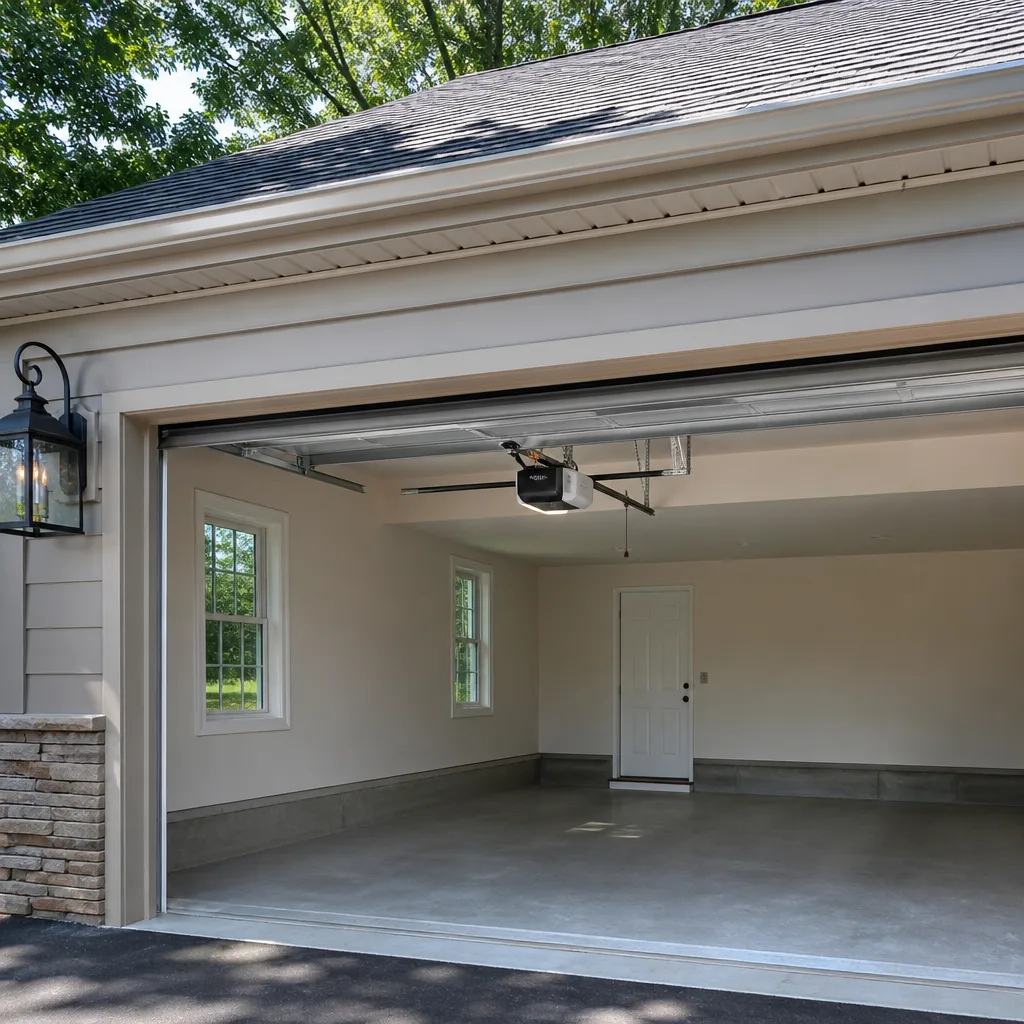 LiftMaster openers
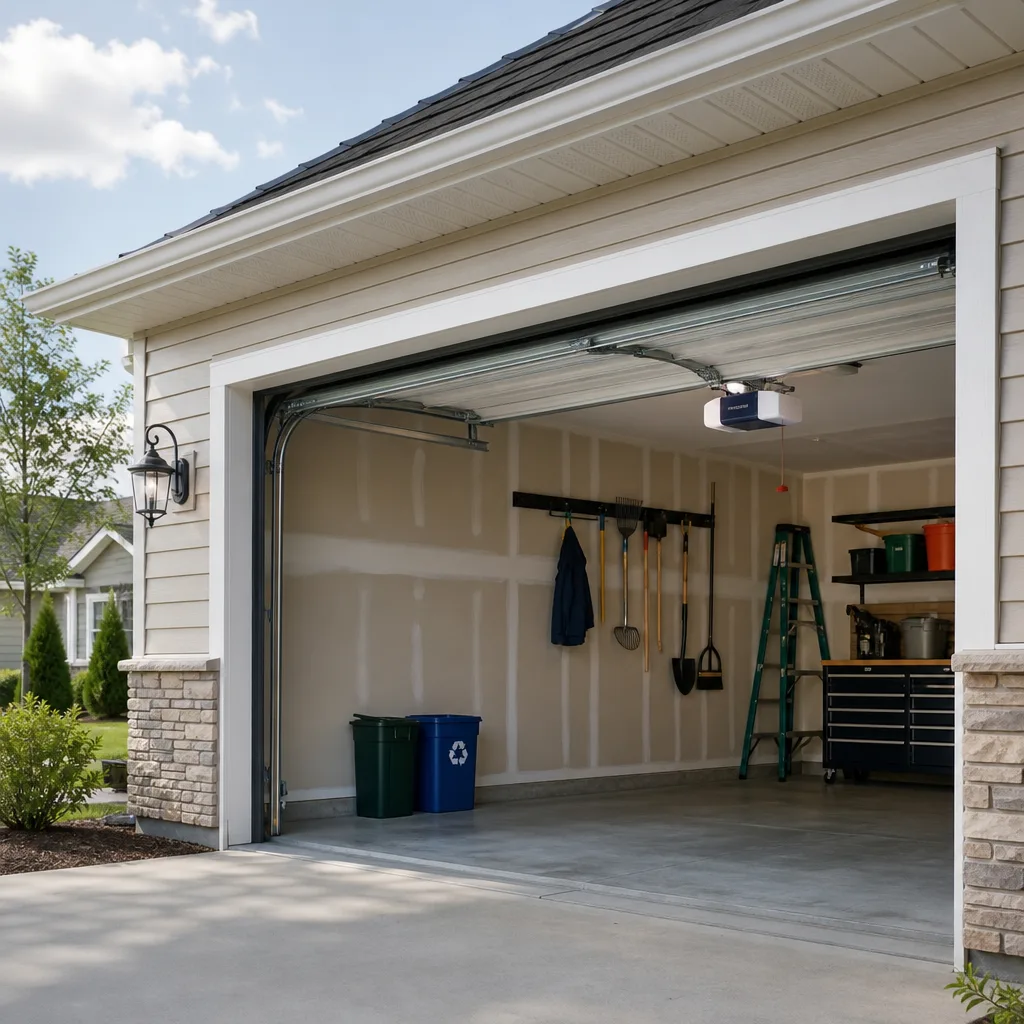 Chamberlain openers
Full 25-point door and opener safety check with every visit - springs, cables, rollers, tracks, and your LiftMaster or Chamberlain opener included
You get a price before we start. It does not change when the truck arrives.
Get your free estimateThe Complete Guide to Garage Door in Elk Grove
Here’s a number that should make you pause: the average Elk Grove homeowner cycles their garage door roughly 1,500 times a year. That’s 1,500 chances for a spring to weaken, a cable to fray, or a sensor to misalign. Yet most people know less about their garage door than any other major mechanical system in their house. They know their HVAC filter schedule. They know their water heater’s age. But the garage door, the largest moving object in their home, gets ignored until it fails. This guide is different from the ones written to sell you a new door. We’re going to walk through how garage doors actually work, which parts fail first in Elk Grove’s specific climate, how to read a quote without getting fleeced, and when a repair genuinely beats a replacement. No brand bias, no inventory to move, just the straight story from people who work on every major manufacturer.
Styles & brands we work with
Quick Answer
A garage door in Elk Grove is a system of interconnected mechanical and electromechanical parts: panels, springs, cables, tracks, rollers, and an opener. The two most common failure points are torsion springs and opener drive components, and both are repairable without replacing the whole door. The right decision between repair and replacement depends on door age, panel condition, and opener compatibility, not on what a salesperson needs to clear off their lot.
Table of Contents
- Anatomy of a Garage Door System
- How Elk Grove’s Climate Affects Your Door
- Why Opener Compatibility Should Anchor Your Decision
- Which Parts Fail First in Elk Grove
- What a Dealer Recommends vs. What an Independent Would Install
- How to Read a Garage Door Quote Line-by-Line
- Repair vs. Replace: A Decision Framework
- Common Mistakes to Avoid
- When to Call a Professional
- Frequently Asked Questions
- The Bottom Line
Anatomy of a Garage Door System
Before you can make smart decisions about your garage door in Elk Grove, you need to know what you’re actually looking at. Every residential garage door, whether it’s a Clopay, an Amarr, or a Wayne Dalton, follows the same basic architecture. Understanding this architecture is what separates homeowners who get taken advantage of from those who don’t.
The Door Itself
The door is made of sectional panels, typically four or five of them, connected by hinges. These panels ride on rollers inside a track system that runs from the floor, up the wall, and back along the ceiling. The panels themselves can be steel, aluminum, wood composite, or vinyl. In Elk Grove, steel is the most common because it handles the summer heat without warping and provides a solid balance of durability and cost. Panel construction matters more than most people realize. A builder-grade door with a thin steel skin over foam insulation will dent faster, transfer more heat into the garage, and generally feel flimsier than a mid-grade or premium panel. When we’re called out to garage door repair in Elk Grove, panel damage is one of the first things we assess because it often determines whether a repair makes financial sense.
The Counterbalance System
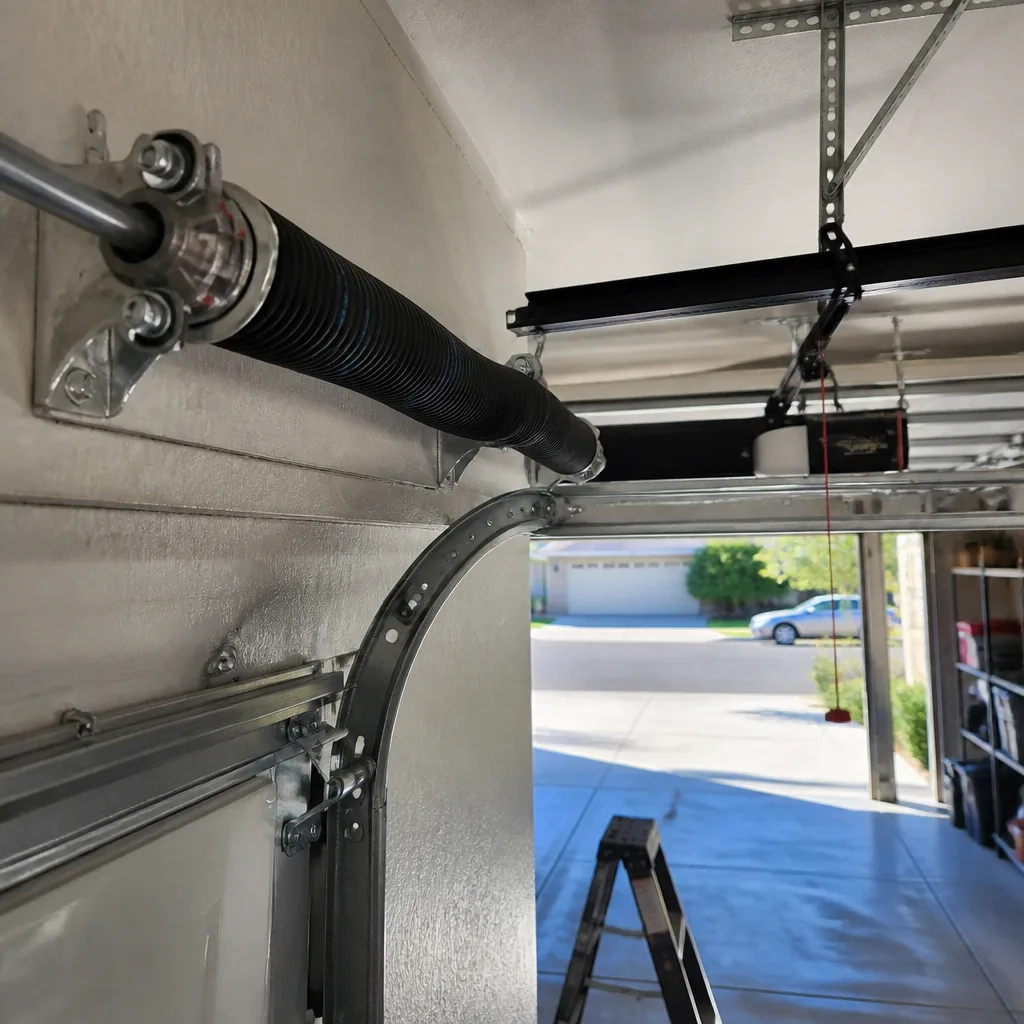
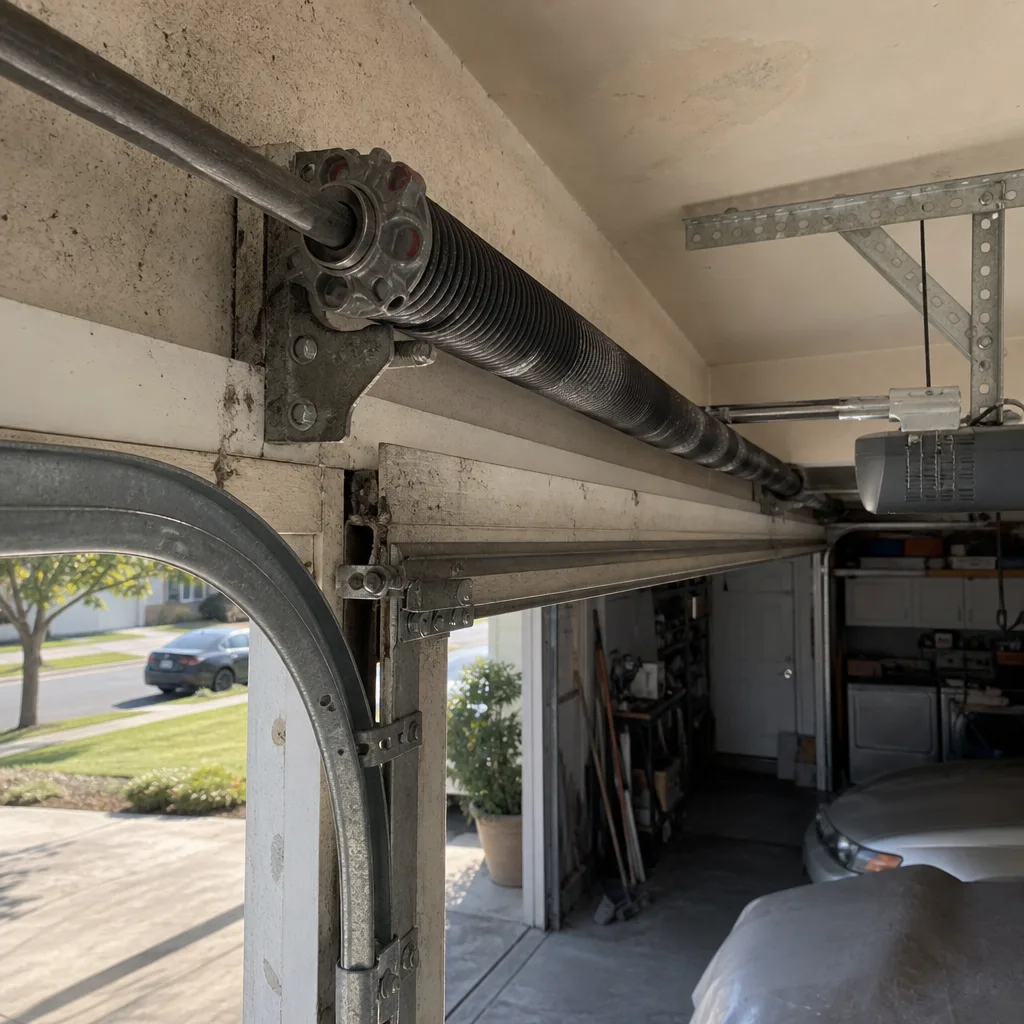
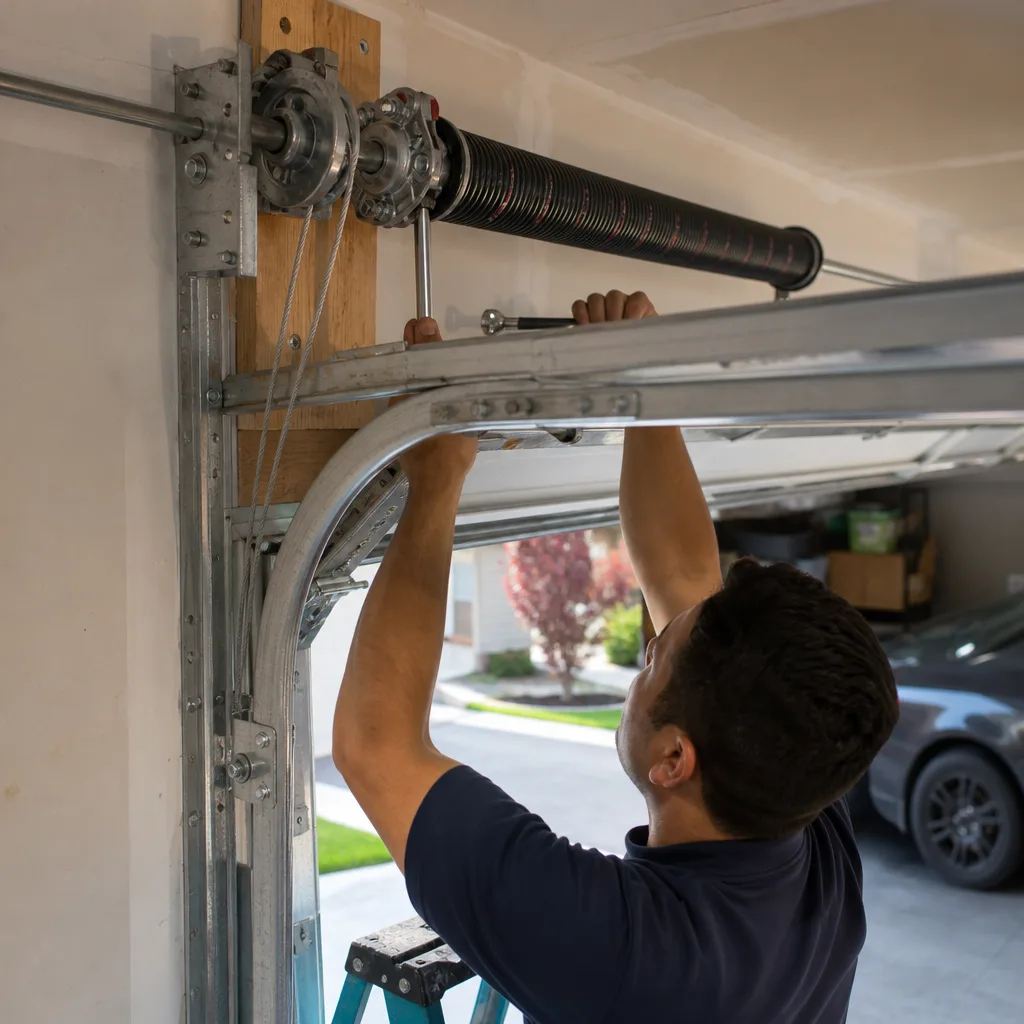
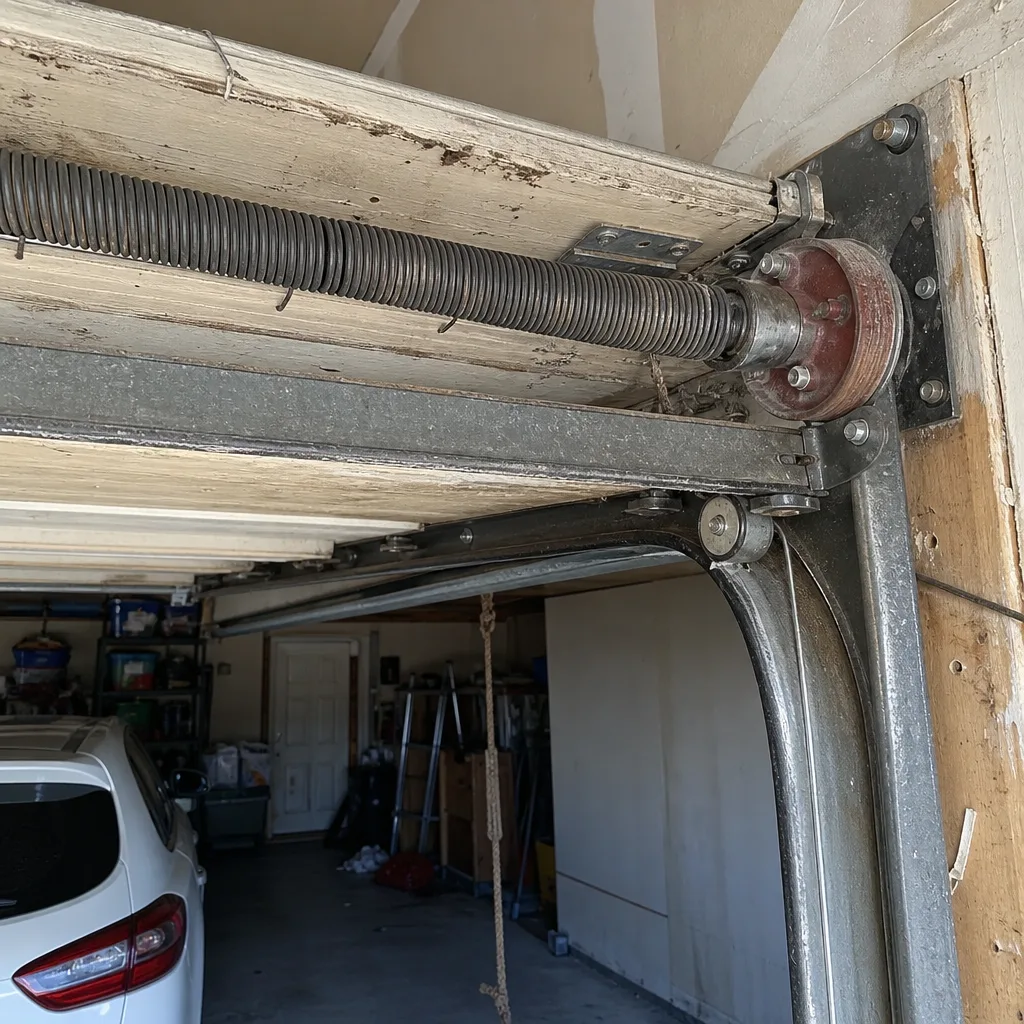
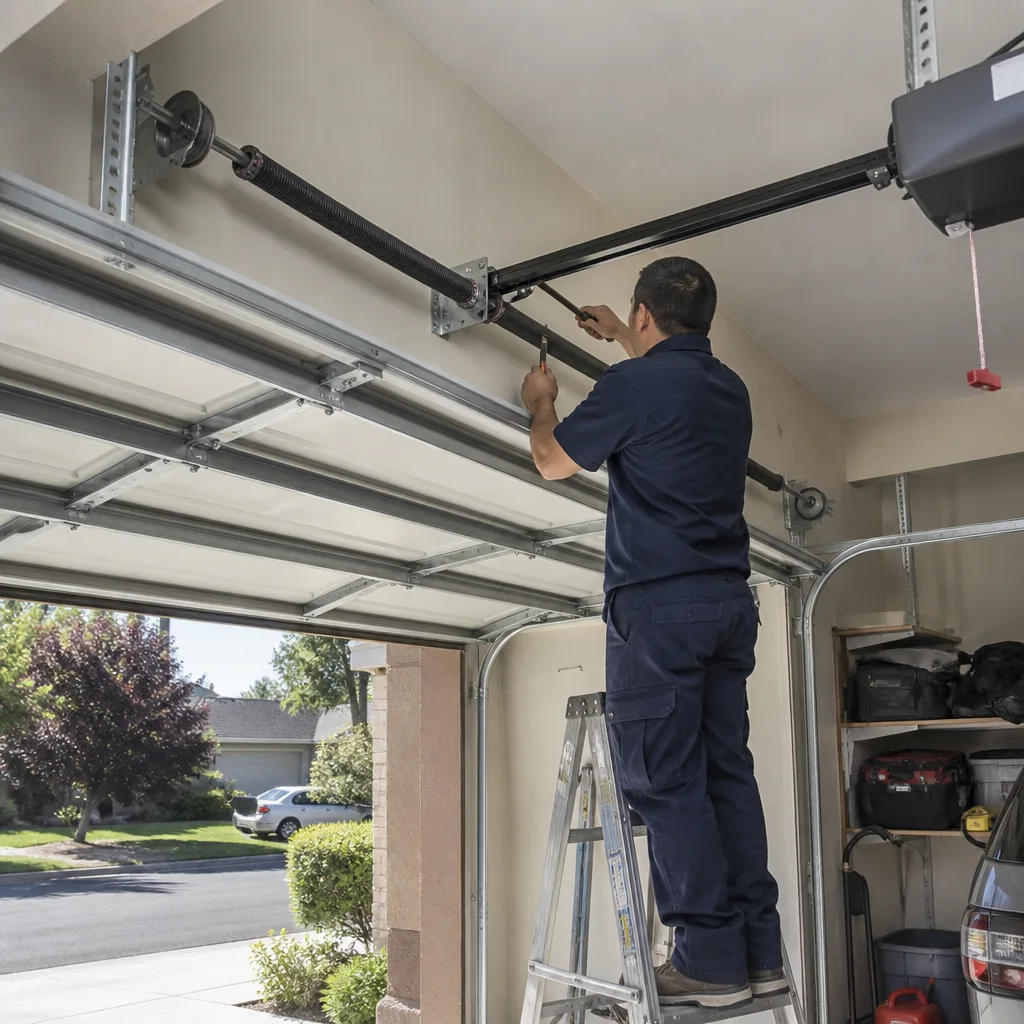
Here’s the part most people misunderstand. Your garage door opener does not lift the door. The opener provides the motion, but the actual lifting force comes from the springs. Torsion springs, mounted on a metal shaft above the door opening, store mechanical energy when the door closes and release it when the door opens. These springs are wound under extreme tension. A typical residential torsion spring can hold enough force to seriously injure or kill someone who tries to work on it without proper training and tools. This is the one component where DIY becomes genuinely dangerous. If your spring snaps, which happens suddenly and sounds like a gunshot, do not try to replace it yourself. Call a professional. The cables, which run along the sides of the door, work with the springs and are also under high tension. Cable replacement is less dangerous than spring work but still not a beginner project.
The Opener and Drive System
The opener is the electromechanical unit mounted on the ceiling of your garage. It contains a motor, a drive mechanism (chain, belt, or screw), logic board, and safety sensors. When you press the remote, the opener’s motor turns the drive mechanism, which moves a trolley connected to the door by a metal arm. The opener also has a safety system: photo-eye sensors near the floor that reverse the door if anything breaks the beam, and a force-sensing mechanism that reverses the door if it hits resistance. These safety features are why a garage door opener is not a simple appliance. They’re regulated for a reason: a door that doesn’t reverse properly can cause serious injury, especially to children and pets.
How Elk Grove’s Climate Affects Your Door
Every climate punishes garage door hardware differently, and Elk Grove has its own particular set of challenges. If you’ve lived here through a full summer, you already know the drill: long stretches of 95-plus degrees, intense sun exposure on west-facing garage doors, and a clay-heavy soil base that shifts with moisture changes. These conditions interact with your door in ways that a generic garage door guide won’t tell you about.
Heat and UV Exposure
Elk Grove’s summer heat does two things to a garage door. First, it accelerates oxidation of the metal components. Springs, cables, and hinges all develop surface rust faster here than in coastal California cities like Monterey or Santa Cruz. That’s not just a cosmetic issue. Surface rust creates microscopic pitting on spring wire, which weakens the spring over time and shortens its cycle life. A torsion spring rated for 10,000 cycles in a mild climate might fail at 7,000 or 8,000 in Elk Grove if the garage is uninsulated and faces southwest. Second, heat affects the door’s balance. Metal expands when hot, which changes the tension relationship between the springs and the door. A door that’s perfectly balanced at 70 degrees might be slightly off at 105 degrees, which puts extra strain on the opener motor and can cause premature wear on the drive gear.
In our experience, west-facing garage doors in Elk Grove take the worst beating. The afternoon sun hits them directly during the hottest part of the day, and the panel surface temperature can exceed 150 degrees. This is particularly rough on vinyl trims, weatherstripping, and any adhesive-based components. The bottom weatherseal, which keeps rainwater and pests out, tends to harden and crack within two to three summers here, where it might last five years in a coastal climate.
Clay Soil and Foundation Movement
Elk Grove’s soil is heavy clay. It expands when wet and contracts when dry. This means your garage slab moves slightly throughout the year. It’s usually a fraction of an inch, but it’s enough to matter. A garage door track that was perfectly plumb when installed will slowly drift out of alignment as the concrete shifts. The result: a door that rubs against the track, rollers that wear unevenly, and an opener that has to work harder to move the same door. Property owners in newer Elk Grove developments, where the soil is still settling, tend to see this more than owners in established neighborhoods. The fix is usually straightforward: realign the tracks and rebalance the door. But if you ignore it, the uneven wear eventually trashes the rollers and can oval-out the hinge points, which turns a $150 adjustment into a $400-plus repair.
What This Means for Ownership Cost
If you own a garage door in Elk Grove, you should budget for slightly more frequent maintenance than the national average. The springs will likely need replacement every 7 to 10 years instead of 10 to 12. The weatherseal will need replacing every 2 to 3 years. Rollers should be inspected annually and replaced every 5 to 7 years, sooner if you hear metal-on-metal grinding. None of this is catastrophic. It’s just the reality of owning a mechanical system in a hot, sunny climate with reactive soil. Knowing this going in means you won’t be surprised when a technician tells you your five-year-old door needs new weatherseal. It’s not an upsell, it’s Elk Grove.
Why Opener Compatibility Should Anchor Your Decision
Here’s the counterintuitive truth most homeowners never hear: when you’re deciding what to do with an aging garage door system in Elk Grove, the door style matters less than the opener compatibility. The opener is the brain of your system, and in the last decade, opener technology has changed dramatically. Smart home integration, battery backup, and security encryption have all become standard on new openers. If your opener is pre-2010, it’s using older technology that’s increasingly incompatible with modern remotes and safety standards. This matters because if you replace the door but keep an outdated opener, you’re essentially putting new tires on a car with a dying transmission.
The Brand Question
One of the advantages of working with a brand-agnostic company is that opener compatibility is something we can assess honestly, without bias toward any manufacturer. LiftMaster, Chamberlain, Genie, and Craftsman all make good openers, but they don’t all play well with every type of door. A heavy, insulated Amarr door might pair beautifully with one opener and strain another. A bargain Wayne Dalton panel might work fine with a basic chain drive but be overpowered by a premium belt drive. The point is, the opener and the door need to be matched as a system. This is where a garage door opener repair in Elk Grove specialist can help more than a general contractor: they understand the electromechanical side as well as the mechanical side.
What Modern Openers Offer
If your opener is more than 12 years old, the upgrade path is worth understanding. Modern openers from LiftMaster, Chamberlain, and Genie include technology that older units simply don’t have: battery backup so the door works during a power outage, which matters during Sacramento-area summer brownouts; smart home integration that lets you check whether the door is closed from your phone; and rolling code encryption that prevents thieves with code grabbers from opening your door. None of these features require a specific door brand. They’re opener-level upgrades. And here’s the part most dealers won’t tell you: if you’re happy with your existing door’s condition and your opener is the weak link, you can replace just the opener. It’s a fraction of the cost of a full system replacement, and it often solves 80% of the functionality complaints we hear.
Making the Right Call
- Check your opener’s age. If it’s over 12 years old, factor in opener replacement as part of any door replacement project. Adding it later doubles the labor.
- Ask about drive type. Belt drives are quieter, which matters if you have a bedroom above the garage. Chain drives are cheaper but louder. Screw drives are rare now but still work fine in Elk Grove’s dry climate.
- Think about smart features. Do you need your door to work during a power outage? Do you want phone control? These features are easier to add at replacement time than retroactively.
- Match the opener to the door’s weight. Insulated doors are heavier. A cheap opener on a heavy door will burn out its motor prematurely.
Which Parts Fail First in Elk Grove
Every component in your garage door system has a lifespan, and in Elk Grove’s climate, some components die earlier than others. Knowing which parts fail first helps you anticipate maintenance, budget for repairs, and recognize when a technician is recommending work you actually need versus work that pads the invoice. Here’s the frank breakdown, based on what we see day in and day out across Elk Grove.
1. Torsion Springs (7 to 10 years)
Springs are the hardest-working component in your system. Every time the door opens and closes, the springs cycle through a full tension and release cycle. At 1,500 cycles per year, a standard 10,000-cycle spring lasts around 6.5 to 7 years. Higher-cycle springs, rated at 20,000 or 30,000 cycles, last proportionally longer. In Elk Grove, you want to ask for higher-cycle springs when you replace them. The heat and humidity fluctuations we discussed earlier take a real toll on spring life, and the cost difference between a 10,000-cycle spring and a 20,000-cycle spring is usually $30 to $60 per spring. That’s cheap insurance. When a spring snaps, the door won’t open, period. The opener can’t overcome the dead weight. You’ll need a technician, and you’ll need to replace both springs at once since they wear evenly.
2. Weatherseal and Vinyl Trim (2 to 4 years)
The bottom weatherseal is a sacrificial component. It sits flush against the concrete, exposed to sun, rain, and constant compression when the door closes. In Elk Grove, the UV intensity hardens the rubber or vinyl within a few summers. Once it’s brittle, it stops sealing properly, which lets in dust, pests, and rainwater during winter storms. Replacing the bottom seal is a $60 to $120 job. It’s one of the cheapest maintenance items on the list and one of the most commonly neglected. If you can see daylight under your closed door, the seal is shot. The vinyl trim around the door frame, sometimes called the weatherstrip or jamb seal, lasts a bit longer: 4 to 6 years in Elk Grove before the sun makes it brittle and crack.
3. Rollers (5 to 7 years, less with lack of maintenance)
Steel rollers run inside the vertical and horizontal tracks. Over time, the bearings wear out, the rollers develop flat spots, and they start to chatter as the door moves. Nylon rollers are quieter and last longer than steel, but they cost more. In Elk Grove, a lack of lubrication is the biggest killer of rollers. The dry, dusty summer air combined with lack of grease on the bearings means metal-on-metal contact, which accelerates wear. If you hear a grinding or screeching sound when your door opens, that’s often a roller bearing failure. Replacing a full set of rollers costs $120 to $200 and takes about an hour. Comparing that to the $400-plus track and hinge damage that seized rollers can cause, it’s one of the best value maintenance items on this list.
4. Opener Drive Gear and Capacitor (5 to 10 years)
Inside your opener, the plastic drive gear is the first thing to fail. It’s a sacrificial component designed to strip out before the motor burns up. On a chain or belt drive opener, the gear connects the motor to the drive sprocket. Over time, the gear teeth wear down, especially if the door is out of balance and the opener is working harder than it should. The capacitor, which provides the initial voltage surge to start the motor, also has a finite lifespan. In Elk Grove, and elsewhere, capacitors tend to fail at 5 to 8 years. The good news: both the gear and capacitor are replaceable at a fraction of the cost of a new opener. A good garage door opener repair can replace these parts in under an hour.
5. Cables (10 to 15 years)
The lift cables, which run from the bottom brackets up to the drums on the spring shaft, are made of braided steel. They can develop rust, fraying, or kinking over time. When a cable fails, the door usually jams or becomes dangerously unbalanced, with one side of the door dropping while the other stays up. Cable replacement is a job for a professional because removing the cables while the springs are under tension is risky. The average lifespan of a properly maintained cable in Elk Grove is 10 to 15 years.
What a Dealer Recommends vs. What an Independent Would Install
Here’s a conversation that happens more often than you’d think. A homeowner calls a garage door dealer in the Sacramento area because their spring snapped. The dealer sends a technician, who takes one look at the door, notes that it’s 12 years old, and recommends a full replacement. The quote: $2,800 for a new door, opener, and install. The homeowner agrees, because the door is “old” and the dealer is “the expert.” Here’s what the dealer didn’t mention: the door’s panels were in good condition, the track was solid, and the only thing that actually failed was a $180 spring. A brand-agnostic technician would have replaced the spring, charged $250, and the homeowner would have gotten five more years out of that door.
The Incentive Problem
Dealers are in the inventory business. They order doors from Clopay, Amarr, or Wayne Dalton, warehouse them, and need to move the stock. The sales incentive is to sell new doors. An independent brand-agnostic technician has a different incentive: fix the problem in the most cost-effective way, because repeat business and word of mouth are worth more than a one-time door sale. At Elk Grove Garage Door Service home, we work on all the major brands but carry no inventory of doors. When a customer needs a new door, we source it. When a customer just needs a spring, we replace the spring and leave. There’s no sales quota, no inventory aging report, and no reason to push a replacement when a repair will do.
What We’d Actually Install on Our Own House
If one of our technicians were building a house in Elk Grove tomorrow, here’s what they’d spec: a mid-grade insulated steel door from Clopay or Amarr, because both companies make a solid, dent-resistant panel at a fair price; a belt-drive LiftMaster opener with a battery backup, because it’s quiet and reliable in power outages; higher-cycle torsion springs, at least 20,000 cycles, because the marginal cost is small and the longevity gain is real; nylon rollers instead of steel, because they’re quieter and last longer; a good quality bottom weatherseal. Total cost: around $2,500 to $3,500 for the complete system, installed. What we wouldn’t install: the cheapest builder-grade door, because the cost savings disappear within five years when the panels dent and the insulation fails; a chain-drive opener on a bedroom-adjacent garage, because the noise will drive you crazy; a Wayne Dalton torquemaster spring system, because they’re harder to service than standard torsion springs and most independent technicians don’t carry torquemaster parts on the truck. This is the kind of honest advice a dealer tied to one brand won’t give you.
How to Read a Garage Door Quote Line-by-Line
A garage door quote can be confusing, and some companies count on that confusion. They’ll bundle low-value add-ons into the price without explaining them, or they’ll quote a door without including the necessary hardware, then hit you with “extras” on install day. Here’s how to read a quote so you know exactly what you’re paying for.
Line 1: The Door Panel
The door itself should be itemized with make, model, size, insulation rating (usually R-value), and color. If the quote just says “16×7 steel door” without a brand or model, ask for specifics. A generic line-item is a red flag. You want to know whether you’re getting an Amarr Lincoln or a Wayne Dalton 9100. The price difference between models can be $500 or more, and the quote should tell you what you’re actually getting.
Line 2: Hardware
This covers springs, cables, hinges, rollers, and track. Some quotes lump hardware into the door price. Others itemize it separately. There’s nothing wrong with either approach, but you should know which one you’re looking at. Low-bid quotes often skimp on hardware: they’ll quote a high-cycle spring and install a standard one, or use steel rollers instead of nylon. Ask what’s included. If the quote doesn’t specify the spring cycle rating, ask. If the answer is vague, get another quote. You want a 20,000-cycle or higher spring in Elk Grove.
Line 3: The Opener
If the quote includes an opener, it should specify the brand, model, and drive type. A LiftMaster 8500 is a different animal than a Chamberlain B2405. The quote should also state whether the opener includes battery backup, Wi-Fi connectivity, and any smart home integration. If the line just says “garage door opener,” ask for the model number. A $150 difference in opener price is meaningful, and you deserve to know exactly what you’re paying for.
Line 4: Installation and Labor
Labor should be a separate line or at minimum a stated percentage of the total. If the labor isn’t itemized, you can’t compare quotes fairly. A $2,000 door with $800 labor is a $2,800 job. A $2,400 door with $400 labor is the same total, but the components are better. This matters.
Line 5: Disposal of the Old Door
Removing and disposing of the old door costs money. Most companies charge $75 to $150 for haul-away. Make sure this is included in the quote. If it’s not, you’ll be staring at an old steel panel in your driveway on install day, and that’s your problem now.
Line 6: Tax and Fees
Sales tax applies to the door and sometimes to labor in California. The quote should show the total with tax. Beware of quotes that say “plus tax and fees” without specifying what those fees are. A “processing fee” or “convenience fee” is almost always negotiable or avoidable.
The Price Is the Price
Before any work starts, you should have a firm price in writing. The price covers parts, labor, and disposal. If the technician finds something unexpected during the job, they should call you with a revised price before proceeding. That’s standard practice at any reputable garage door company, including ours. A technician who starts work and then presents a bigger invoice at the end is not operating in good faith.
Repair vs. Replace: A Decision Framework
Every homeowner eventually faces the question: fix the old door or replace it? The answer depends on a handful of factors, and emotion often clouds the analysis. A door that’s been reliable for 15 years feels like a friend. A door that’s been nothing but trouble feels like a drain. Here’s a rational framework to make the call.
When to Repair
Repair makes sense when the door’s structure is sound and the failure is isolated to a wearable component: a spring, a cable, a roller, a hinge. These parts fail independently of the door’s overall condition, and replacing them restores the door to full function. As a rule, if your door is under 15 years old, the panels aren’t dented or rusted through, and the track is straight, repair is usually the right call. A broken spring is a $200 to $350 fix. A full replacement is $1,800 to $4,000. The math is obvious. Similarly, an opener that’s making noise but still moving the door can often be repaired with a new drive gear or capacitor for under $200, versus $450 to $800 for a new opener. A good garage door repair in Elk Grove technician will tell you when a repair is smarter than a replacement, even though the repair generates less revenue. We diagnose first, recommend second.
When to Replace
Replacement becomes the right call when the door’s structure is compromised: panels are dented beyond repair, the door has substantial rust, or the bottom section is rotted from standing water. A damaged panel on a 15-year-old door can be impossible to match, and replacing a single panel can cost nearly as much as a mid-grade full door. Replacement also makes sense when the opener and door are both old enough that you’d be investing in a system that’s near the end of its useful life. If your 20-year-old door needs new springs, a new opener, and new weatherseal, you’re looking at $800-plus in repairs on a door that might fail structurally in two years. At that point, a garage door installation in Elk Grove is the better long-term investment. The key is that the recommendation should be based on your door’s condition and your budget, not on what the technician happens to have in stock. That’s the difference between a dealer and an independent specialist.
The Decision Tree
- Is the door structurally sound? Yes: proceed to repair. No: consider replacement.
- Are the panels in good condition? Yes: repair is viable. No: check if a single panel replacement is available before committing to a full replacement.
- How old is the opener? Under 10 years: keep it. Over 10 years: factor replacement into your long-term plan but don’t rush if it’s working.
- What’s the total cost of repairs vs. replacement? If repairs exceed 50% of replacement cost, replacement usually makes more sense.
- How long do you plan to stay in the house? If you’re moving within two years, a cheaper repair is almost always better. If you’re staying long-term, invest in the durable option.
Common Mistakes to Avoid
- Ignoring balance issues. A door that’s out of balance forces the opener to work harder, which shortens the motor’s life. If you can manually lift the door and it doesn’t stay put at waist height, the springs need attention. Ignoring this for a year in Elk Grove’s heat can burn out an opener gear prematurely.
- Lubricating the wrong parts. Spraying WD-40 on your rollers and hinges is a mistake. WD-40 is a solvent, not a lubricant. Use a silicone-based spray on rollers, hinges, and springs. Lubricate the opener rail with white lithium grease. Doing this twice a year will extend the life of your hardware measurably.
- Skipping weatherseal replacement. The bottom seal is cheap and easy to replace, and neglecting it leads to water intrusion during our winter storms, plus pests. A mouse or rat in the garage can chew through wiring and cause hundreds in damage. A $60 weatherseal replacement is cheap protection.
- Buying the cheapest door available. Builder-grade doors are thinner, less insulated, and more prone to denting. In Elk Grove’s heat, a non-insulated door turns your garage into an oven and compromises any room above it. A mid-grade insulated door pays for itself in comfort and durability within a few years.
- Replacing the opener when a $40 part would fix it. A loud opener or an opener that won’t start is often a gear or capacitor issue, not a motor failure. A reputable opener repair company will diagnose the problem and quote the part replacement before recommending a new unit. If the first thing out of a technician’s mouth is “you need a new opener,” get a second opinion.
- DIY spring replacement. This one bears repeating. Torsion springs are under lethal tension. The tools and training required to replace them safely are not worth the $200 to $350 you’d save. Every year, people are seriously injured attempting this job. Don’t be one of them.
- Not asking about the spring cycle rating. Standard springs are rated for 10,000 cycles. In Elk Grove, that’s roughly 7 years of use. High-cycle springs rated for 20,000 or 30,000 cycles cost a little more but last twice as long. If a technician replaces your springs without telling you the cycle rating, you’re likely getting the standard, shorter-life product.
When to Call a Professional
Some garage door work is genuinely DIY-appropriate: lubricating rollers, replacing a weather seal, tightening hardware, painting the door face. But many repairs are not. If a torsion spring snaps, call a pro. If a cable frays or comes off the drum, call a pro. If the door comes off its track, call a pro. If the opener’s logic board fails or it’s making a grinding noise from the motor, call a pro. The common thread: anything involving spring tension, cables under load, or track geometry requires training and specialized tools. A mistake on these systems can cause the door to fall, and a falling garage door can cause catastrophic injury. If you’re not sure whether a job is safe to tackle, err on the side of calling a professional. Elk Grove Garage Door Service offers free estimates in Elk Grove, call (844) 766-3083 to get a straight diagnosis and an upfront price before any work begins.
Frequently Asked Questions
A new garage door in Elk Grove typically costs between $1,800 and $4,500 installed, including the door, hardware, labor, and disposal of the old door. The price depends on door size, material, insulation rating, and whether you’re also replacing the opener. A mid-grade insulated steel door from Clopay or Amarr with a basic opener usually lands around $2,500 to $3,000. Call (844) 766-3083 for a free quote, and you’ll get a written price before any work is scheduled.
Yes, and it’s one of the most common calls we get in Elk Grove. A door that won’t open is usually caused by a broken spring, a stripped opener gear, a bad capacitor, or a misaligned sensor. All of these are repairable. The first step is diagnosing which part failed, which is where a brand-agnostic technician helps because they can test the opener regardless of manufacturer. Call (844) 766-3083, and we’ll diagnose the problem and give you a firm price before any work starts.
Spring replacement takes about one to two hours from arrival to cleanup and costs between $180 and $340 per spring in Elk Grove. Most doors have two springs, and both should be replaced at the same time because they wear evenly. We carry the springs on the truck, so there’s no second trip necessary. One call covers the door and the opener.
At Elk Grove Garage Door Service, the price is quoted and agreed upon before any work starts, and it’s the price you pay unless something genuinely unexpected is discovered. If that happens, the technician will stop and discuss the revised price with you before proceeding. You’ll never get an invoice bigger than the quote without a conversation first.
We work on all eight major garage door and opener brands: LiftMaster, Chamberlain, Genie, Clopay, Amarr, Wayne Dalton, Craftsman, and Raynor. Whatever brand is on your door, we know it. You don’t need to switch brands or buy a new door just because your existing one needs a repair. We diagnose first, recommend second.
Not necessarily. If your opener is under 10 years old and in good working condition, it can often be reused with a new door, provided the door’s weight is compatible with the opener’s lifting capacity. If your opener is older or you want modern features like battery backup, smart home integration, or a quieter belt drive, replacing the opener at the same time as the door saves on labor compared to doing it later. We’ll give you an honest recommendation based on your situation, not our inventory.
The Bottom Line
Your garage door is the largest moving object in your home, and in Elk Grove, it takes a beating from heat, UV exposure, and clay-heavy soil movement. Understanding how the system works, which parts fail first, and how to read a quote are the keys to not getting overcharged. The smartest homeowners treat their garage door like any other mechanical system: maintain it, repair worn parts promptly, and replace it only when the numbers make sense. If you want a straight diagnosis from a brand-agnostic specialist, call Elk Grove Garage Door Service at (844) 766-3083. We diagnose first, recommend second, and the price is agreed before any work starts.
Written by the team at Elk Grove Garage Door Service, serving Elk Grove since 2018.
See the difference
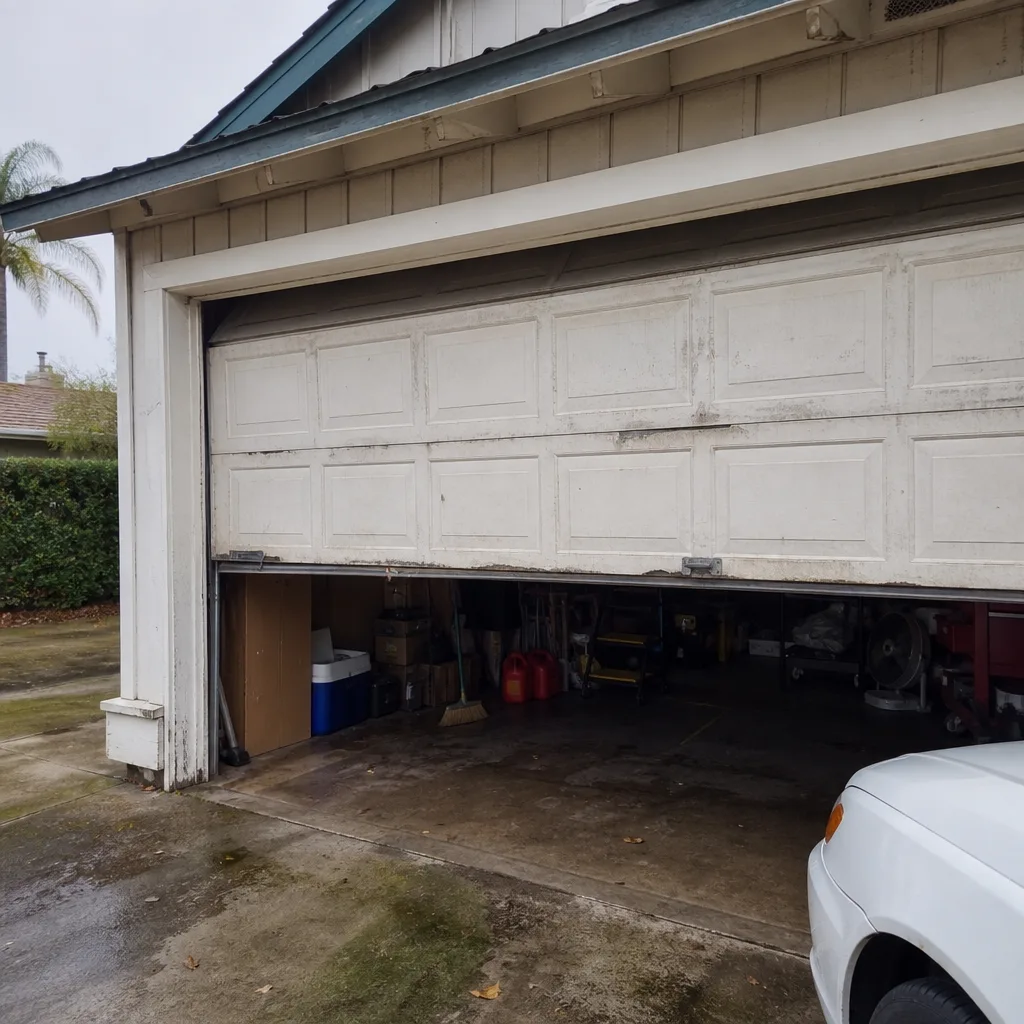 Before
 After
 Before
 After
 Before
 After