
Last updated October 31, 2026
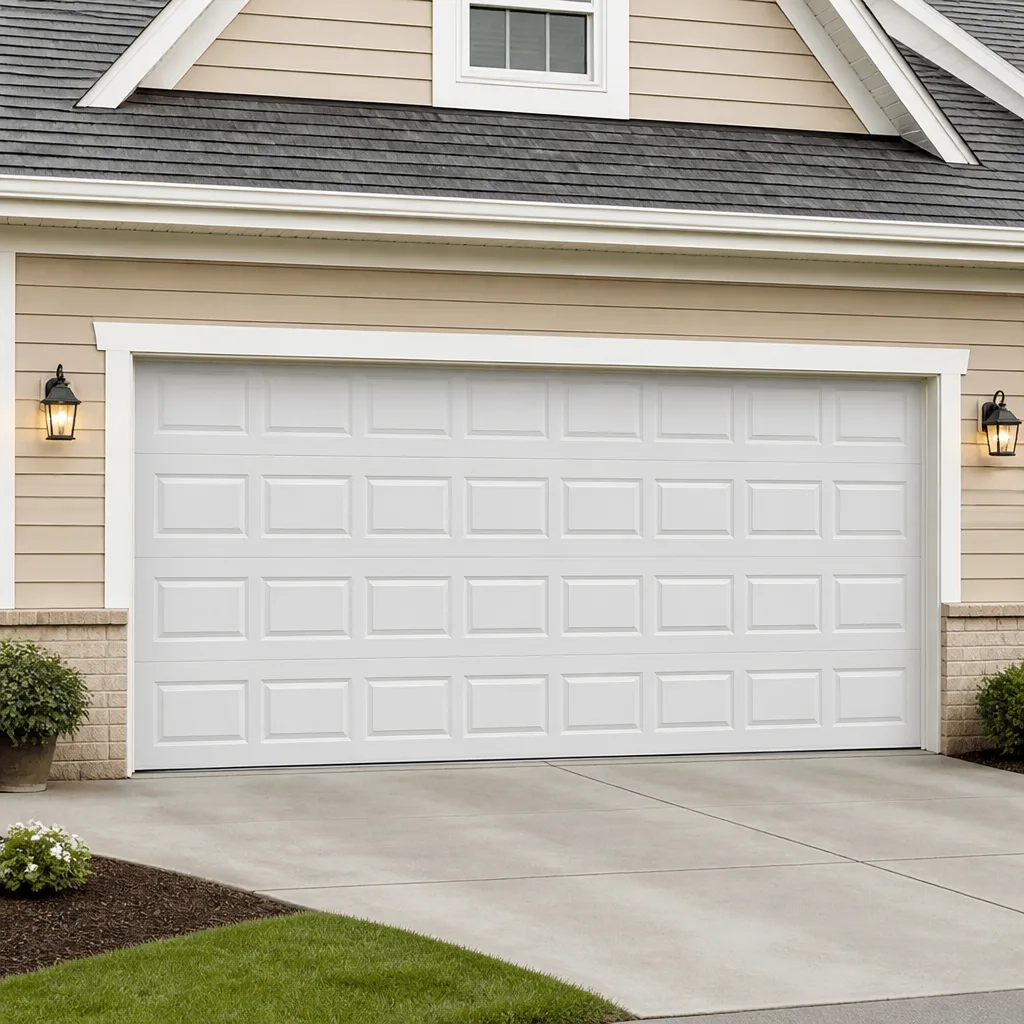 Raised-panel steel
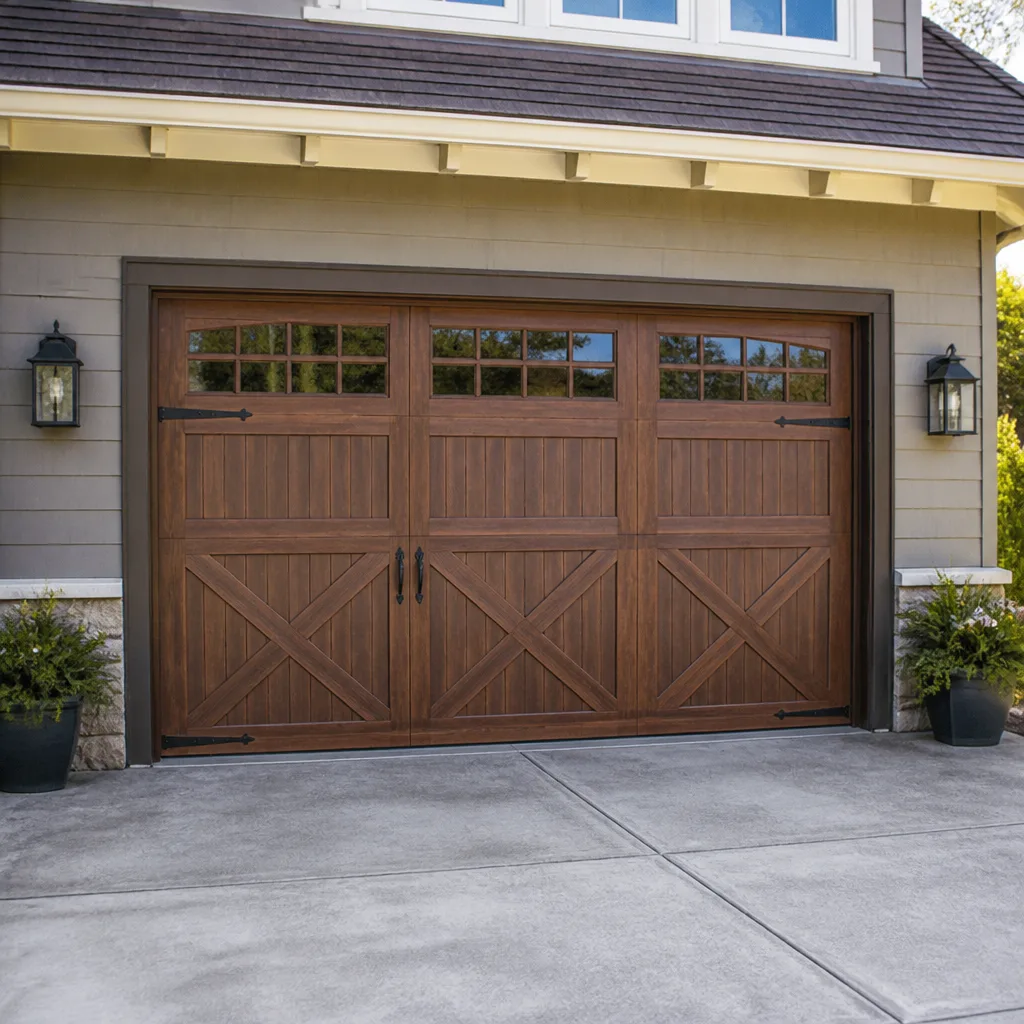 Carriage house
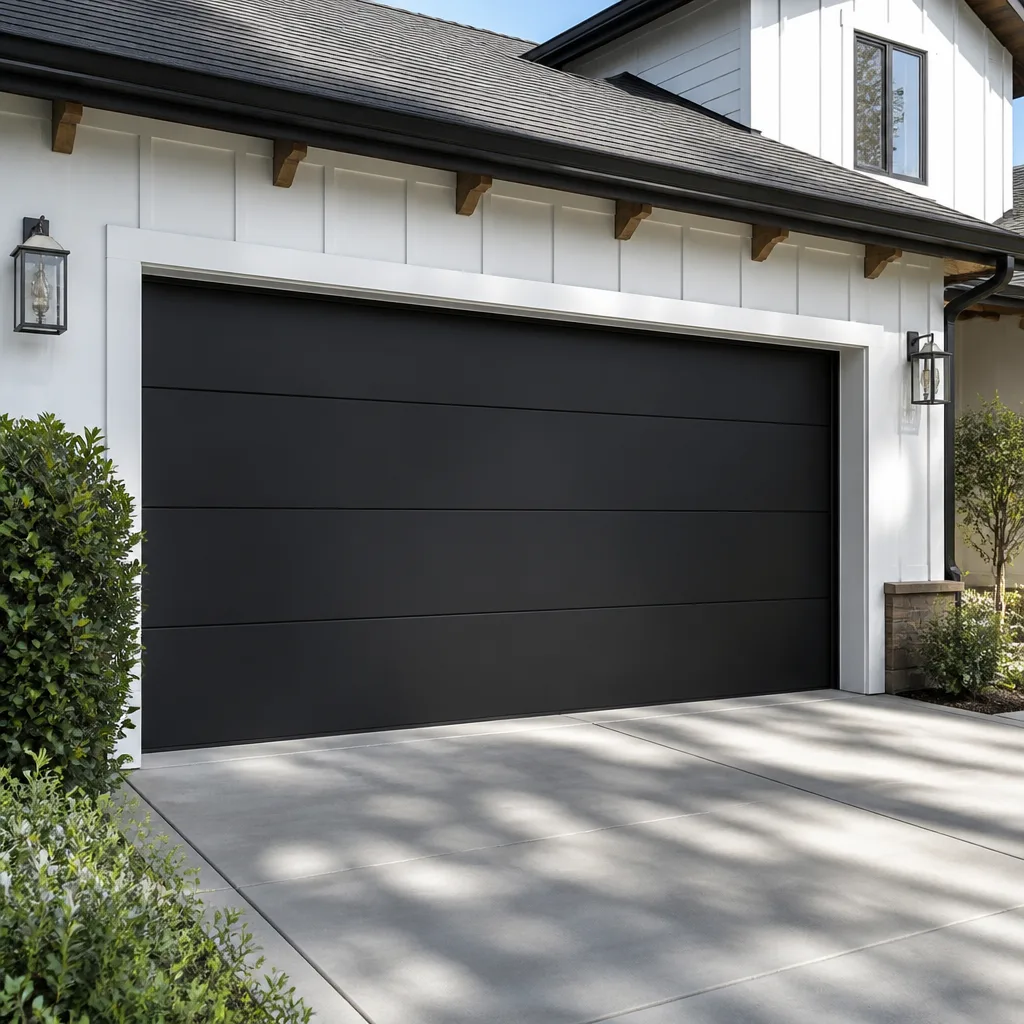 Modern flush
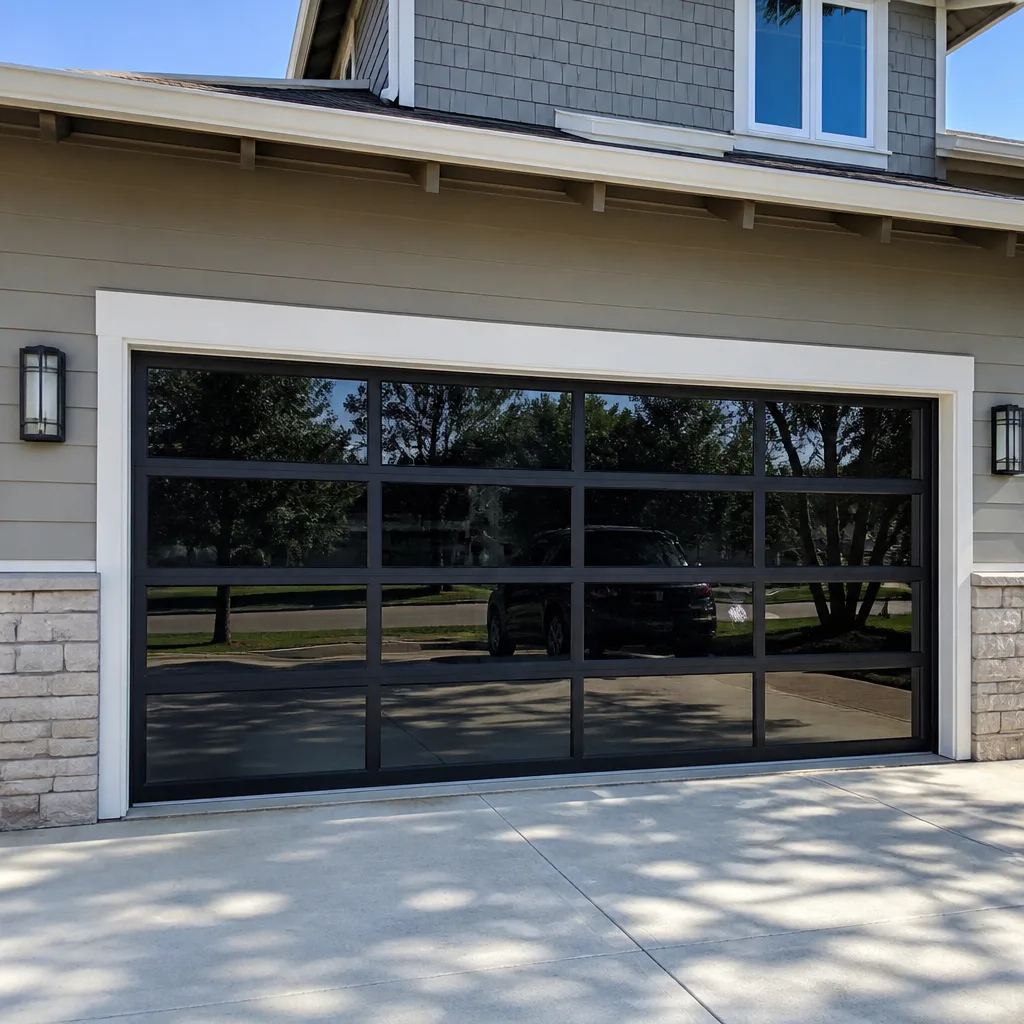 Full-view glass
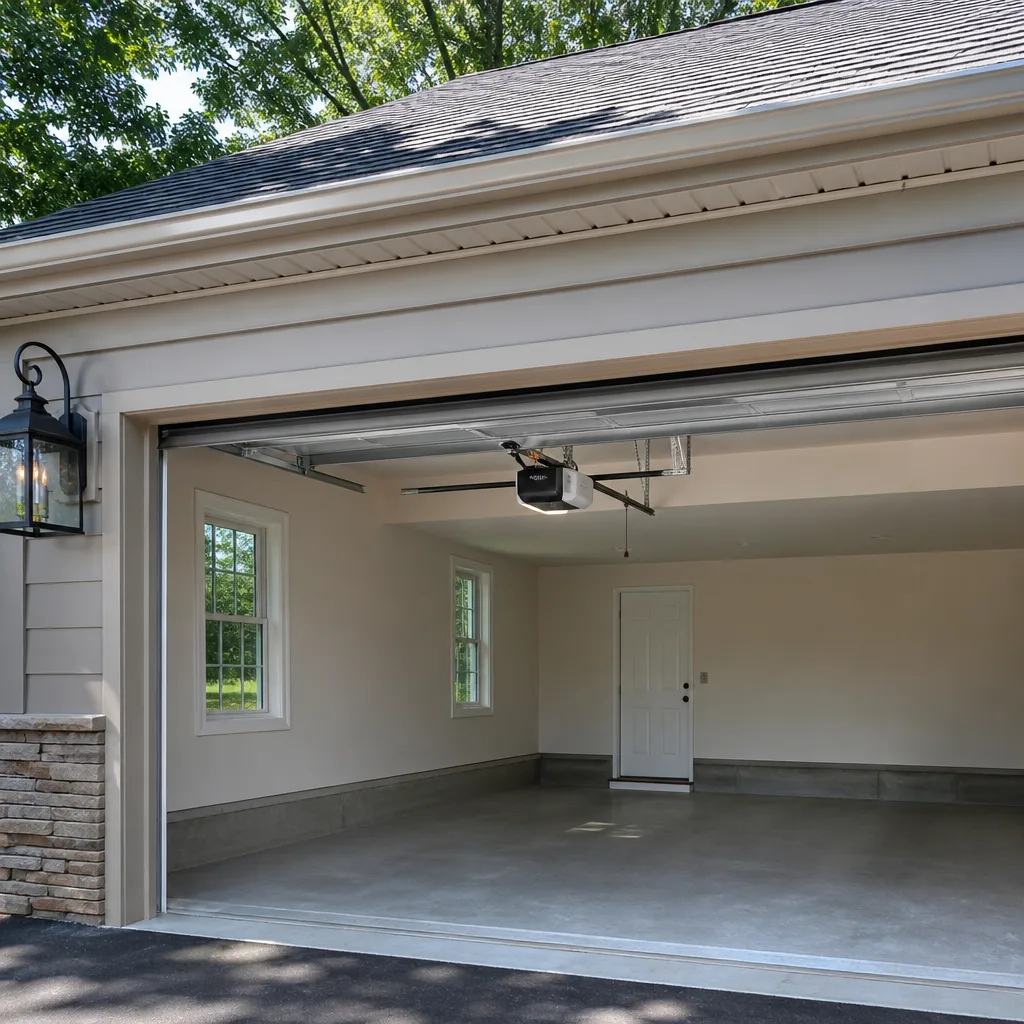 LiftMaster openers
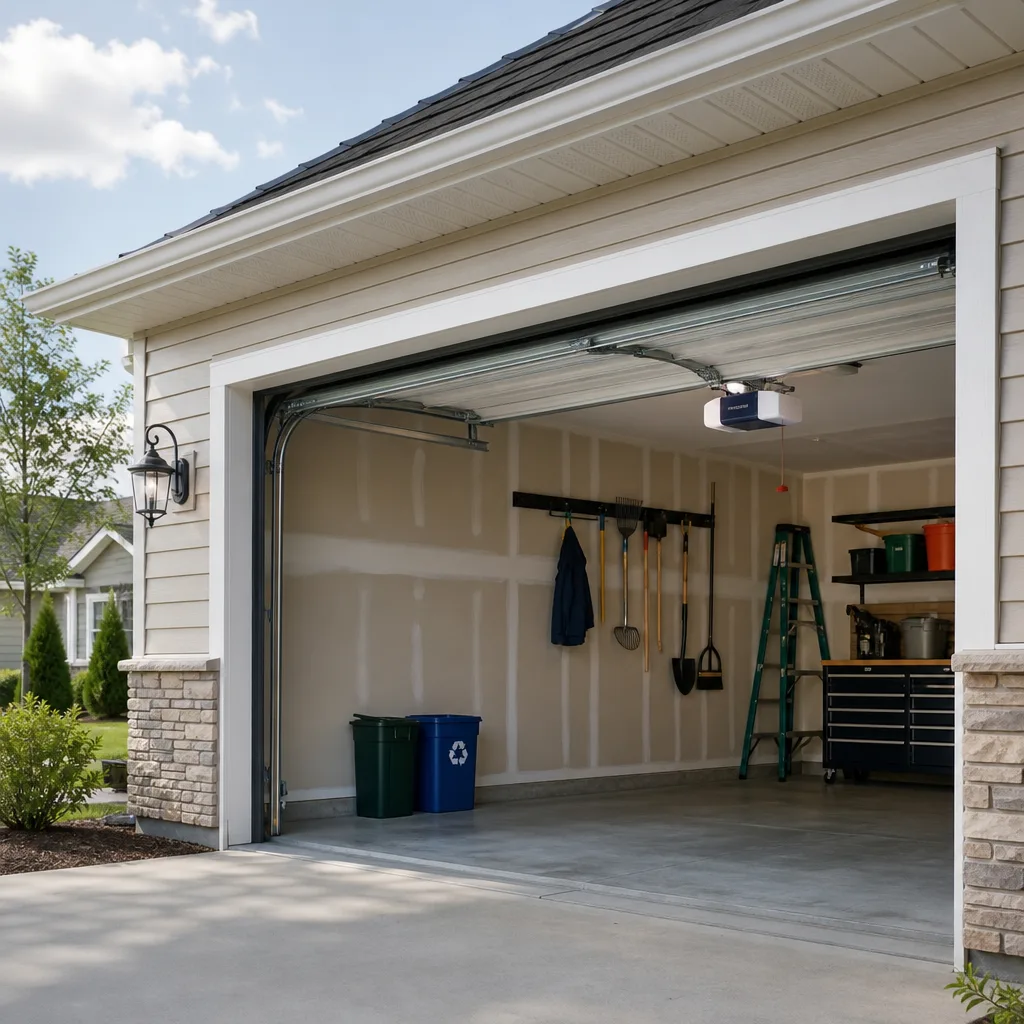 Chamberlain openers
Full 25-point door and opener safety check with every visit - springs, cables, rollers, tracks, and your LiftMaster or Chamberlain opener included
You get a price before we start. It does not change when the truck arrives.
Get your free estimateDIY vs Professional Garage Door: The Elk Grove Homeowner’s Decision Guide
Here’s a number most Elk Grove homeowners never think about: a standard torsion spring on a double-car garage door is wound tight enough to lift roughly 150 to 250 pounds of dead weight through a full open-close cycle, and all of that stored energy sits about eighteen inches above your head. When one of those springs lets go, it releases that force in a fraction of a second. The repair tutorials make it look like turning a wrench, and for someone who has done it twenty times, it kind of is. For someone doing it the first time on a spring that has been rusting since the Bush administration, the risk profile changes completely. This guide walks through which garage door tasks are genuinely safe to tackle yourself, which ones carry real injury potential, and how to tell the difference before you’re standing in the driveway holding the wrong tool.
Quick Answer
For most Elk Grove homeowners, tasks like lubricating rollers and hinges, realigning photo-eye sensors, and reprogramming a remote are safe DIY projects that take under an hour. Anything involving torsion springs, extension springs under tension, cable replacement, or a door that has come off its track is not a DIY job – the injury risk and the cost of fixing a botched attempt typically exceed what a professional repair would have cost in the first place. When the springs or cables are involved, call a licensed technician.
Styles & brands we work with
Table of Contents
- The Real Decision Framework: Risk, Not Cost
- Genuinely DIY-Safe Garage Door Tasks
- Tasks You Should Never Attempt Yourself
- Extension Springs vs Torsion Springs: Two Very Different Risks
- The Tool Math: What a One-Time Repair Actually Costs You
- Honest Skill Assessment: Can You Actually Do This?
- When DIY Goes Wrong: What the Fix Costs Afterward
- Common Mistakes to Avoid
- When to Call a Professional
- Frequently Asked Questions
The Real Decision Framework: Risk, Not Cost
Every DIY-versus-pro conversation about garage doors starts with money, and that’s a mistake. The question is not “can I save $200?” The question is “what’s the worst thing that happens if I get this wrong?” For about 40 percent of the garage door repair calls we handle in Elk Grove, the worst case is a door that won’t open and a couple of wasted hours. For the other 60 percent – anything touching springs, cables, or the bottom brackets – the worst case is a trip to the emergency room or a door falling on a car, a kid, or you.
Garage doors are the largest moving object in your home. A 16-foot double steel door weighs between 250 and 400 pounds depending on insulation and material. When properly balanced by functioning springs, it feels light – a four-year-old can open it. When the springs fail or the cables snap, that same door becomes dead weight governed by gravity, and gravity does not give you a second chance to reposition your hand. This is not alarmism. It’s the engineering reality that the Garage Door Repair in Elk Grove trade is built around.
Elk Grove’s climate adds a variable that most national DIY articles miss entirely. We get hot, bone-dry summers that bake springs and cause metal fatigue, followed by damp winter mornings that freeze and thaw components repeatedly. A spring that has been exposed to 100-degree July heat every year since 2012 behaves differently than one in a mild climate. Moisture from Delta fog seeps into rollers and hinges. None of this makes DIY impossible, but it means the parts you’re working on have often degraded in ways a YouTube video filmed in Phoenix or San Diego won’t show you.
Here’s the framework we recommend. Before you touch anything, answer three questions. First: if this part fails while I’m working on it, where does the energy go – into the air, into the wall, or into my body? Second: do I own the specific tools this job requires, and do I understand how to use them under load? Third: if I get halfway through and realize I’m in over my head, can I safely stop and leave the door in a state where someone can still repair it? If you can’t answer all three with confidence, the risk math tips toward a professional visit.
Genuinely DIY-Safe Garage Door Tasks
Plenty of garage door maintenance is not only safe for a competent homeowner but genuinely satisfying. These tasks involve components under minimal or no tension, require common household tools, and carry a low consequence-of-error profile. If you’re looking to save money on garage door upkeep, this is where the savings actually live.
Lubrication (15 minutes, under $10)
Spray white lithium grease or a silicone-based garage door lubricant on the hinges, rollers, and the torsion spring itself. Do not use WD-40 – it displaces moisture but doesn’t leave a durable lubricating film, and it can strip the protective coating off some springs. In Elk Grove’s dry summers, lubrication breaks down faster than in coastal climates, so doing this twice a year extends the life of your moving parts measurably.
Photo-Eye Sensor Alignment
If your door starts to close and then reverses for no apparent reason, the photo-eye sensors at the bottom of each track are usually the culprit. They get bumped by bikes, trash cans, and feet. Check that both sensors have solid glowing indicator lights. If one is blinking or dark, loosen the wing nut holding it to the track, adjust the aim so the lights are steady, and tighten it back down. Clean the lenses with a soft cloth. This task requires zero mechanical skill and solves roughly one in five opener problems we see in Elk Grove homes.
Remote and Keypad Reprogramming
Every major opener brand – LiftMaster, Chamberlain, Genie, and Craftsman among them – has a clearly marked “Learn” or “Program” button on the motor unit. The process usually takes under a minute: press the button, press the remote, done. The exact sequence varies by model, but the manufacturer’s instructions are on a sticker right on the motor housing. This is about as safe as operating a microwave.
Roller Cleaning and Replacement (with the door in the open position)
Nylon rollers wear out over time, especially the ones that ride the curved portion of the track. You can inspect them visually – if the wheel is worn flat on one side or wobbles, it’s time. Accessing rollers requires the door to be raised, which removes tension from most of the system. However: the bottom roller on each side attaches to a bracket that carries cable tension. If you’re only comfortable replacing upper and middle rollers, do those and let a pro handle the bottom pair. Getting that wrong puts you back in dangerous territory.
Track Cleaning and Debris Removal
Dirt, leaves, mud dauber nests, and the occasional tennis ball find their way into the vertical tracks. Clean them with a rag and a flat-head screwdriver, checking for obvious dents or bends. A track that’s slightly out of alignment can cause the door to bind mid-travel, but it’s also a job that requires some judgment – if the track itself is bent, that’s a bigger fix that involves unbolting sections and requires more than a hammer and patience.
Key takeaway: these five tasks cover most of the routine maintenance a garage door needs, and all of them are safer than changing the oil in your car. The savings are real – maybe $80 to $150 a year in avoided service calls plus extended component life – and the injury risk is negligible if you keep your fingers out of moving joints.
Tasks You Should Never Attempt Yourself
Now the other side of the ledger. These jobs account for the emergency room visits, the crushed fingers, the doors that crash down onto windshields, and the 10 p.m. panic calls from people whose garage door is stuck half-open with a car trapped inside — exactly the situations our Garage Door Emergency Preparedness Guide for Elk Grove Homes is designed to help you avoid. Do not learn on these. The consequences of error are immediate, mechanical, and severe.
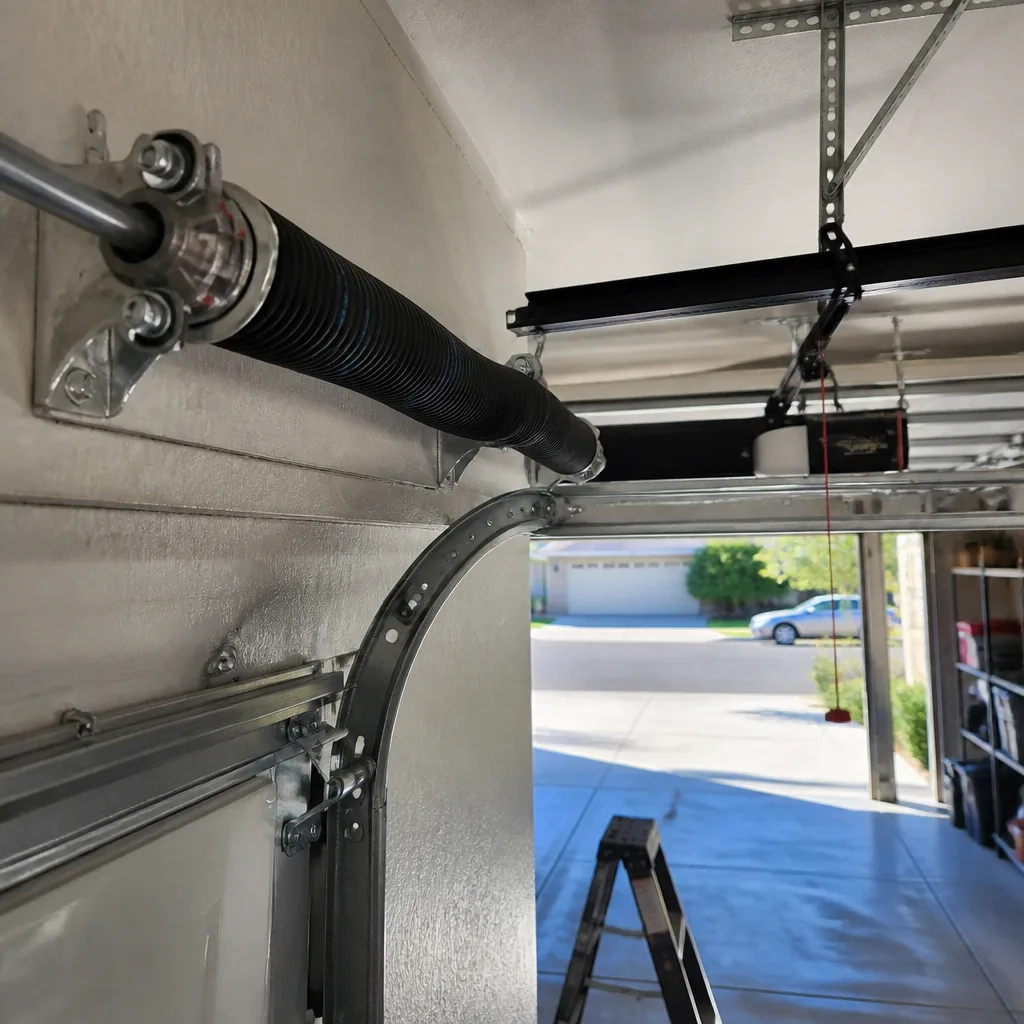
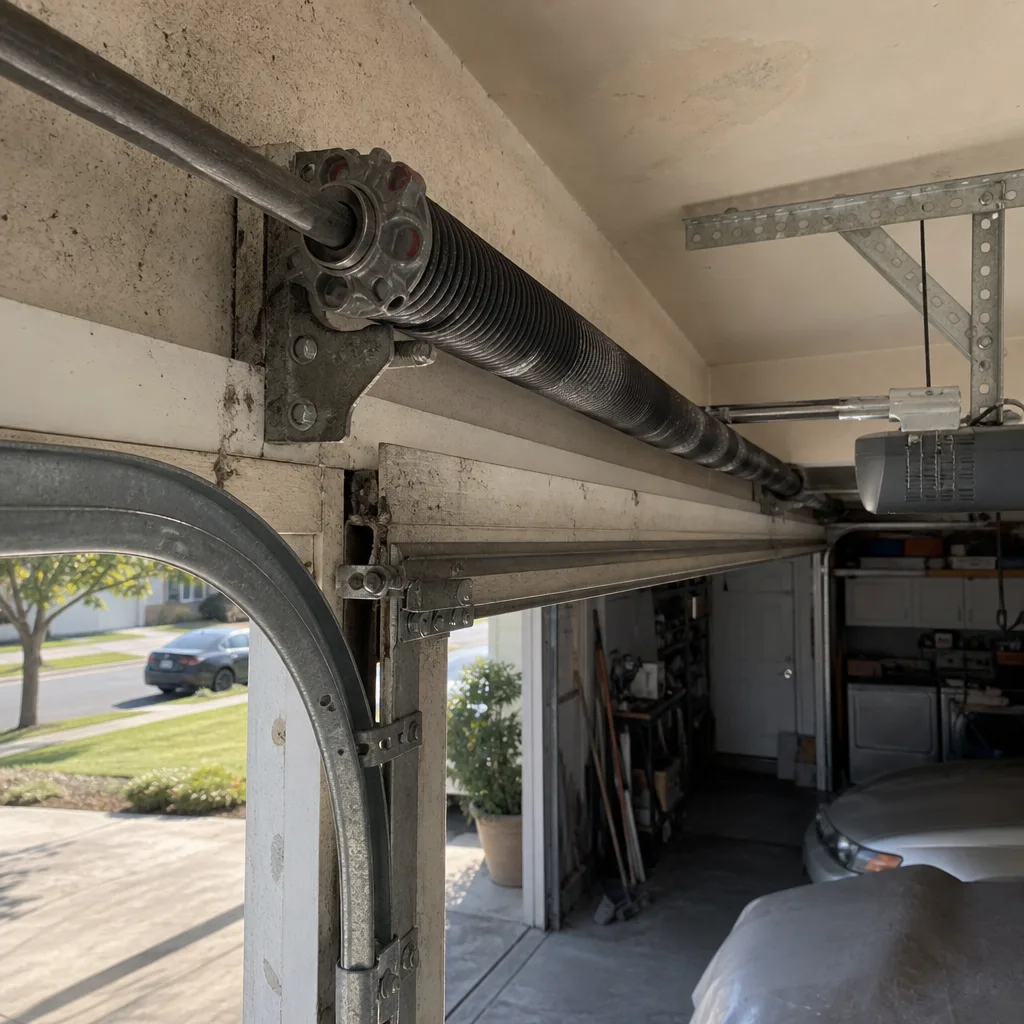
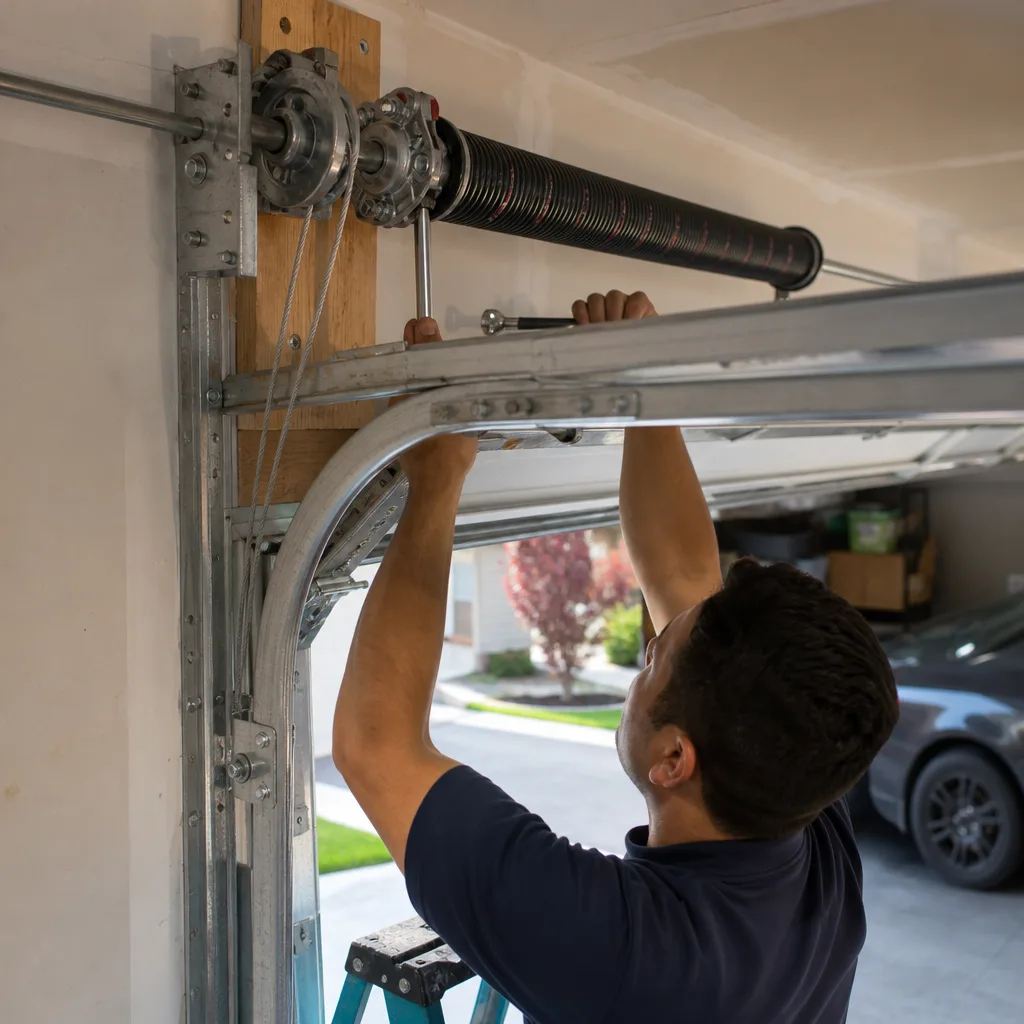
Torsion Spring Replacement or Adjustment
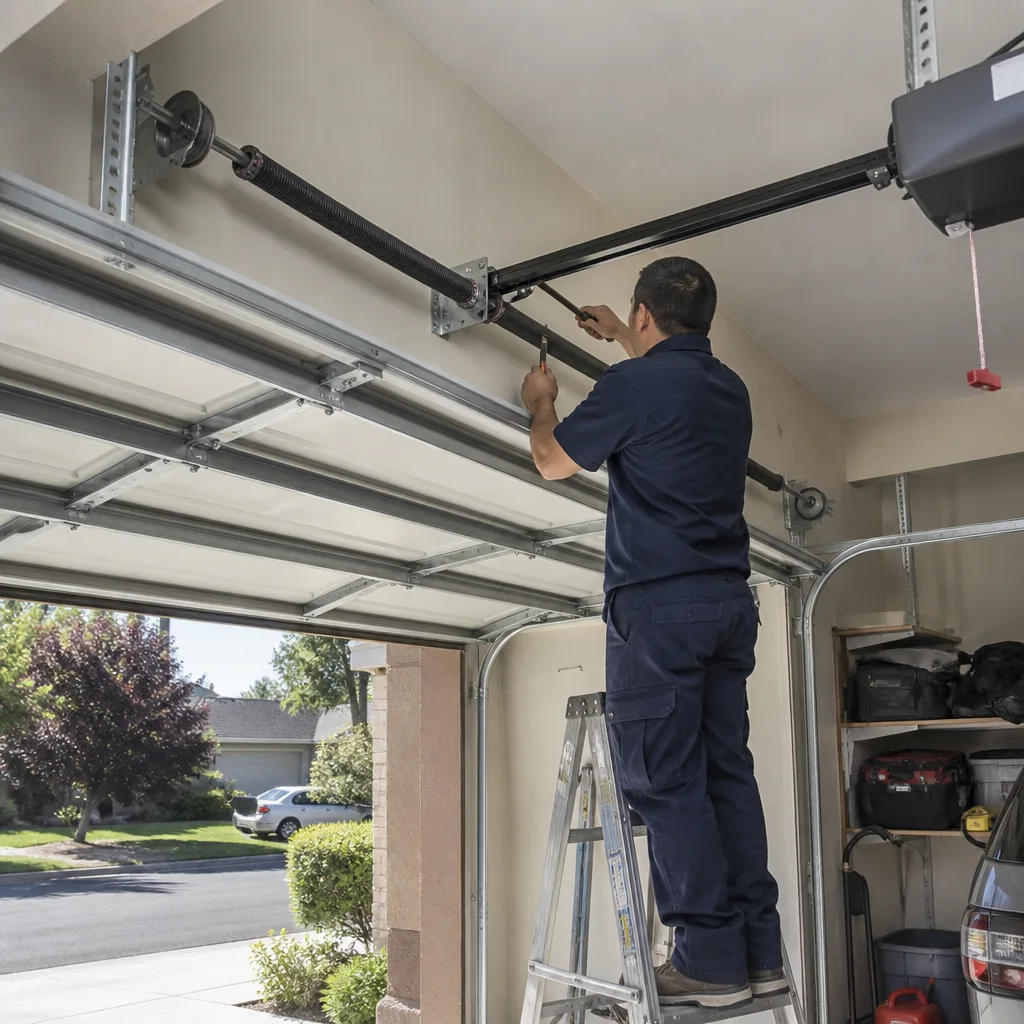
This is the headline risk and it cannot be overstated. Torsion springs are mounted horizontally above the door and wound under extreme tension. The winding bars used to adjust them are two feet long precisely because the spring stores enough energy to fling that bar through a wall or into your face if it slips. The injury most associated with torsion spring failure is a broken wrist or forearm when a winding bar kicks back, followed closely by head injuries and lacerations. Experienced technicians treat these springs with respect on every single job, and they have the specialty tools and the muscle memory from hundreds of windings to do it safely. This is the single most common “I tried it myself” caller scenario we get in Elk Grove, usually with the homeowner calling to ask if we can fix what they now realize they shouldn’t have started.
Cable Replacement
The cables run along both sides of the door and connect the bottom brackets to the spring system or the extension spring pulleys. When a cable snaps while the door is closed, it whips with enough force to cut skin and damage anything within a few feet. When a cable snaps while the door is open, the door can drop suddenly. A cable that has frayed means the entire lifting system is compromised. Replacing a cable requires disconnecting the spring tension first – which means you should refer to the previous paragraph.
Panel Replacement on a Damaged Door
A cracked or dented panel is tempting to swap out, but panel replacement involves lifting, aligning, and re-fastening a 40-to-70-pound section while the rest of the door hangs on the tracks. It also frequently requires rebalancing the springs because the door’s weight has changed. This is a two-person job at minimum, and it’s exactly the kind of work that looks straightforward on video and turns into a morning of frustration with the door now binding or the new panel scratched from being muscled into place.
Bottom Bracket and Roller Replacement
As mentioned in the DIY-safe section, the bottom brackets are where the lifting cables attach. They are under full tension even when the door is closed. Removing or loosening a bottom bracket without releasing spring tension first is how you get a cable in the face and a door that can’t be re-secured. This is another job that falls into the “professionals only” category, and it’s one of the most common sources of garage-door-related ER visits nationally.
Opener Motor Replacement
Replacing the opener itself is not particularly dangerous, but it is involved. The unit hangs from the ceiling, the rail assembly needs to be sized and installed, the safety reverse mechanism must be properly adjusted, and the opener’s force settings need to be calibrated so the door reverses when it encounters resistance rather than crushing through it. Setting the force limit too high is how a garage door opener kills a pet or injures a child – the door keeps closing because the homeowner turned the dial until “it would go down.” Proper calibration uses a 2×4 and a specific testing procedure. Get it wrong and the safety system that protects your family is effectively disabled. If that’s not a job for a professional, nothing is.
Extension Springs vs Torsion Springs: Two Very Different Risks
Most homeowners don’t realize there are two fundamentally different spring systems on residential garage doors, and the distinction matters more than any single tool on the list. The growing consensus among safety-minded technicians and trade organizations: extension spring replacement is not a DIY job for nearly everyone, and torsion spring replacement is not a DIY job for anyone.
Extension Springs: The “Safer” Option That Still Isn’t Safe
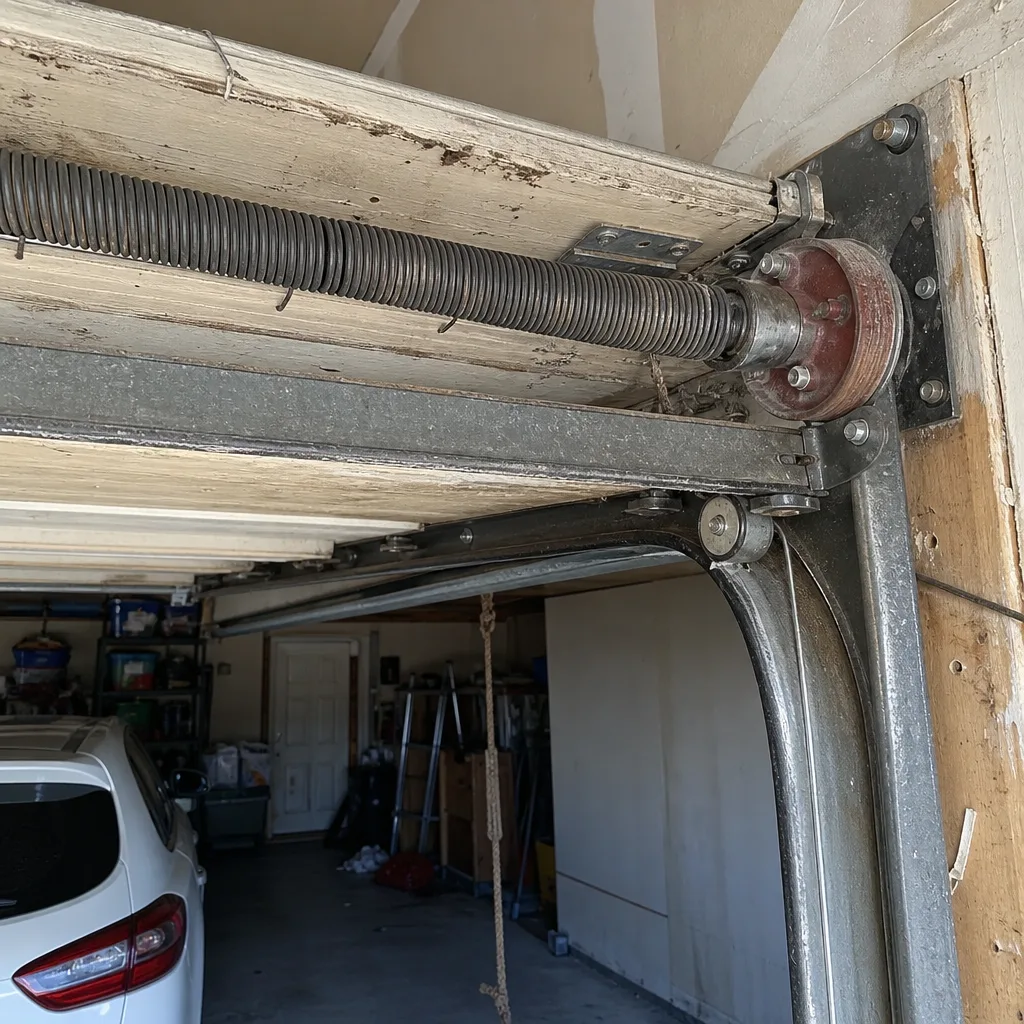
Extension springs run alongside the horizontal tracks, one on each side, and they stretch to store energy as the door closes. Older Elk Grove homes – particularly those built before 2000 – frequently have extension spring systems. Many online guides rate these as DIY-able because you can replace them without metal winding bars. That assessment misses the real danger: an extension spring under tension is a loaded projectile. When one snaps – and they do snap, especially with age and summer heat baking the metal – the broken end can whip through the air with enough force to lacerate skin or worse.
If you do attempt an extension spring replacement – and we’d still recommend against it – modern safety standards require a containment cable to be routed through the center of the spring so a break doesn’t turn it into shrapnel. Many older doors in Elk Grove lack these containment cables. Replacing springs on a door without them, even carefully, means you’re working with an uncontained projectile under hundreds of pounds of force. That’s not a homeowner-grade calculation.
Torsion Springs: The Line in the Sand
Torsion springs are the standard on most doors installed since 2000. They sit above the door opening, and they store energy by twisting rather than stretching. Replacing or adjusting a torsion spring requires inserting two steel winding bars into the spring’s cone and rotating it a precise number of quarter-turns – usually between 28 and 36, depending on door height and weight – and doing it identically on both sides. Under-wind the spring and the door is dangerously unbalanced, slamming down if released. Over-wind it and you’ve created a spring that can tear the mounting hardware out of the header. And throughout the winding process, each bar is under continuous force; a slip means that two-foot steel bar becomes a high-energy lever aimed at whatever part of your body is in its arc.
The bottom line for Elk Grove homeowners: if your door has torsion springs, call a professional. Full stop. The equipment cost alone for quality winding bars, proper safety gear, and replacement springs that actually match your door’s weight and cycle rating will eat most of the savings, and that’s before you account for the risk assessment that should tell you not to do it at all.
The Tool Math: What a One-Time Repair Actually Costs You
Here’s a simple exercise. Before you attempt any garage door repair, write down every tool you’d need to buy. Then multiply the total by the number of times you expect to perform this repair in the next 20 years. For most homeowners, that number is one. Here’s what the honest math looks like.
For Safe Maintenance Tasks
- White lithium grease or silicone lubricant: $6 – $12
- Soft cloth, household screwdriver set: $0 – $15 (you own these)
- Step ladder: $0 (you own one) or $40 – $80 if you don’t
Total outlay: under $50. Savings per year: $80 – $150 in avoided service calls and extended part life. This is a winning DIY economic case, and it’s why lubrication and sensor alignment belong in every homeowner’s skill set.
For Torsion Spring Replacement
- Quality winding bars (two, solid steel, 18+ inches): $25 – $45
- Correctly sized replacement springs (pair, matched to door weight and cycle life): $60 – $140
- Vise grips or locking pliers for securing the shaft: $15 – $25
- Safety glasses and thick work gloves: $15 – $30
- The YouTube video you watched twice: $0, but it also gives you about 6 percent of the feel required
Total outlay: $115 – $240, assuming perfect execution. Professional cost: typically $250 – $400 for both springs installed and balanced, with the parts and labor warrantied and the system tested. The DIY savings here, best case, is around $150. The downside risk is a broken wrist, a dented car, or a door that now needs professional correction anyway – which brings us to the next section.
When you compare line items, the “savings” on spring work are more like hazard pay you’re paying yourself. We don’t think that’s a trade any Elk Grove homeowner should make. The Garage Door Installation in Elk Grove side of our business often quotes full replacements that come in lower than a botched DIY repair plus the professional fix, and that’s the arithmetic worth paying attention to.
Honest Skill Assessment: Can You Actually Do This?
Here’s where a lot of otherwise rational people get themselves into trouble. They assume that because they can assemble IKEA furniture or change a brake light, they can handle a garage door spring. These are not the same skill class. Not even close. Here’s an honest framework for assessing where you fall.
Skill Level 1: Basic Household Competence
You can hang a picture, assemble flat-pack furniture, change a light fixture, and follow written instructions. You own a screwdriver set, a hammer, and maybe a drill. You are cleared for: lubrication, sensor alignment, remote programming, and track cleaning. Nothing else on the door. Not because we doubt you, but because your current tool and force-management experience doesn’t cover loaded springs.
Skill Level 2: Weekend Mechanic
You change your own oil, rotate tires, replace brake pads, and own a torque wrench plus a decent socket set. You understand that some nuts and bolts are under load and should be approached carefully. You are still not cleared for spring work, but you might handle upper roller replacement, hinge replacement with the door braced open, and some basic opener troubleshooting. If you’re not sure what “under load” means when you’re holding a wrench, you’re at Level 1.
Skill Level 3: You’ve Done This Before
You’ve replaced a garage door spring under supervision, or you work in a trade that involves tensioned cable systems and stored mechanical energy – and you own the correct winding bars. You might be fine doing spring work yourself. But if you’re reading this guide to decide whether to try it, you’re not at Level 3. People at Level 3 aren’t doing first-time research. They already know the answer.
The honest truth is that most Elk Grove homeowners fall into Level 1 or Level 2, and there’s no shame in that. The shame would be turning a $300 repair into a $2,500 door replacement or an emergency room bill because you overestimated your skill and underestimated the spring. If that sounds harsh, it’s because we’ve seen the aftermath. Garage doors are all we do – that’s the only reason we’re confident enough to be direct about it.
When DIY Goes Wrong: What the Fix Costs Afterward
Let’s run through three real failure scenarios. These are not hypothetical composites – they’re the calls we get in Elk Grove, sometimes on the same afternoon the homeowner started the project.
Scenario 1: The Unwound Spring
A homeowner watches a 12-minute tutorial, buys winding bars online, and starts winding a new torsion spring. On the fourth quarter-turn, the bar slips out of the cone. The spring unwinds violently, knocks the bar out of his hand, and bends the horizontal track in the process. The spring is now partially wound with no chalk line to verify tension. He calls us. Cost: the original spring ($80) is unusable, the track section needs replacement ($60 – $90), and the professional spring replacement he was trying to avoid still needs to happen ($250 – $350). Total cost: roughly $390 – $520 instead of the $300 professional quote he turned down. And he’s lucky the bar went into the track instead of his face.
Scenario 2: The Cable That Came Off
A homeowner decides to replace a frayed cable himself. He removes the old cable from the bottom bracket without first releasing spring tension. When the bracket comes free, the door drops several inches and the remaining cable on the other side snaps. The door is now wedged at a 20-degree angle with one side resting on concrete. He calls us. Cost: the door has to be jacked back into position, both cables replaced, the track realigned, and the springs rebalanced to compensate for any damage. Total: $300 – $500 for the repair, versus the $150 – $200 cable replacement would have cost if we’d done it first.
Scenario 3: The Door That “Wouldn’t Go Down”
After a power surge, a homeowner’s opener isn’t closing the door fully. He follows a forum thread that tells him to turn up the force adjustment dial until the door will close. It works – and now the opener will close on anything in the path because the safety reverse threshold has been cranked past the point of function. He doesn’t realize this until the door closes on the hood of his spouse’s SUV. Cost: a new opener ($350 – $500 installed) plus a dent repair that insurance may or may not cover, for what started as a $0 adjustment. The fix that would have taken a technician ten minutes is now a multi-hundred-dollar job.
The pattern across all three: the DIY attempt didn’t just fail to save money – it converted a routine repair into a more expensive one. And these are the cases where nobody got hurt. Add an injury to any of these scenarios and the cost figures with a comma in them.
Common Mistakes to Avoid
- Watching one YouTube video and assuming competence. A video shows you what the steps are, not what the forces feel like. Experience – specifically, the muscle memory of how a spring behaves when it’s three-quarters wound and starting to fight back – is the missing variable that no tutorial can transfer. If you’re learning on the day you’re doing, you’re already behind the risk curve.
- Using the wrong tools because “this will work.” Winding bars are not screwdrivers. Using a socket extension, a pair of bars that are too short, or an adjustable wrench in place of a proper winding bar is how sockets get stripped and bars get launched. The tool either fits properly or it doesn’t, and there’s no middle ground at 200 pounds of torque.
- Replacing one spring instead of both. Garage door springs are rated for a specific cycle life, and they wear out together. Replacing only the broken one means the other is likely near failure, leaving you with an unbalanced door and another repair bill within a year or two. A professional will always replace both springs – it’s not an upsell, it’s the correct repair.
- Ignoring the balance test. A properly balanced door stays put when you raise it to the halfway point and release it. If your door drops or shoots up, the springs are not matched to the door’s weight, and continuing to use it accelerates wear on every component, including the opener. Checking balance is free and takes 30 seconds.
- Skipping the safety cable on extension spring doors. If your Elk Grove home has extension springs without containment cables, every open-close cycle is a gamble. Adding containment cables is an inexpensive retrofit that changes the failure mode from projectile to internal break. This is not a recommendation; it’s a minimum safety standard.
- Trying to adjust a track with a hammer and a prayer. Bent tracks are one of the few garage door problems that responds well to professional tools and poorly to brute force. A track that’s out of alignment causes compounding wear, and a track that’s knocked loose under spring tension is a hazard. If you can see visible bending, it’s a repair job, not an adjustment.
- Underestimating how heavy the door actually is. New insulated steel doors in Elk Grove weight anywhere from 250 to 400 pounds, and every pound of that is supported by springs and cables that are designed to counterbalance it – not by the door itself. When you disconnect the opener and the door drops, the force involved is exactly as much as a refrigerator falling over every time the spring fails.
When to Call a Professional
Call a professional any time the job involves springs, cables, bottom brackets, a door that has come off its tracks, or an opener that won’t maintain proper safety reverse function. If your door is making a noise that sounds like a gunshot – that’s a spring breaking, and it means the system is now unbalanced and dangerous to operate. If the door is stuck and you can see frayed steel cable strands anywhere, do not try to close it by force. If the opener is more than 15 years old and failing, replacement is usually a better value than repair, and that installation involves electrical work, safety calibration, and proper mounting – not a job for a screwdriver and a sunny afternoon. In Elk Grove specifically, the freeze-thaw cycles of winter and the prolonged summer heat put extra stress on springs and rollers, so components fail more abruptly here than in milder climates. Garage Door Opener Repair in Elk Grove is our most-requested service for exactly this reason.
Elk Grove Garage Door Service offers free estimates in Elk Grove – call (844) 766-3083. We diagnose first and recommend second. If it’s a sensor alignment and you can do it yourself, we’ll tell you that on the phone. If it needs a technician, you’ll get a straight answer about what it costs before any work starts.
Frequently Asked Questions
Lubricating hinges and rollers, cleaning and realigning photo-eye sensors, reprogramming remotes and keypads, cleaning the tracks, and replacing upper or middle rollers are all safe DIY tasks that require no special tools and carry minimal injury risk. Anything involving springs, cables, bottom brackets, or an opener’s safety calibration should be handled by a professional.
Professional torsion spring replacement in the Elk Grove market typically runs $250 – $400 for both springs, including the parts, the labor to wind and balance them, and testing the full system. Doing the work yourself costs $115 – $240 in tools and materials before considering the injury risk and the potential cost of a bad installation. If the price you’re quoted feels high, ask what’s included – both springs should always be replaced together.
Yes. A torsion spring under full tension stores enough energy to break a forearm if the winding bar slips, and extension springs without containment cables can lash through the air with enough force to cause serious lacerations. These are not low-probability risks – they’re the single most common source of garage-door-related injuries reported by emergency departments. Professional technicians treat every spring job as a loaded-system job, and that’s the standard homeowners should apply too.
In many cases, yes. Most opener manufacturers – including LiftMaster, Chamberlain, and Genie – state in their warranty documentation that damage caused by improper adjustment or unqualified repair voids coverage. Attempting a spring replacement and getting it wrong can also void the door manufacturer’s warranty on Clopay and Amarr doors if the failure results from the repair itself. The same job performed by a professional is typically covered, and receipts from licensed work keep your warranty intact. If you’re not sure what your warranty allows, call us at (844) 766-3083 and we’ll help you read the fine print – the advice is free.
Look for visible rust along the coils, a door that feels heavier than it used to when you lift it manually, uneven gaps between the spring coils, or a door that begins to rise or close unevenly. If you hear a loud bang from the garage that sounds like a gunshot, a spring has already snapped – at that point, stop using the door and call a technician before attempting to operate it again. Springs in Elk Grove fail faster than the national average because summer heat accelerates metal fatigue.
When a spring snaps or a cable lets go and the door is stuck closed with a car trapped inside, this is an emergency – and it’s the most common emergency call we handle. Availability varies by day and season, so the fastest way to find out is to call us at (844) 766-3083 and describe what’s happening. We’ll give you an honest assessment over the phone: whether we can get a technician out, what the likely fix is, and what the price range looks like for that repair. Estimates are free, and the price is quoted and agreed before any work starts.
The Bottom Line
Most Elk Grove homeowners can handle lubrication, sensor alignment, and remote programming without ever needing to call anyone – and they should. Those tasks are safe, quick, and genuinely extend the life of the door. But springs, cables, and track repairs are a different category of work, and the math doesn’t favor the DIY approach: the tools cost nearly as much as the repair, the injury risk is real and well-documented, and a botched attempt typically costs more than the professional quote that was declined in the first place. The right question is not “can I?” but “what happens if I get it wrong?” – and when the answer involves stored mechanical energy, the smart choice is usually a phone call.
Call (844) 766-3083 for a free estimate, or visit our Elk Grove Garage Door Service home page to see the full scope of what we do. Whatever brand is on your door, we know it.
Written by the team at Elk Grove Garage Door Service, serving Elk Grove since 2018.
See the difference
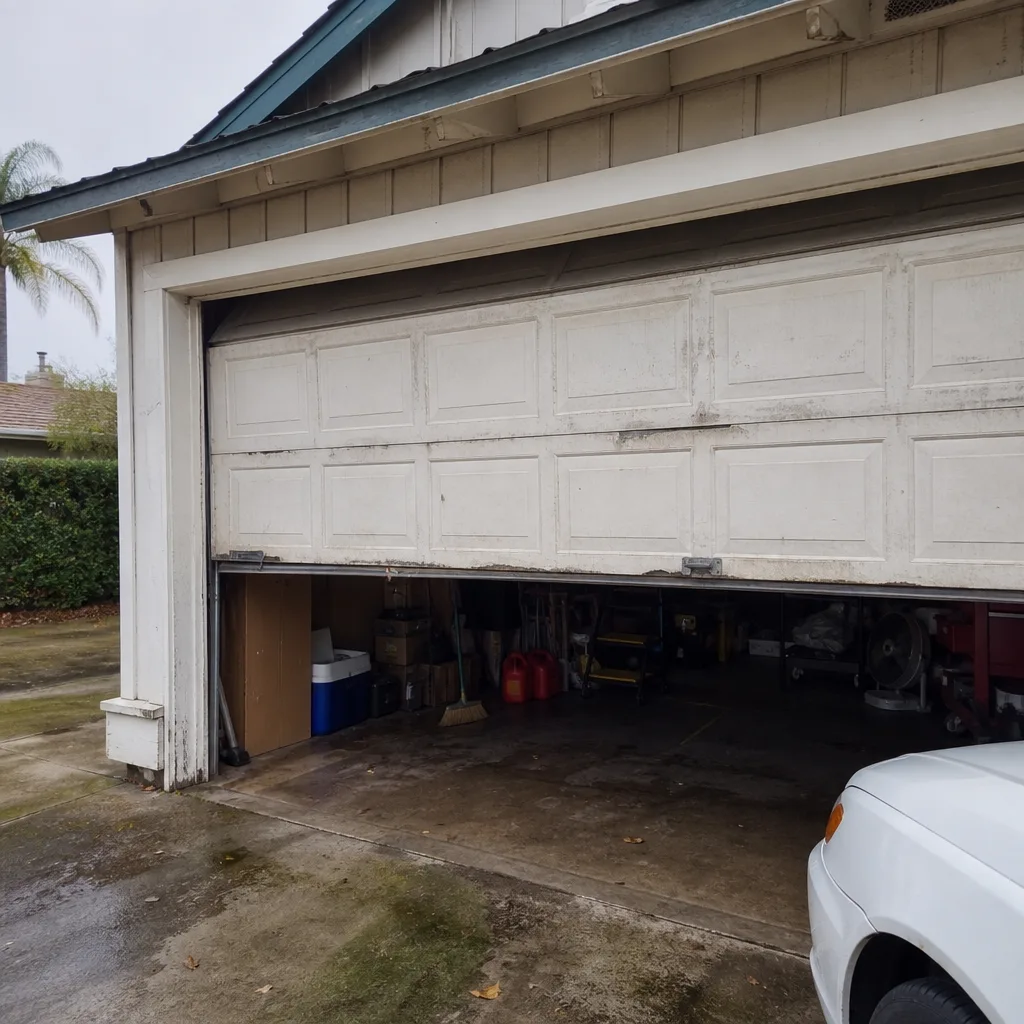 Before
 After
 Before
 After
 Before
 After