
Last updated October 31, 2026
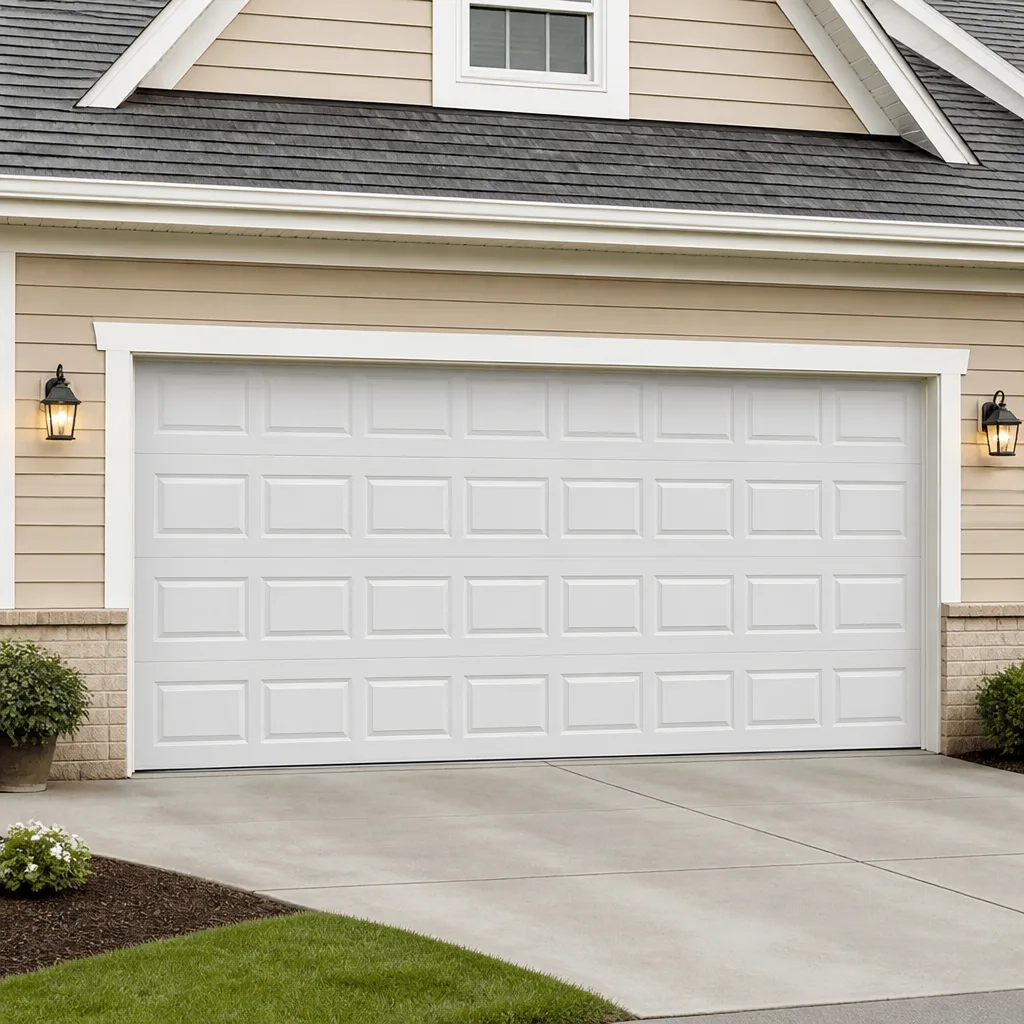 Raised-panel steel
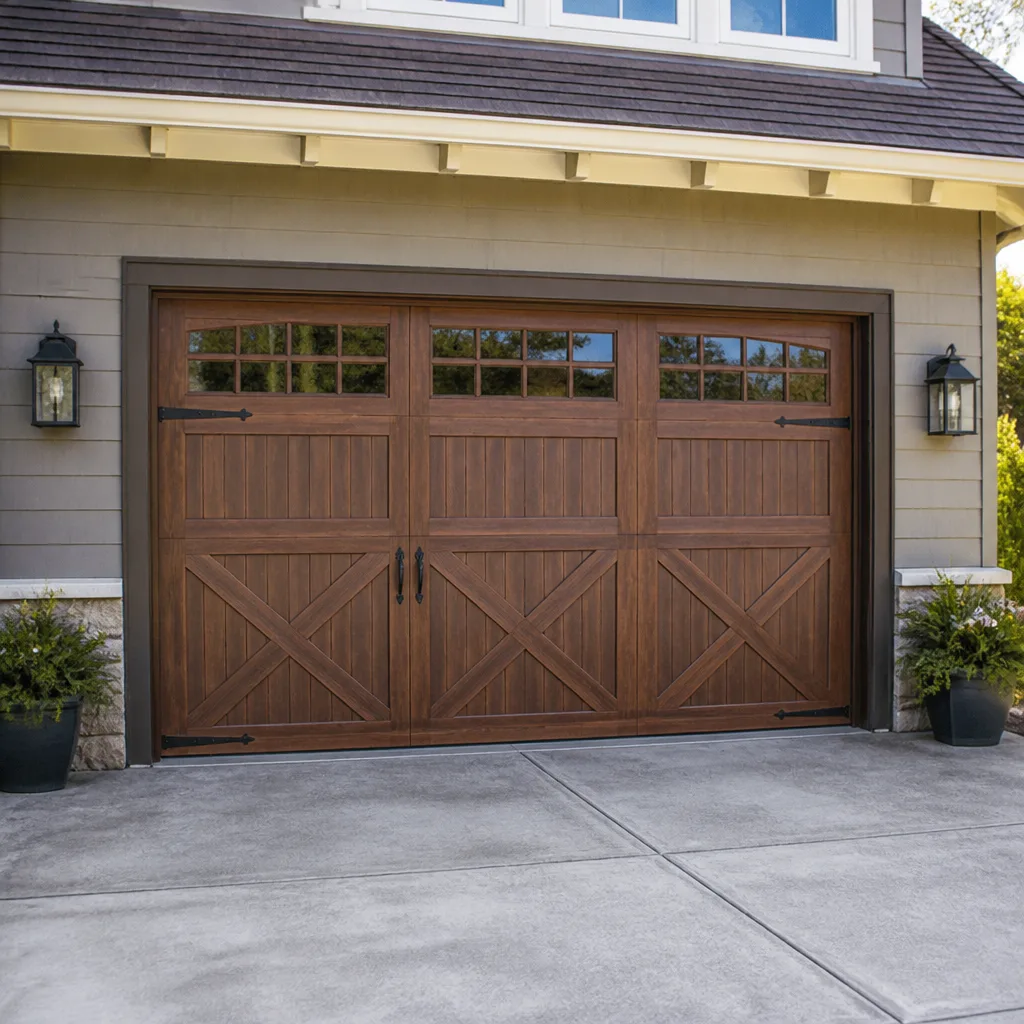 Carriage house
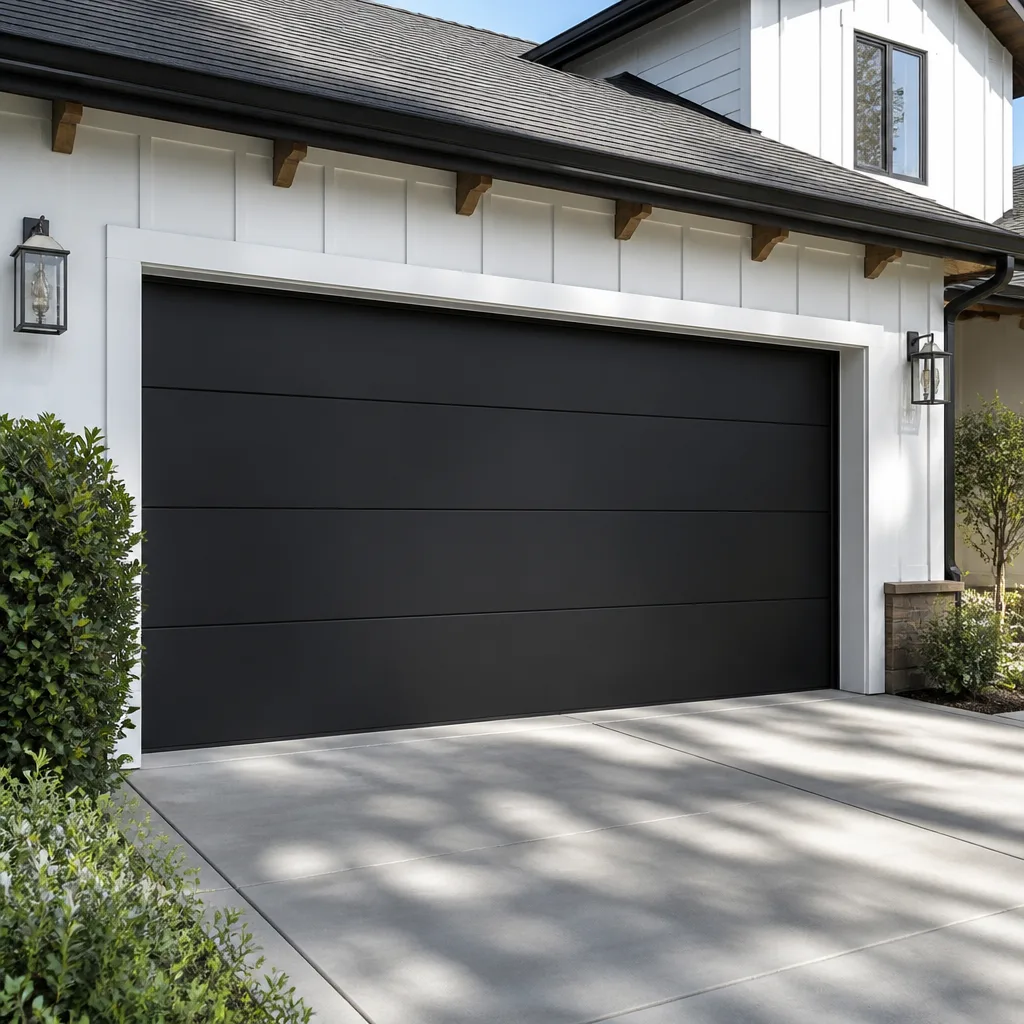 Modern flush
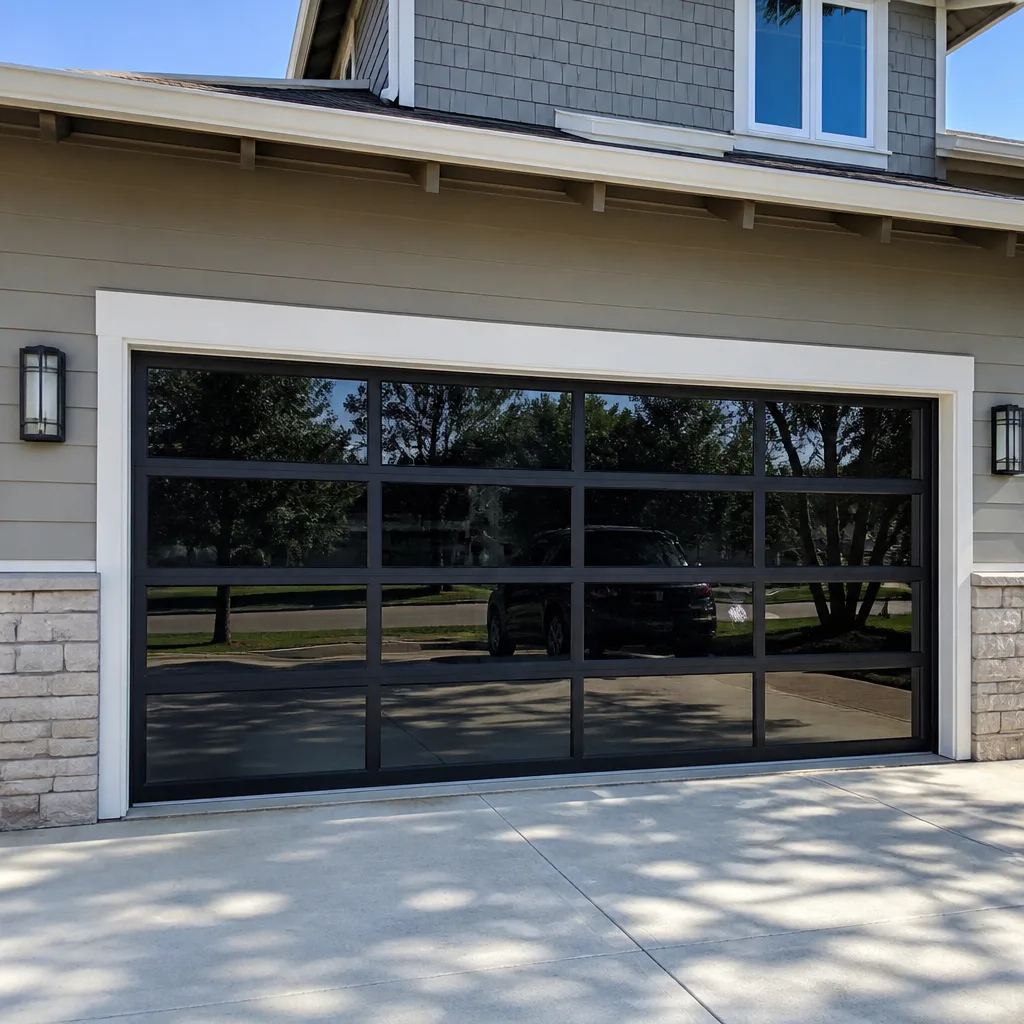 Full-view glass
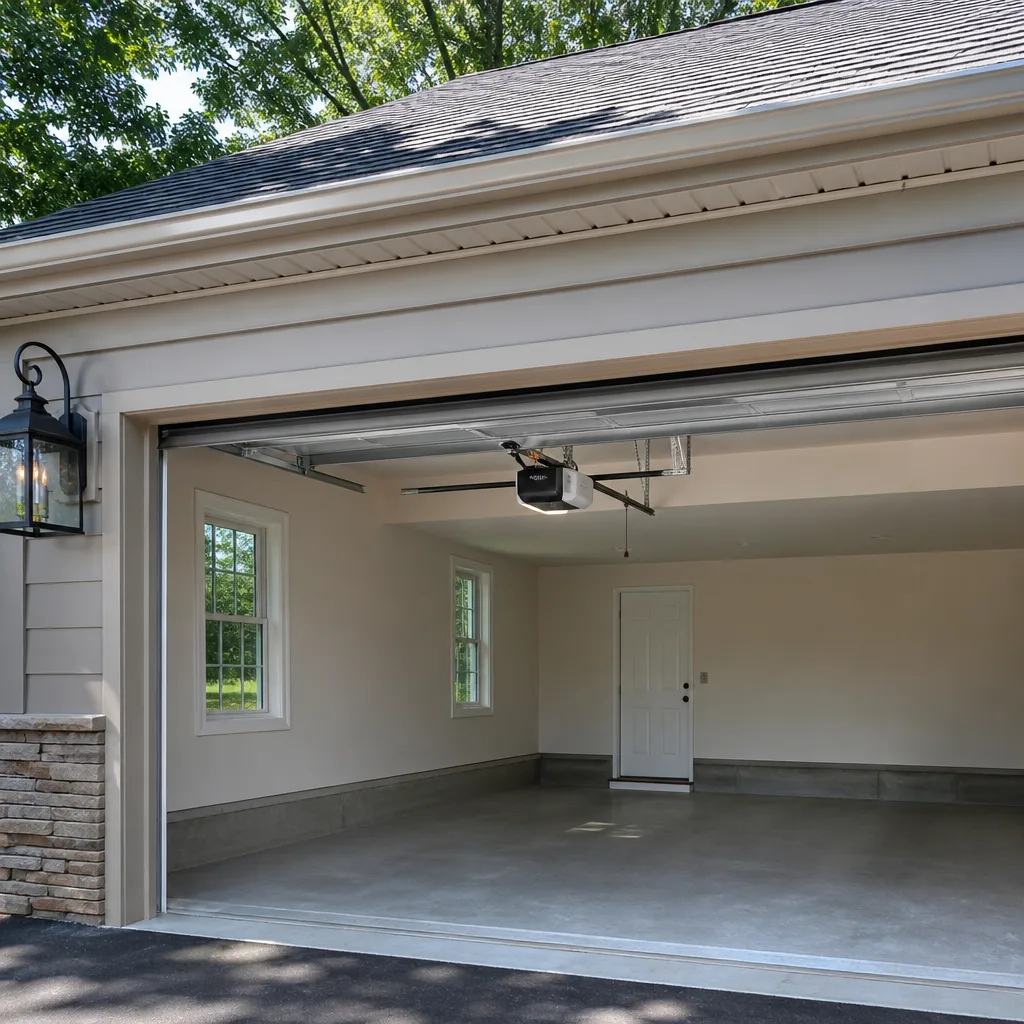 LiftMaster openers
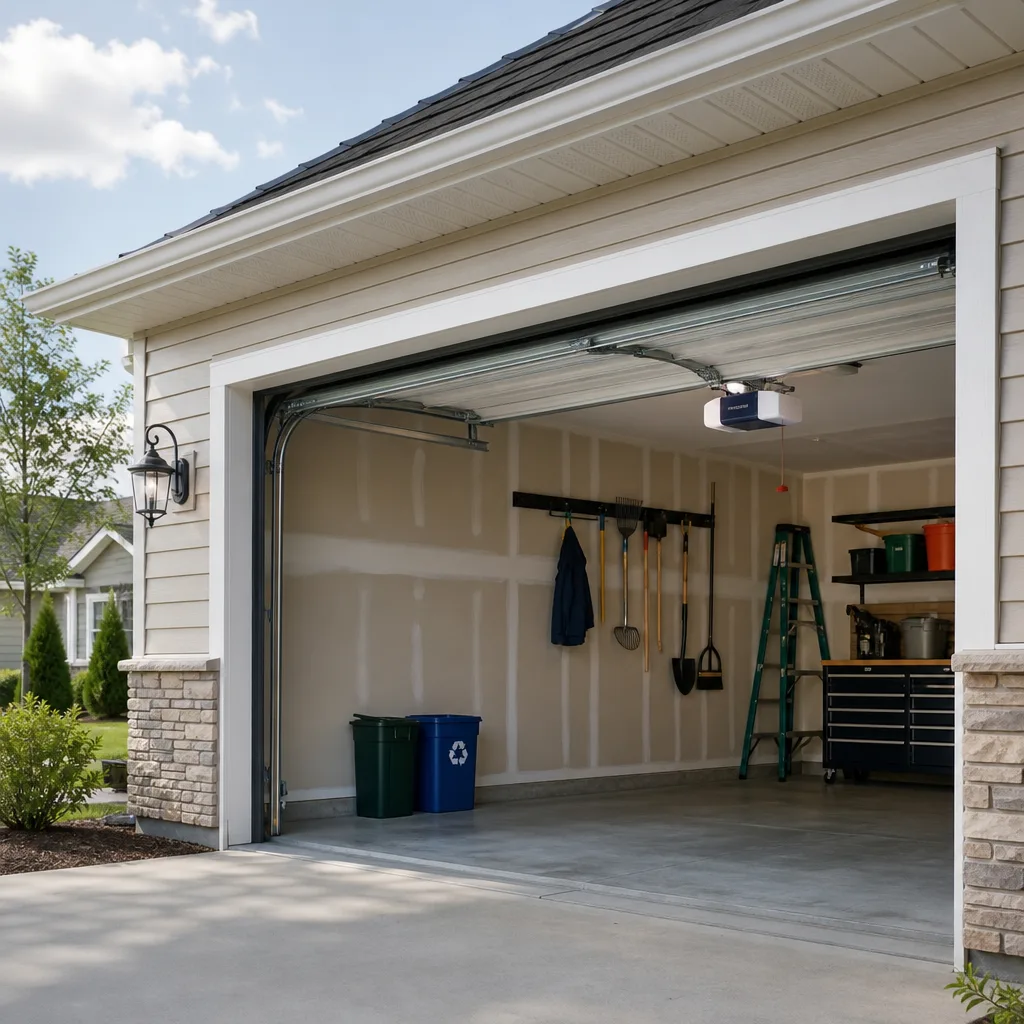 Chamberlain openers
Full 25-point door and opener safety check with every visit - springs, cables, rollers, tracks, and your LiftMaster or Chamberlain opener included
You get a price before we start. It does not change when the truck arrives.
Get your free estimateGarage Door Emergency Preparedness Guide for Elk Grove Homes
Here’s the scenario most Elk Grove homeowners never rehearse: a July heat wave pushes the grid past its limit, PG&E initiates a rotating outage at 5:40 a.m., and your garage door opener’s backup battery died quietly eleven months ago. The door is now a 400-pound wall with no motor, no battery, and no obvious way to lift it. This guide exists so that morning never happens to you. We’ve rebuilt, tested, and repaired thousands of garage doors across Elk Grove, and the emergencies that strand families are rarely exotic. They’re predictable. And predictable things can be prepared for.
Styles & brands we work with
Quick Answer
Garage door emergency preparedness in Elk Grove means addressing the three failures most likely to trap your car: power outages that reveal dead backup batteries, broken torsion springs that make the door impossible to lift safely, and sensor misfires during wildfire smoke events. The core solution is knowing your manual release cord by touch, testing your battery backup every six months, and pre-staging a stepladder and flathead screwdriver in the garage. Most emergencies resolve in under ten minutes when the homeowner has rehearsed the release sequence once.
Table of Contents
- Power Outages and Backup Battery Reality in Elk Grove
- Manual Release: The Exact Steps for Belt-Drive vs. Chain-Drive Openers
- Spring Failure: What to Do When a Spring Breaks and Traps Your Car
- Wildfire Smoke and Photo-Eye Sensor Interference
- Post-Wind-Event Cable and Track Inspection
- Pre-Staging the Right Tools for Manual Override
- Testing Backup Battery Systems Before You Need Them
- Common Mistakes to Avoid
- When to Call a Professional
- Frequently Asked Questions
- The Bottom Line
Power Outages and Backup Battery Reality in Elk Grove
Elk Grove sits in a grid segment that’s increasingly managed by rotating outages during Sacramento Valley heat events. When the temperature pushes past 105 degrees for consecutive days, PG&E and SMUD both implement load-shedding protocols. Your garage door opener does not care about the reason. It cares that it lost power at 6 a.m. and the backup battery either works or it doesn’t.
Here’s what most homeowners don’t understand about backup batteries: they have a service life of roughly 2 to 4 years, and they degrade silently. A battery that worked fine during the 2023 outages may be completely dead by the 2026 heat season. The opener will still open and close normally on main power because the battery is dormant until an outage hits. That’s the trap. The system gives you zero warning that the backup has failed until the moment you need it.
In our experience across Elk Grove, the failure rate on backup batteries over three years old is high enough that we treat any battery past that age as suspect until tested. Wayne Dalton and Genie models we service both show the same pattern: the battery chemistry, typically sealed lead-acid or lithium-ion depending on the opener generation, does not hold a charge after prolonged Sacramento Valley heat exposure. Garage attics and uninsulated garage ceilings routinely hit 130 degrees in July. Heat kills batteries faster than usage does.
The practical takeaway: if your opener is more than three years old and you’ve never replaced the backup battery, assume it will fail during the next outage. We’ll cover the testing procedure later in this guide. For now, understand that the most common emergency call we get during Elk Grove heat events is not a mechanical failure. It’s a homeowner who pulled the manual release for the first time in the dark, pulled too hard, and disconnected the trolley in a way they can’t reverse.
Garage Door Opener Repair in Elk Grove calls spike every time a rotating outage hits, and half of those calls are for issues that ten minutes of preparation would have prevented. The opener itself is rarely broken. The preparation is.
Manual Release: The Exact Steps for Belt-Drive vs. Chain-Drive Openers
The red cord hanging from your opener trolley is the manual release. It disconnects the door from the motorized carriage so you can lift the door by hand. Every opener has one, but the disengagement feel and reset procedure differ between belt-drive and chain-drive systems. Knowing which one you have changes how you handle an emergency.
Identifying Your Opener Type
- Belt-drive: The rail running from the motor to the door has a rubber-reinforced belt visible on top. It’s smooth, wide, and usually black or gray. These openers are quieter. Genie and Clopay residential openers are frequently belt-drive.
- Chain-drive: The rail has a metal chain running through it, visible from underneath. It’s louder and has visible links. Older Wayne Dalton and Amarr installations often use chain-drive.
Manual Release Steps for Belt-Drive Openers
- Confirm the door is fully closed. Never disengage with the door open. The door can slam down if the spring is weak or broken.
- Place a stepladder directly under the opener trolley. The red cord may be at head height or higher. Do not yank it from a distance.
- Pull the red cord straight down, then toward the door. Belt-drive trolleys disengage with a firm, smooth pull. You’ll feel a distinct click as the release arm locks open.
- Lift the door by the handle or bottom rail. Use both hands. The door should lift smoothly with moderate effort if springs are intact. If it’s heavy or won’t move, stop immediately. See the spring failure section.
- Prop the door open if needed. A working spring system holds the door’s position, but if you need to leave it open, place locking pliers on the track below a wheel to prevent drift.
- To reset after power returns: With the door closed, pull the release cord toward the door to re-engage. Run the opener through one full cycle to confirm the trolley latched correctly.
Manual Release Steps for Chain-Drive Openers
- Door closed, ladder under the trolley. Same starting position.
- Pull the red cord straight down, then release it fully. Chain-drive trolleys often require a sharper pull. The chain slack will visibly drop when disengaged.
- Watch the trolley position. On chain-drive units, the trolley may slide forward or back a few inches after release. That’s normal. The chain stays on the sprocket.
- Lift the door by hand. Chain-drive doors are no heavier than belt-drive doors of the same size. The spring system, not the opener, carries the weight.
- Reset carefully: Power the opener on, press the wall button once. The trolley will move along the rail and re-engage automatically on most post-1993 models. If it doesn’t latch, pull the cord again and jog the opener once more.
The critical difference is in reset behavior. Belt-drive systems are more forgiving on re-engagement. Chain-drive systems occasionally need a second cycle before the trolley catches. If you’re ever unsure of your opener type, a quick look at the rail answers it in two seconds. And if the manual release is jammed or the cord has snapped off the release arm, that’s not a DIY moment. A jammed release often means the trolley is seized, and forcing it can bend the rail.
For more detail on opener-specific issues, visit Garage Door Opener Repair in Elk Grove for what we cover and how we diagnose across brands.
Spring Failure: What to Do When a Spring Breaks and Traps Your Car
A torsion spring breaking sounds like a gunshot inside the garage. It’s a sharp, metallic crack followed by rattling. It happens without warning. If the door was closed, your car is now trapped. If the door was open, it likely slammed shut or hangs at an angle. Either way, you’re facing the one garage door emergency that genuinely requires professional decision-making because manual operation with a broken spring can put more than 300 pounds of unbalanced force in your hands.
Here’s the sequence that prevents additional damage and keeps you safe:
- Do not use the opener. The motor is designed to lift a balanced door. With a spring broken, the door’s full weight is unsupported. Running the opener can strip gears, snap cables, and damage the motor. One cycle attempt is often enough to burn out a circuit board on newer models.
- Do not attempt to lift the door manually. A door with one broken spring still has the other spring under tension, but the weight distribution is uneven and the door can shift sideways off the tracks. This is how garage doors fall on people.
- If the door is partially open, leave it. Do not try to pull it closed or push it open. A partially open door with a broken spring is under unpredictable tension. Prop nothing, force nothing.
- If the car is inside and you must get it out, assess whether other exits are usable. The front door is almost always the right answer. If there is truly no other exit, call before touching the door. We’ve talked Elk Grove homeowners through this exact scenario by phone more times than we can count, and the answer is never “put your shoulder into it.”
- Take photos of the spring assembly. A clear photo of the broken spring, the center bracket, and the cable drums helps with diagnosis before a technician arrives.
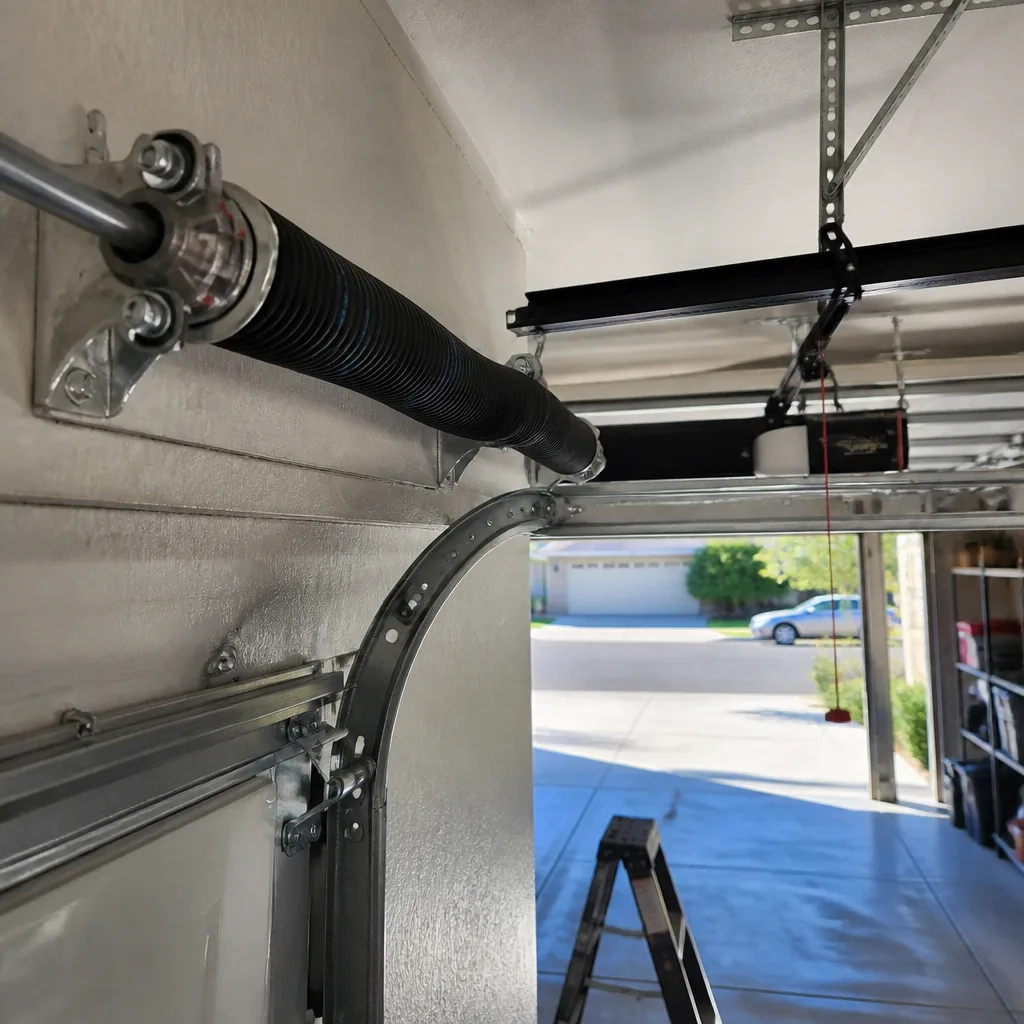
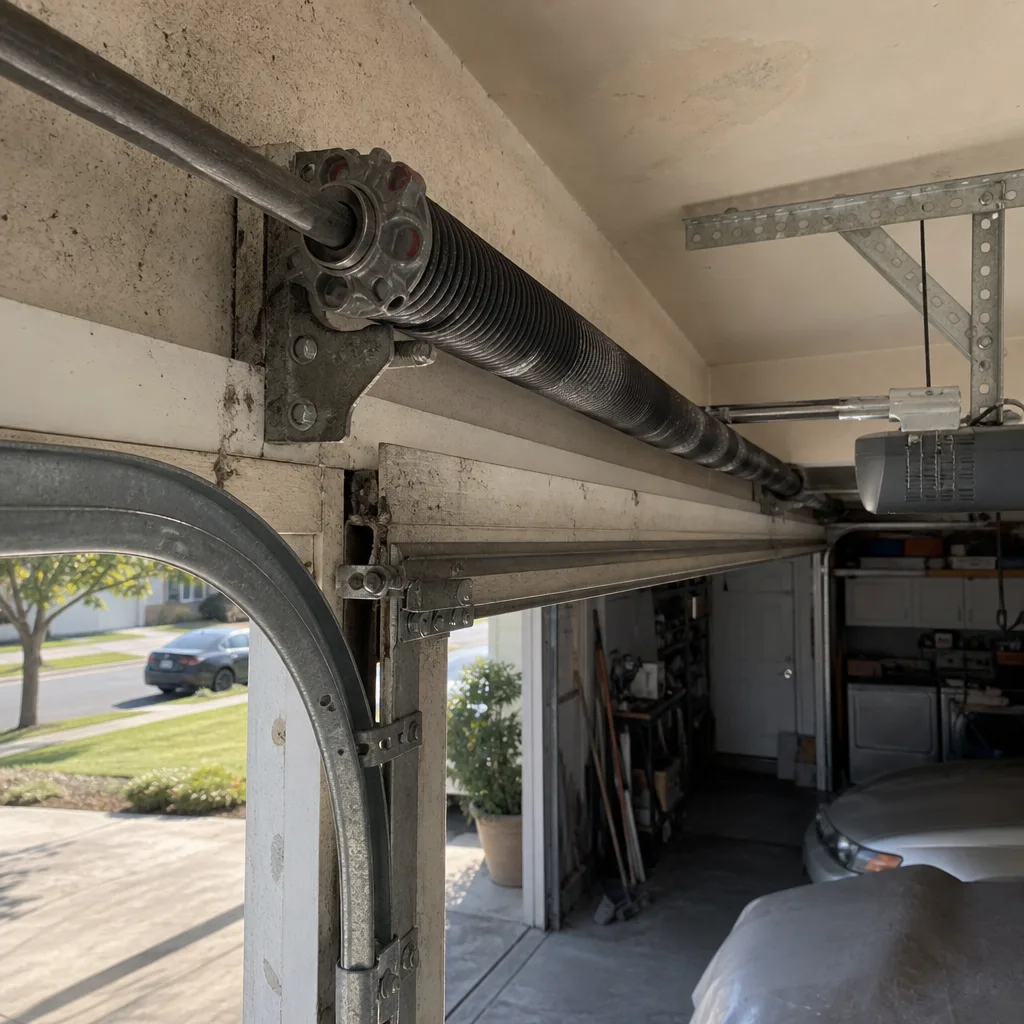
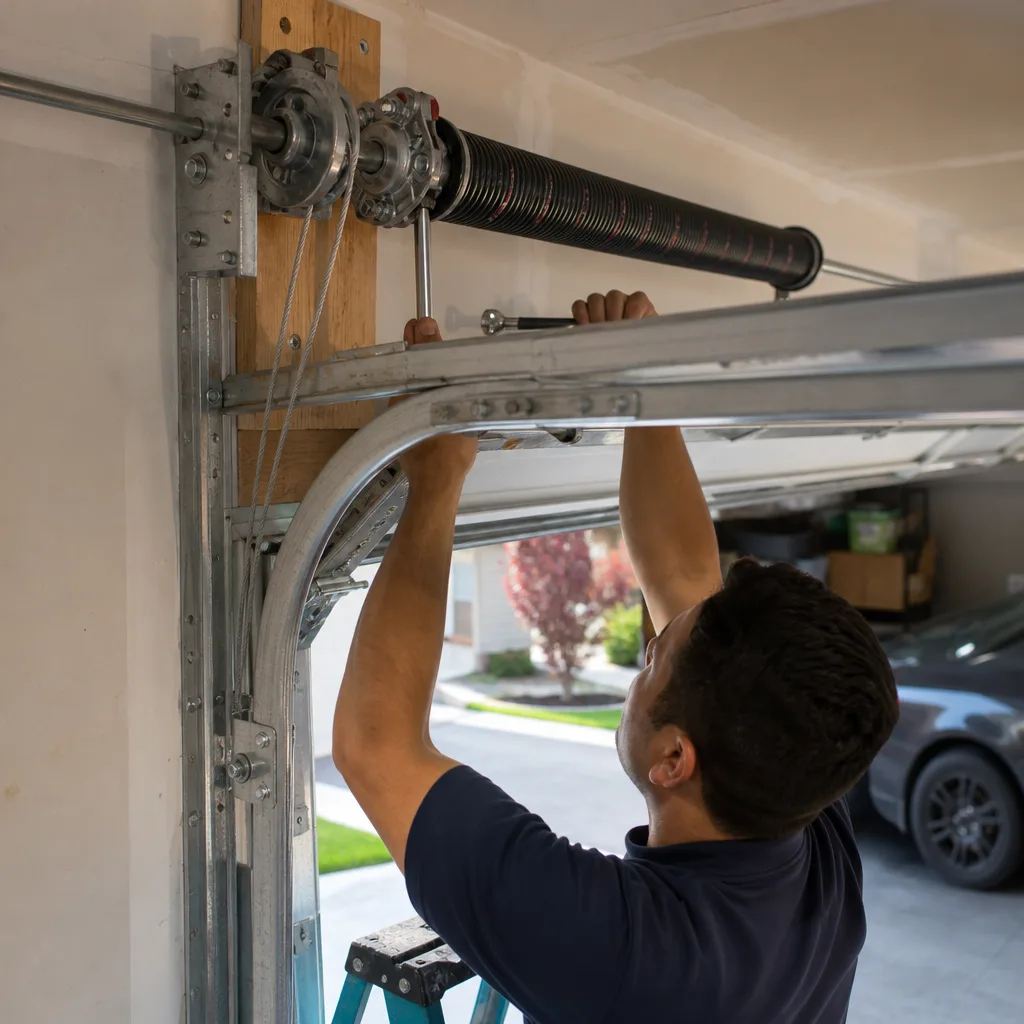
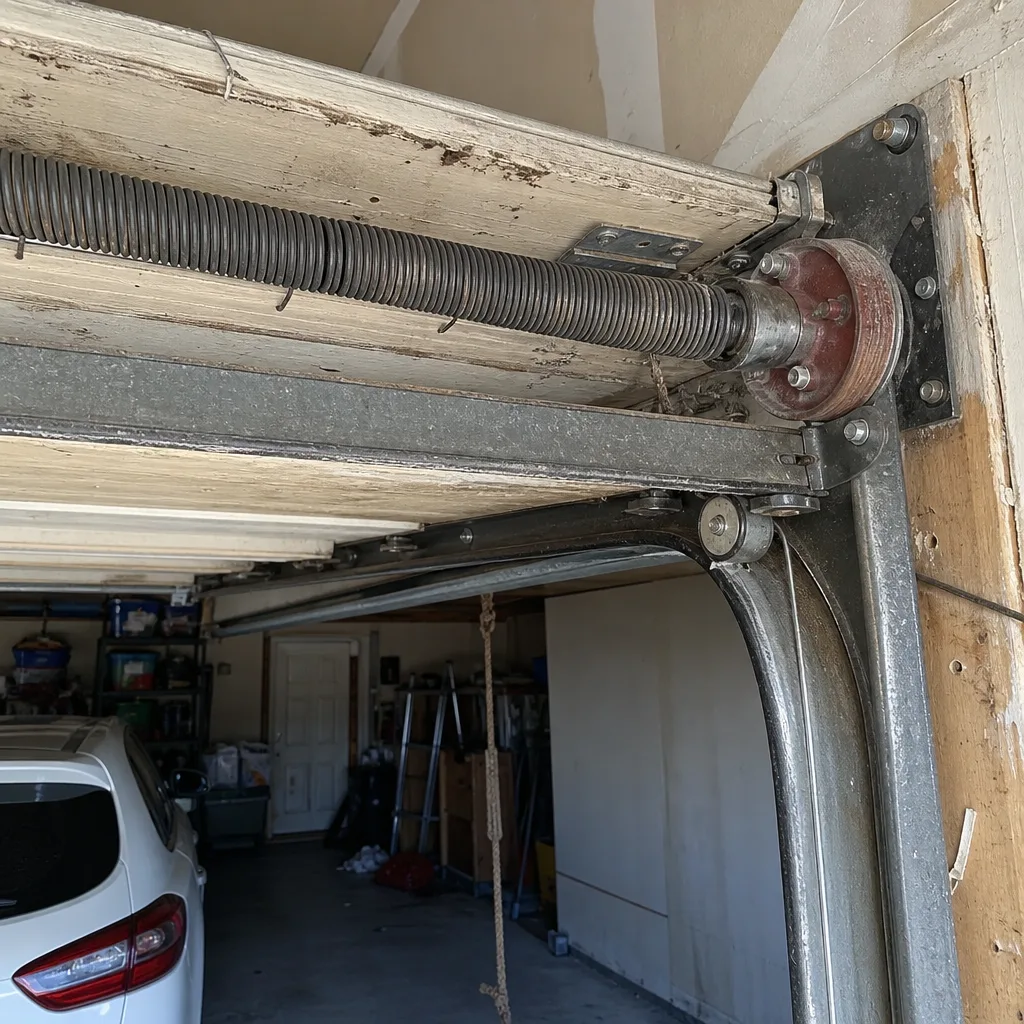
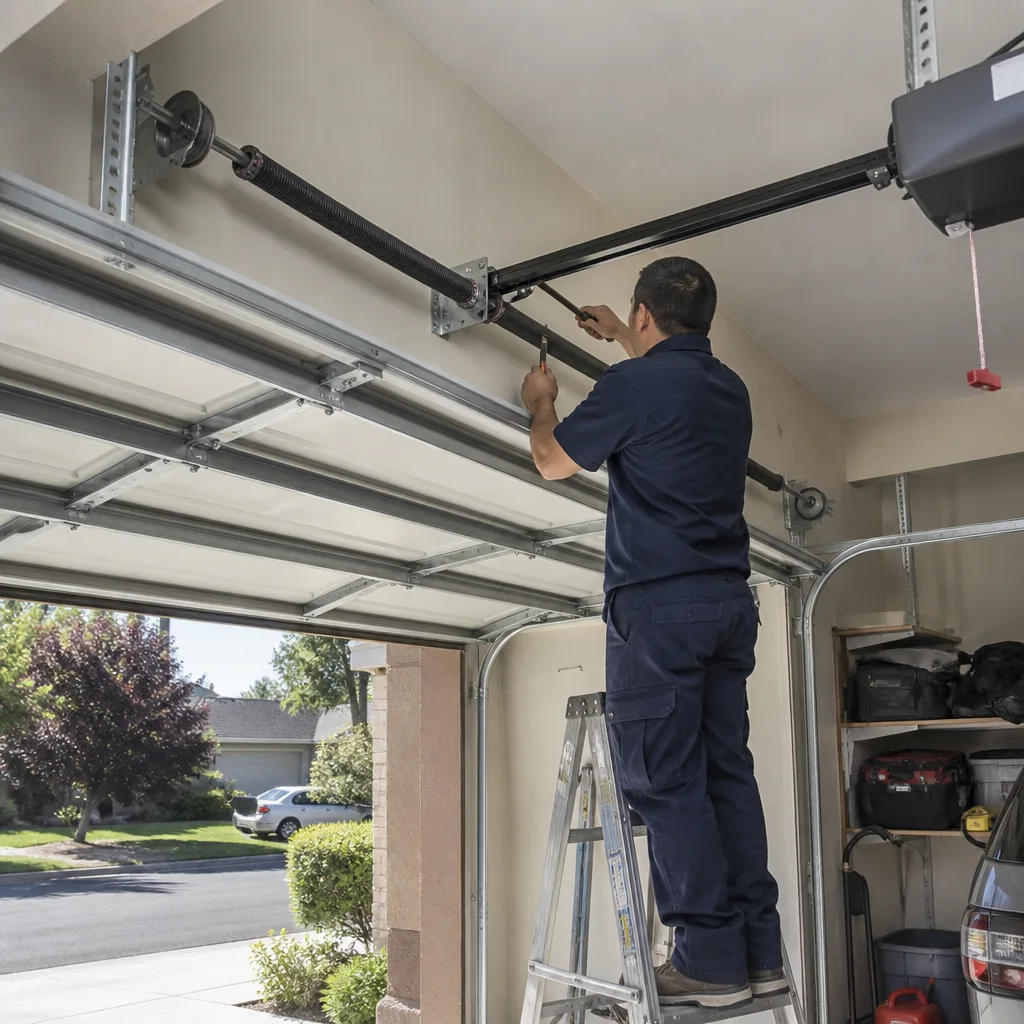
When we talk about springs, we’re always talking about the torsion assembly above the door, not the small extension springs on the sides. Both carry tension, but torsion springs hold many times more stored energy. This is the component we recommend never handling yourself. The safety caveat is non-negotiable: torsion springs are under enough tension to cause serious injury or death when mishandled. A trained professional with the proper winding bars and a steel ladder rated for the load is the only safe path. We say this as a company that has made garage doors our entire trade: spring repair is not a homeowner repair.
For spring repair or a full door evaluation, start with Garage Door Repair in Elk Grove. We diagnose first and recommend second. If both springs are the same age, we’ll often recommend replacing both at once since the second typically fails within weeks of the first. That’s a standard practice in the trade, not an upsell.
Wildfire Smoke and Photo-Eye Sensor Interference
Elk Grove may not sit in the fire zone, but we sit directly downwind of it. During the 2020 and 2021 fire seasons, Sacramento Valley air quality dropped into the hazardous range for weeks. That smoke becomes a garage door problem in a very specific way: photo-eye sensors.
Modern garage door openers come with two safety sensors mounted about six inches off the floor on either side of the door opening. They project an invisible infrared beam across the opening. If anything interrupts the beam while the door is closing, the opener reverses. This system saves lives and prevents property damage. But the sensors are optical devices, and optics do not love smoke.
What actually happens during heavy smoke events is more subtle than most people assume. Smoke particles themselves rarely break the beam cleanly. What breaks the beam is the ash that settles on the sensor lenses. Elk Grove experienced exactly this during the Camp Fire and Dixie Fire seasons. A fine layer of ash accumulates on the sensor face, reduces the beam’s signal strength, and the opener’s logic board interprets it as a blockage. The door closes halfway, reverses, and refuses to close again. The homeowner assumes the opener is broken.
The fix takes thirty seconds and needs no tools:
- Wipe both sensor lenses with a dry microfiber cloth. Do not use glass cleaner or water. The lenses are plastic and can haze.
- Check the small indicator lights on each sensor. A steady green or yellow light (varies by manufacturer) means the sensor is powered and aligned. A blinking or dim light means misalignment or fault.
- Verify the sensors haven’t been bumped out of alignment. Kids, garbage bins, and car bumpers knock sensors askew all the time, and smoke events just add insult to injury.
- Test the door twice after cleaning. One full close cycle and one full open cycle.
If the door still refuses to close after cleaning and alignment checks, the problem may be at the logic board level. Heavy, sustained smoke can also corrode the connector pins on older Genie and Wayne Dalton sensor sets. That’s a wiring-level repair we handle regularly. For opener-specific troubleshooting, see Garage Door Opener Repair in Elk Grove for what’s actually involved.
Post-Wind-Event Cable and Track Inspection
Elk Grove gets its share of strong Delta breezes and the occasional fierce storm front pushing through from the Pacific. Garage doors are large vertical sails. A 40 mph gust hitting a 16-foot door generates hundreds of pounds of lateral force. Over time, that force works cables loose, misaligns tracks, and fatigues the hardware that holds everything square.
After any significant wind event, walk through this inspection before using the door:
- Look at both lift cables. These are the steel cables running up both sides of the door and winding onto the drums at the top. A frayed or kinked cable is a warning sign that failure is imminent. Do not touch it under tension.
- Inspect the bottom corners of the door panel. This is where wind force concentrates. Look for cracks, separation from the weather seal, or pulled screws.
- Check the vertical track alignment. Stand at the back of the garage and sight down each track. Any visible bow, twist, or gap between the track and the door rollers means the track took a hit.
- Run the door through one cycle with your hand on the wall button, watching for wobble, hesitation, or grinding. A door that shudders during travel after a wind event often has a loose hinge or moved track bracket.
- Look at the weather seal along the bottom. Strong winds can tear the rubber strip off entirely. A missing seal lets in dust, water, and pests, and it’s a cheap fix when caught early.
Ignoring a minor cable kink after a wind event is how we see Elk Grove homeowners end up with a door that derails mid-cycle a month later. The cable parts, the door drops on one side, and suddenly the panel is bent and the repair bill triples. These inspections take five minutes. The alternative is a full replacement panel. Amarr and Clopay panels are not cheap.
For any signs of cable damage or track misalignment, a Garage Door Repair in Elk Grove inspection is the right next step. We’d rather catch the kink than replace the panel.
Pre-Staging the Right Tools for Manual Override
The moment you need the manual release is the worst possible moment to start looking for a step ladder. You’re late, the garage is dark, and the red cord is somewhere above eye level in a sea of stored boxes. Pre-staging is the single highest-leverage preparation step in this entire guide.
What belongs in a dedicated emergency kit mounted on the garage wall or sitting on a shelf near the opener unit:
- A two-step folding stool or small step ladder. The release cord is often positioned too high to reach comfortably from the floor. Stretching to reach it results in a yank instead of a pull, which is how release arms get bent.
- A flathead screwdriver. Useful for prying the release arm if it’s stiff, and for removing sensor brackets for cleaning during smoke events.
- A headlamp or flashlight with working batteries. Power outages at night are dark in a way that city dwellers underestimate. A garage with no windows is completely black.
- Locking pliers. For propping the door open safely on the track if you need to hold it in position for an extended period.
- A printed copy of the manual release steps. Not a link. Not a PDF on your phone that’s at 4% battery. A sheet of paper taped inside the cabinet door.
- Gloves. Lifting a door manually means grabbing the bottom rail or side rails. The metal edges are sharp and often dirty.
We recommend installing a small plywood board or a simple shelf within arm’s reach of the opener unit. Label it clearly. The goal is that anyone in the household, including a teenager home alone, can grab the kit and have the door open in five minutes without a phone call. That’s the standard we push for in Elk Grove homes because we’ve seen what happens when the kit doesn’t exist. The homeowner calls us. We walk them through finding the release cord in the dark over the phone. It’s a lousy experience for everyone involved.
If you’re not sure your release cord even works, test it on a quiet evening before any emergency. That’s the entire game with garage door preparedness: discovering the problem during a low-stakes moment rather than at 6 a.m. during a rotating outage.
Testing Backup Battery Systems Before You Need Them
Most homeowners have never tested their opener’s backup battery. The opener doesn’t prompt you. There’s no check-engine light. The battery simply sits inside the opener unit, chemically degrading in the heat, and you find out it’s dead when the power cuts. In Elk Grove, where summer outages are now routine rather than rare, that’s a test with real stakes.
Here’s the testing procedure we recommend, and it works for nearly every major brand with a battery compartment:
- Locate the battery. On most Genie, Amarr, and Wayne Dalton openers with backup capability, the battery is clipped inside a housing near the motor unit. On some models it’s a separate box mounted beside the opener.
- Check the age. The battery will have a date code or a “replace by” year stamped on it. If it’s over three years old, the test is almost a formality. It will likely fail or deliver reduced runtime.
- Unplug the opener from the wall outlet. This simulates a power outage. Do not use the circuit breaker, because you want to test the actual plug connection, which can also be the failure point.
- Press the wall button or use a remote. The opener should operate normally at full speed. If it moves slowly, the battery is weak. If nothing happens, the battery is dead or never installed.
- Run it through two or three cycles. A healthy battery should handle several open-close cycles without noticeable slowdown. One cycle is not a test. Rotating outages can last hours, and you may need to operate the door multiple times.
- Plug the opener back in. Confirm the opener returns to normal operation and the battery charging light (if equipped) comes back on.
The models with genuinely reliable battery backup in our experience are the current-generation belt-drive units with lithium-ion batteries. Older models with sealed lead-acid batteries degrade faster and deliver fewer cycles. If your opener predates roughly 2016 and has a battery backup, treat that battery as suspect until a test proves otherwise.
If the test fails, replacing the battery on most models is a simple swap. The battery disconnects with a clip connector and a new one runs $40 to $120 depending on brand and chemistry. If you’d rather not work on an opener yourself, Garage Door Opener Repair in Elk Grove handles battery replacement as part of the service. It’s a quick visit and one of the most common calls we run during heat season.
Common Mistakes to Avoid
- Yanking the manual release cord instead of pulling it smoothly. A sharp yank bends the release arm inside the trolley. Once bent, the arm won’t re-engage properly, and the opener will run but the door won’t move. That’s a repair call that didn’t need to happen.
- Testing the backup battery by flipping the circuit breaker. Breakers simulate a different failure than an unplugged opener. Test at the plug. The plug connection itself can be loose or degraded, especially in Elk Grove garages that experience temperature swings.
- Lifting a door manually when the spring is broken. This is how garage doors fall. If a spring snaps, the door weight is uneven and unpredictable. Stop. Call. Wait.
- Assuming a quiet opener means good batteries. Backup batteries are dormant during normal operation. Silence tells you nothing about battery health. Only a test tells you.
- Storing the emergency kit in a box at the back of a shelf. A kit you can’t reach in the dark in ten seconds is not a kit. Mount it. Label it. Test it.
- Leaving the door partially open during a wind event. A half-open door catches wind from below and above. It acts as a sail and a scoop simultaneously. Close it fully or open it fully. Nothing in between.
- Waiting to replace both springs when one breaks. Springs fatigue at roughly the same rate. Replacing one while the other has thousands of cycles on it guarantees a second service call soon after. In the trade, replacing both is standard practice and cheaper than two separate visits.
When to Call a Professional
Some garage door emergencies are home-solveable. A smoke-fouled sensor, a tested battery replacement, a manual release pull with working springs. These are all within reach of a prepared homeowner. Other situations are not.
Call a professional when a torsion spring breaks. Call when a cable frays or snaps while the door is moving. Call when the door derails or the track visibly bends after a wind event. Call when the opener makes a grinding noise that persists after a power cycle. Call when the manual release won’t re-engage no matter what you try. These are not failures of preparation. They’re mechanical events that require trained hands, the right tools, and the right diagnosis.
Elk Grove Garage Door Service specializes in exactly this: one call covers the door and the opener. Whatever brand is on your door, we know it. We diagnose first, recommend second. Garage doors are all we do. Reach us at (844) 766-3083 for a free estimate in Elk Grove.
Frequently Asked Questions
Pull the red manual release cord hanging from the opener trolley while the door is closed, then lift the door by hand using both hands on the bottom rail or handle. The release disengages the motor so the door moves independently. A stepladder helps if the cord is out of reach. If the door feels heavy or won’t lift, stop immediately and call (844) 766-3083, because a broken spring may be the actual problem.
Smoke season deposits fine ash on the photo-eye sensor lenses near the bottom of the door opening, which weakens the infrared beam and triggers the opener’s safety reverse. Wipe both lenses with a dry microfiber cloth and confirm the small indicator lights are steady. If the door still won’t close after cleaning, the sensors may be misaligned or a wiring connection has corroded.
Expect 2 to 4 years depending on the battery type and garage temperature. Elk Grove garages routinely exceed 120 degrees in summer, which accelerates degradation on both lead-acid and lithium-ion chemistries. Test the battery every six months by unplugging the opener and running a full open-close cycle. If it’s over three years old and hasn’t been replaced, assume it will fail.
Do not use the opener and do not attempt to lift the door manually. The door is now unbalanced, and any movement can damage the tracks, snap cables, or cause the door to fall. Use a different exit from the home if possible, take photos of the spring assembly, and call a professional for repair. Both springs should typically be replaced together since they wear at the same rate.
In most cases no. Track realignment requires removing tension from the door, loosening track brackets in sequence, and re-squaring the frame. A visibly bent track also means the door panels likely took a hit, and continued operation will grind the rollers and widen the damage. This is a job for a professional with the right tools and trained hands.
Every six months, and always at a time when a repair call would not be an emergency. Pull the release, lift the door by hand, close it, and re-engage the opener. If anything jams, feels stiff, or fails to reset, that’s a problem found on your schedule rather than during a power outage. Make the test part of a routine alongside smoke detector battery checks.
The Bottom Line
Garage door emergencies in Elk Grove are rarely random. They follow patterns tied to our heat, our wind, and our wildfire smoke seasons. The homeowners who avoid the worst outcomes are the ones who test the backup battery before the outage, pull the manual release before the emergency, inspect the cables after the storm, and wipe the sensors before the smoke arrives. Preparation is not complicated and it is not expensive. It is a series of five-minute checks done on a schedule. The alternative is discovering the problem at the worst possible moment, in the dark, already late. We’d rather you never make that call. But if you do, the team at Elk Grove Garage Door Service is ready. Call (844) 766-3083 for a free estimate.
Written by the team at Elk Grove Garage Door Service, serving Elk Grove since 2018.
See the difference
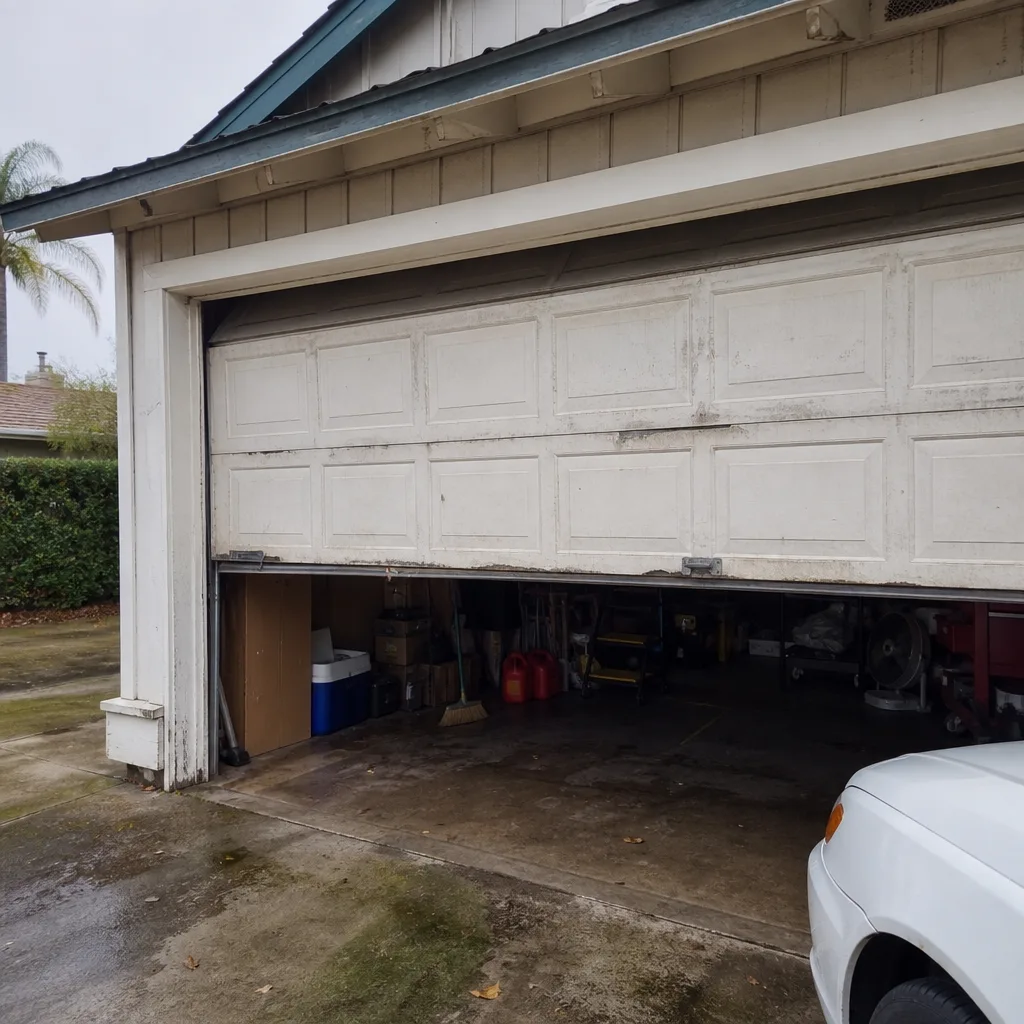 Before
 After
 Before
 After
 Before
 After